7 Best Anthropic Cost Visibility Tools for 2026
16 min read
Tools

Table of Contents
Comparing the top Anthropic cost visibility tools for 2026 are 1. Amnic, 2. Anthropic Console, 3. Helicone, 4. Langfuse, 5. Datadog, 6. Vantage and 7. Finout.
An Anthropic cost visibility tool shows you where Claude spend goes before the invoice does. It reads input, output and cache tokens on every call, attributes that spend to the model, key, team or feature behind it, and surfaces a spike while it is still small. Anthropic bills per token, so one shipped prompt change can move daily spend hard, which is why teams treat live tracking as core FinOps work.
Amnic leads this list because it makes Claude spend legible the way a finance team needs it: tokens tracked per call, mapped back through cost attribution to the team, feature or customer that drove them, with budgets and alerts that fire before the bill lands. The same view also shows OpenAI, Gemini and the AWS, Azure and GCP bill, giving finance one number for total AI plus cloud spend.
This page is about seeing the bill, not cutting it. Reducing the Claude invoice through caching, routing and batching is a separate discipline covered in Anthropic cost optimization tools, so the tools below are graded instead on how well they track, attribute and alert. Strong cost allocation is the line that separates a real visibility tool from a usage chart you read by hand.
Top 7 Anthropic Cost Visibility Tools
Amnic: FinOps platform that tracks Claude tokens per call, attributes spend to teams and features and alerts before the invoice with built-in anomaly detection.
Anthropic Console: the native baseline, with Usage and Cost views, Workspaces, spend limits and a Usage and Cost API for your own dashboards.
Helicone: open-source proxy that logs every Claude request with its tokens, latency and cost through a one-line base-URL swap.
Langfuse: open-source tracing that records each Claude call as a span with token cost tied to prompt versions and evals.
Datadog: APM-grade LLM observability that adds token count and estimated cost to every Claude request span.
Vantage: cloud FinOps tool that pulls Anthropic billing directly and allocates it next to cloud spend.
Finout: cost observability that unifies cloud, SaaS and Claude spend into one shared bill with virtual tagging.
What Are Anthropic Cost Visibility Tools?
Anthropic cost visibility tools are software that turns scattered Claude API spend into a clear, assignable view, broken down by model, key, workspace, team or feature. They answer the question a monthly token total cannot: who spent what on Claude, and why.
They work by reading two streams of data, which together underpin disciplined AI token management. The first is usage and billing data straight from Anthropic, where every Claude response returns a usage object carrying input, output and cache token counts (documented here). The second is request-level telemetry captured at the application, where each call to Opus, Sonnet or Haiku carries the metadata that says which customer or feature triggered it.
A visibility tool joins those two streams so the dollar figure on the invoice traces back to the code path that caused it. For a finance or platform lead, the value is control without waiting, since you see a spike the hour it begins instead of three weeks later. That distance between an engineering usage log and a finance-ready number is what these tools close.
These tools fall into three groups, and which one fits depends on what you need to see. Anthropic's native Console covers the basics for one account. AI observability tools such as Helicone, Langfuse and Datadog capture per-request cost at the application. Enterprise FinOps platforms such as Amnic, Vantage and Finout attribute Claude spend across teams and set it next to cloud cost for chargeback.
Anthropic Cost Visibility Tools Comparison Table
Information reflects vendor sources as of June 2026. Confirm current pricing with the vendor.
Tool | Best for | What it makes visible | Attribution and alerts | Free option | Pricing model |
|---|---|---|---|---|---|
Amnic | Finance and FinOps teams owning AI plus cloud spend | Tokens per call, model, team, feature, customer, plus AWS/Azure/GCP | Team, feature, customer chargeback with budgets and anomaly alerts | One-month trial | Roughly 0.25% to 1% of monitored spend |
Anthropic Console | The starting baseline every account already has | Usage and Cost views, per-model and per-workspace spend | Workspace spend limits, no anomaly detection | Included with account | Free (you pay only API usage) |
Helicone | Developers wanting fast request-level cost logging | Per-request cost, tokens, latency, model | Custom tags, alerts on paid tiers | Yes, 10,000 requests per month | Free tier, Pro from about $79 per month |
Langfuse | Teams wanting trace and prompt-level cost data | Trace-level cost, prompt versions, eval scores | Tag and user-level traces, no spend alerts | Yes, 50,000 units per month | Tiered from about $29 per month, plus self-host |
Datadog | Engineering teams standardized on Datadog APM | Token count and estimated cost per Claude span | Service and trace centric, monitors and anomaly detection | 14-day trial | Usage based, LLM spans plus per-host APM |
Vantage | Cloud FinOps teams adding Claude spend | Anthropic billing pulled directly, budgets, allocation | Cost allocation, anomaly alerts on deviation | Yes, limited tier | Fixed-rate subscription |
Finout | Teams unifying cloud, SaaS and AI in one bill | Claude spend alongside cloud and SaaS via virtual tags | Virtual-tag allocation, budgets | Demo only | Custom enterprise |
How We Evaluated These Tools
Visibility freshness: how current the spend data is, from per-request streaming to a daily billing refresh and how fast a spike actually shows up.
Attribution depth: whether the tool can split Claude cost by model, key, workspace, team, feature and customer, not just print one org-level total.
Alerting and anomaly detection: whether budgets, thresholds and automated spike detection surface a problem before the invoice rather than after.
Coverage breadth: whether Claude sits next to other model providers and the cloud bill, or stands alone in a separate console.
Setup and operating cost: the effort to instrument calls and the risk that the visibility tool itself becomes an expensive line item.
Buyer fit: whether the output is finance-grade for chargeback and showback, or engineering telemetry built for debugging.
Top Anthropic Cost Visibility Tools in 2026
1. Amnic
Best for: finance, FinOps and platform teams that own Claude spend alongside the rest of the cloud bill and need attribution they can charge back.
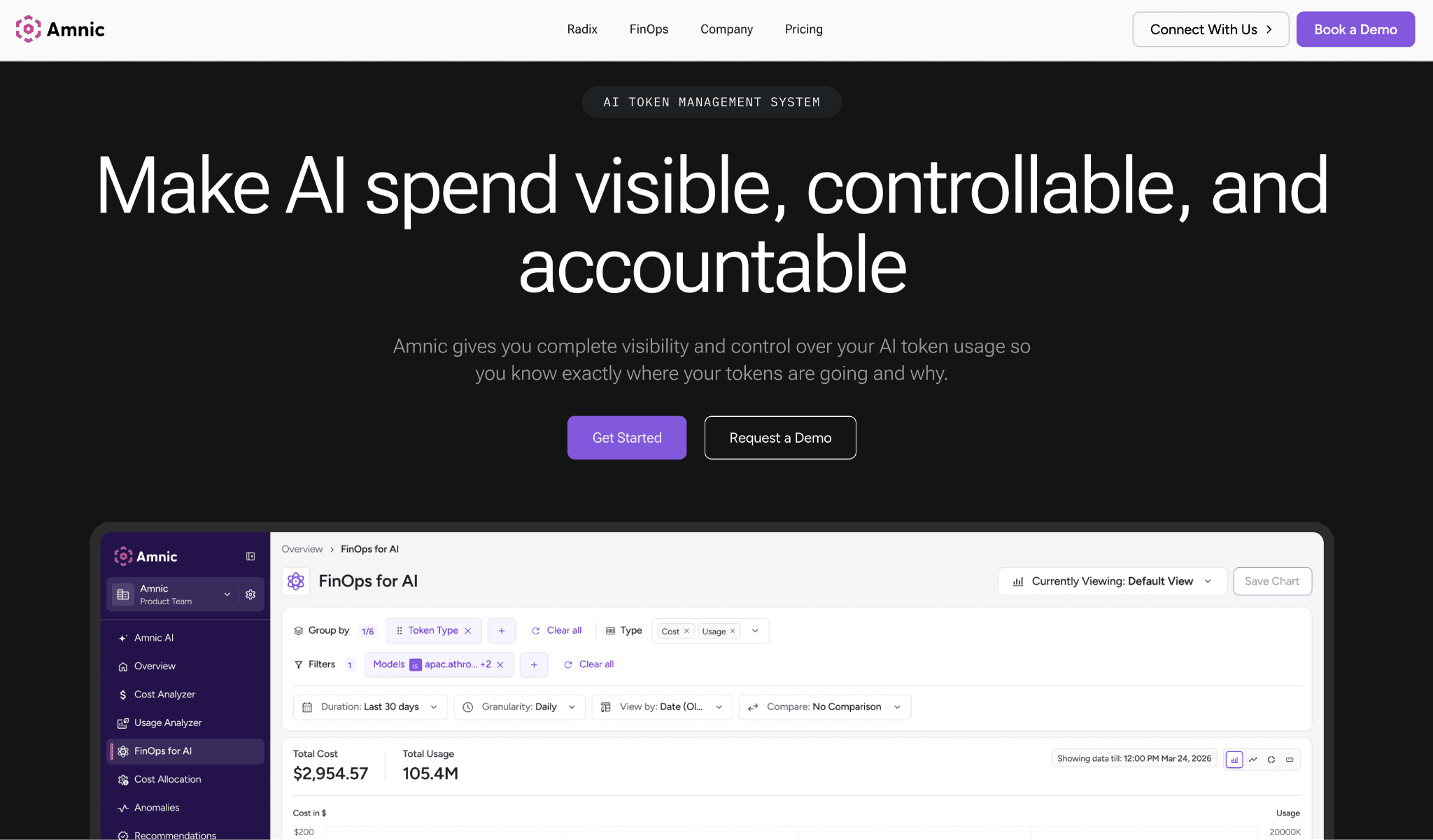
Amnic makes Claude spend visible the way a finance team reads it. It tracks input, output and cache tokens on every call across Anthropic, OpenAI, Gemini and Amazon Bedrock, then maps that spend back to the team, feature or customer that caused it. Instead of one organization total, you get a per-feature and per-customer breakdown, which is what makes the margin question answerable rather than a guess.
The visibility is built to act before the bill arrives. You set budgets per team and per model that alert and trip before the invoice lands, and the monitoring view flags a cost spike the moment it starts with anomaly detection. A runaway agent loop on Opus does not quietly run all weekend, because someone hears about it within the hour rather than at month-end.
Amnic reads data agentless and read-only, so it connects to your Anthropic and cloud billing without write access to infrastructure and it carries SOC 2, ISO and GDPR posture. Because Claude spend sits right next to AWS, Azure and GCP cost, AI stops being a separate dashboard and becomes one line in the same FinOps picture, with budget controls applied consistently across both.
Key features:
Per-call tracking of input, output and cache tokens across Anthropic, OpenAI, Gemini and Bedrock, so multi-model spend lands in one view instead of four consoles.
Attribution that maps Claude spend to team, feature and customer, which is what turns a usage chart into a chargeback you can defend.
Anomaly detection that flags spikes the moment they start, before the monthly invoice confirms the damage.
Budgets per team and per model that alert and trip, giving finance a guardrail rather than a postmortem.
Cost and margin per feature, so product owners can see which Claude feature actually pays for itself.
Claude spend shown next to AWS, Azure and GCP cost, removing the blind spot where AI hides outside cloud reports.
AI agents that allocate spend and generate finance and engineering reports, so attribution is not a manual monthly export.
Agentless, read-only connection with SOC 2, ISO and GDPR coverage, so security review clears it quickly.
Pricing: Amnic charges a percentage of the spend it monitors, roughly 0.25% to 1%, so the cost scales with the bill it protects rather than a flat per-seat fee. A one-month free trial is available before you connect production billing.
Pros:
Finance-grade attribution down to feature and customer, not just an org-level total.
One view for AI and cloud spend, so Claude is never a separate report nobody reconciles.
Read-only access means engineering never hands over write keys just to get visibility.
Cons:
The depth suits teams running a real FinOps practice more than a solo developer watching one API key.
Percentage-of-spend pricing is worth a sizing conversation once the bill gets very large.
Amnic suits the team that has to explain the Claude line to finance. Start a free Amnic trial to attribute your AI and cloud spend in days.
2. Anthropic Console
Best for: any team that wants a starting baseline, since every Anthropic account already has it at no extra cost.
The native Console is the honest first stop. The Usage and Cost views show spend over the current billing cycle with per-model breakdowns, so you can spot a daily jump and see total charges without buying anything. Workspaces let you group keys by project or team and set a spend limit per workspace, which is the closest the native tooling gets to a budget guardrail.
For anything programmatic, Anthropic exposes a Usage and Cost API plus an Admin API that return your organization's token and dollar data (documented here). That is the same source most third-party tools on this list read under the hood, so the Console is a genuine visibility option for a small team and a poor one for a large org.
The limits matter once spend grows. Reporting stops at the workspace level, so splitting cost by individual customer or product feature means building that logic yourself in a spreadsheet or BI tool. There is no anomaly detection either, so a spike you did not predict goes unnoticed until someone happens to open the dashboard.
Key features:
Usage and Cost views over the current billing cycle, so today's Claude spend is visible without any setup.
Per-model breakdown that shows whether Opus, Sonnet or Haiku is driving the bill.
Workspaces to group API keys by project or team for rough segmentation.
Spend limits per workspace, the native equivalent of a budget cap.
Usage and Cost API for programmatic token and dollar data, the same source third-party tools poll.
Admin API to manage workspaces, keys and members at the organization level.
CSV-style export so spend can move into a spreadsheet or BI tool for deeper analysis.
Pricing: the Console and its APIs are included free with any Anthropic account, so you pay only for the API usage itself. There is no upgrade tier for the visibility view.
Pros:
Free and already present, with no integration work to see basic Claude spend.
Reads the authoritative billing source directly, with no estimation gap.
Cons:
No anomaly detection, so a runaway key keeps burning until a human happens to look.
Attribution stops at workspace level, so per-feature and per-customer breakdowns need custom work.
3. Helicone
Best for: developers who want fast, request-level Claude cost logging with almost no integration effort.
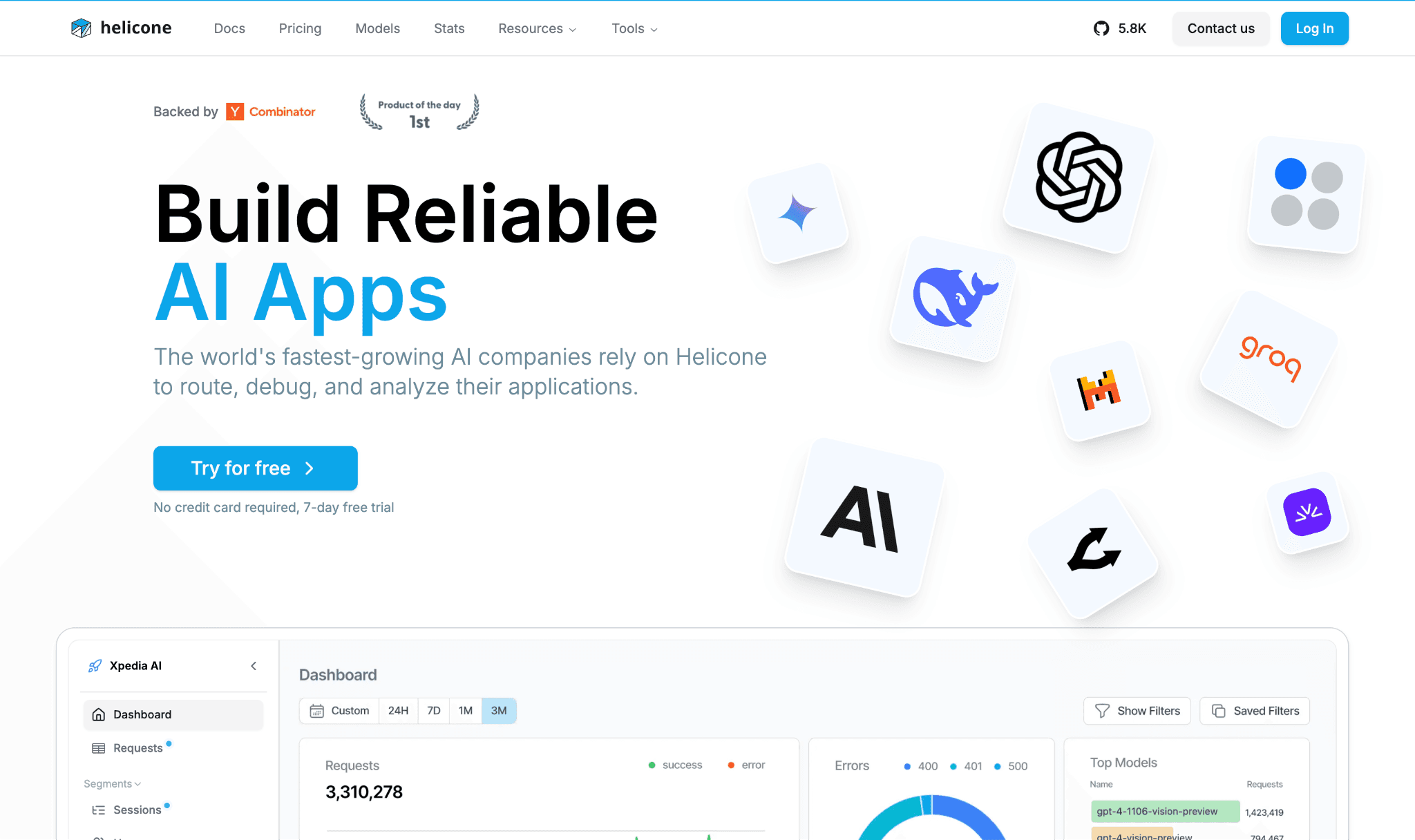
Helicone is an open-source LLM observability platform built around a one-line change: you swap your Anthropic base URL to route through Helicone and immediately get logging, dashboards and cost tracking. Every Claude request is captured with its tokens, model, latency and cost, so you can see which prompts and endpoints drive spend the same afternoon you install it.
The architecture is the thing to weigh. Routing requests through a proxy adds a network hop, which teams with strict latency or reliability requirements need to plan for, though Helicone also offers an async logging path. Custom property tags let you slice Claude spend by user or feature, which is useful for rough segmentation short of full chargeback.
It is a strong engineering observability tool, but the output is request logging rather than finance-ready attribution, so mapping spend to cost centers for a CFO still needs a layer on top. For a quick read on where Claude money goes, it remains one of the lowest-effort options here and a common first step before a deeper LLM cost comparison.
Key features:
One-line base-URL swap to start logging Claude calls without an SDK rewrite.
Per-request capture of tokens, model, latency and cost across major providers.
Dashboards that rank prompts and models by spend so the expensive paths surface fast.
Custom property tags to slice Claude spend by user, feature or environment.
Session and trace views built for agents and multi-step chains, not just single calls.
Open-source core, so a team can self-host and keep request data in its own environment.
Alerting on paid tiers when cost or latency drifts.
Pricing: the free Hobby tier covers 10,000 requests per month with short retention. Pro runs around $79 per month, and a Team plan adds compliance features and longer retention.
Pros:
Fastest path here to per-request Claude cost visibility, often live the same day.
Open-source and self-hostable, which keeps sensitive request data in-house.
Cons:
The proxy hop adds latency and a dependency that strict production paths must design around.
Output is engineering logging, so finance-grade attribution and chargeback need an added layer.
4. Langfuse
Best for: teams that want trace-level Claude cost data sitting next to prompt management and evaluations.
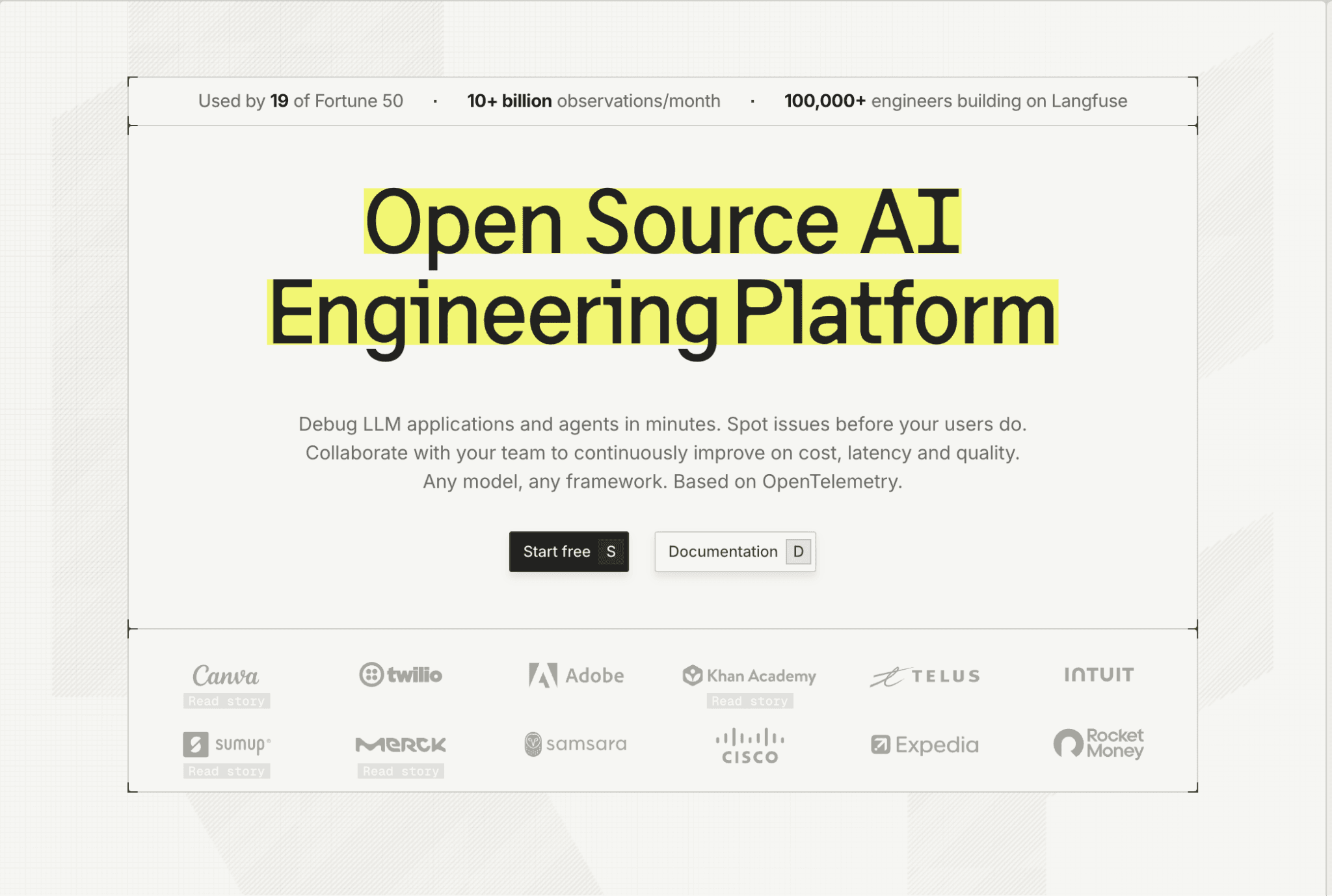
Langfuse is an open-source tracing platform that records each Claude call as a span with its token cost, then ties that to prompt versions and evaluation scores. That trace-level view helps you find the prompt or chain step that quietly drives spend, which is a different angle from a billing dashboard that only shows the total.
It pairs cost data with prompt versioning and evals, so you can see which version of a prompt got more expensive and when and judge a cheaper prompt on quality before it ships. Cloud and self-hosted options exist, though self-hosting carries real infrastructure overhead since it depends on Postgres, ClickHouse, Redis and object storage.
Langfuse measures spend at the trace rather than alerting finance on it, so it complements a FinOps layer rather than replacing one. For an engineering team that wants to pin the exact prompt behind a cost, it is the most precise tool here and it sits close to broader LLM observability practice.
Key features:
Records every Claude call as a span with its token cost, down to the exact prompt or chain step.
Prompt versioning, so you can see which version of a prompt got more expensive and when.
Evaluations sitting next to cost, so a cheaper prompt is judged on quality before it ships.
Tag and user-level traces for rough segmentation of who drives spend.
Open-source core you can read, extend and self-host for data residency.
Support for the major model providers, Anthropic included.
Dataset and experiment tooling for testing prompt changes on real traffic.
Pricing: the free Hobby plan covers 50,000 units per month. The Core cloud plan starts around $29 per month, and self-hosting is free but needs four supporting services to run.
Pros:
The best tool here for pinning down the exact prompt behind a Claude cost.
Open-source with a free tier you can actually build on.
Cons:
It shows spend at the trace but has no spend alerts or budgets, so finance still needs a separate view.
Self-hosting is a heavy lift once you add up the four services it depends on.
5. Datadog
Best for: engineering organizations already standardized on Datadog that want Claude cost inside the same APM they already run.
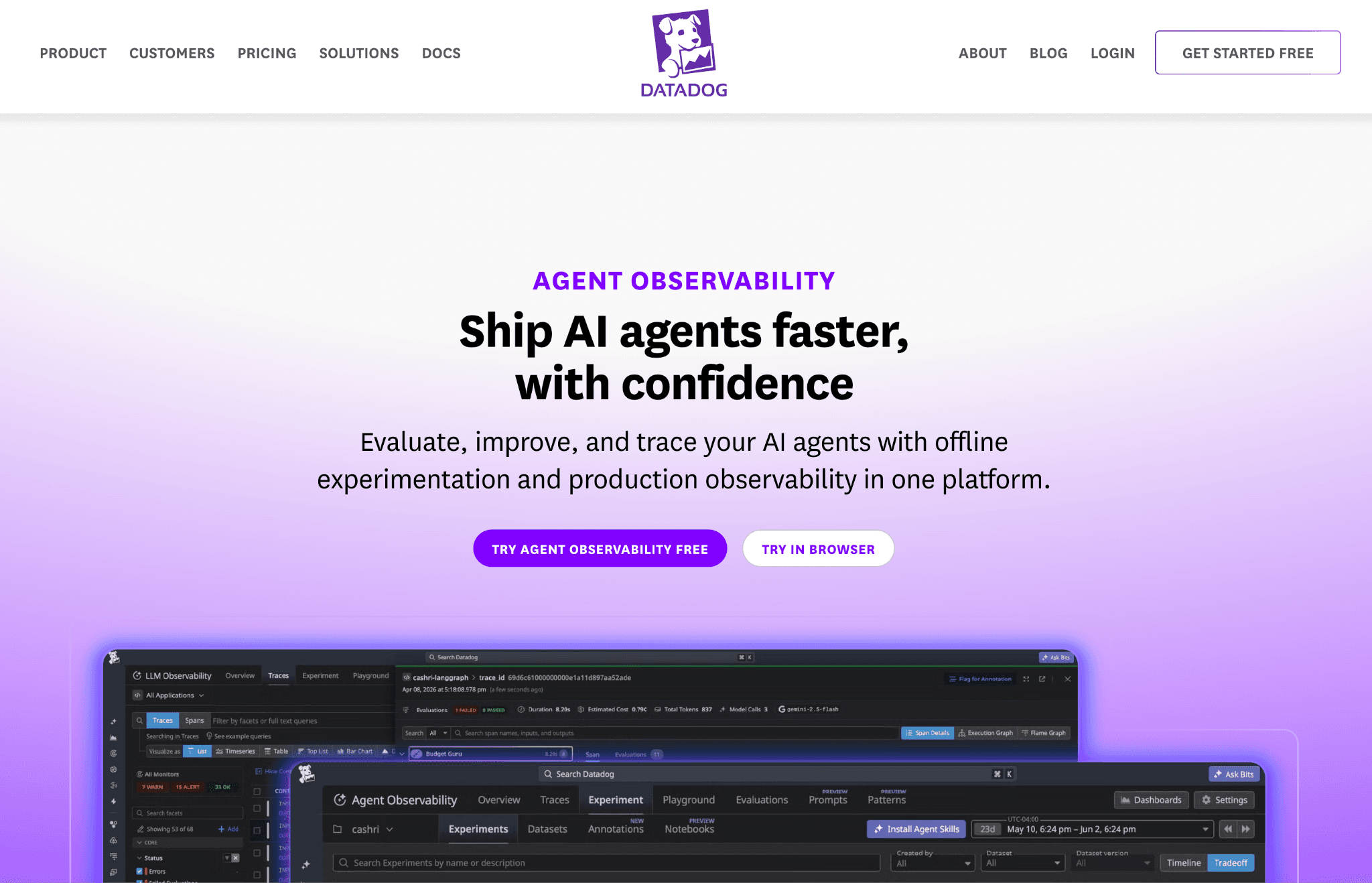
Datadog folds Claude spend into its observability platform through LLM Observability. It auto-instruments calls to Anthropic, OpenAI, Bedrock and LangChain, and adds a token count and an estimated cost to every request span, so you can break down the impact of each Claude call inside a trace and find the calls behind an unusually costly request.
The cost story gets stronger when Cloud Cost Management is added, since it pulls the real invoice alongside Datadog's per-request estimates for both the billed total and request-level detail. The same auto-instrumentation covers GPT, so a team running both can watch it through OpenAI cost monitoring tools, and metric anomaly detection pages someone before a spike compounds.
The trade-off is price and complexity. LLM Observability bills on span volume on top of per-host APM, and Datadog can auto-activate the premium LLM feature when it detects spans, so a high-traffic Claude workload can drive the visibility bill up sharply. Attribution is also engineering-shaped, organized around services and traces rather than finance-ready cost centers.
Key features:
Auto-instrumentation for Anthropic, OpenAI, Bedrock and LangChain, so calls are captured without manual tagging.
Token count and estimated cost attached to every Claude request span for per-call drill-down.
Estimated cost across a wide model catalog, keeping a mixed-provider stack in one dashboard.
Cloud Cost Management pulls the real Anthropic invoice next to the per-request estimates.
Trace-level view that isolates the exact calls behind a costly request.
Monitors and anomaly detection on metrics, so a token or cost spike can page on-call.
Tight fit with existing Datadog APM, logs and infrastructure data already in place.
Pricing: Datadog is usage based, with LLM Observability billed on span volume layered on per-host APM pricing and custom-metric overages. A 14-day trial is available, and costs can climb quickly at high request volume.
Pros:
Per-request Claude cost detail inside full traces, which is excellent for debugging expensive calls.
Real invoice plus estimate together when Cloud Cost Management is added.
Cons:
Pricing compounds across per-host APM, LLM spans and overages, so a busy workload can make the monitor itself expensive.
Attribution is service and trace centric, so finance-grade chargeback by customer or feature takes extra modeling.
6. Vantage
Best for: cloud FinOps teams that already track AWS, Azure and GCP and want to add Claude spend to the same console.
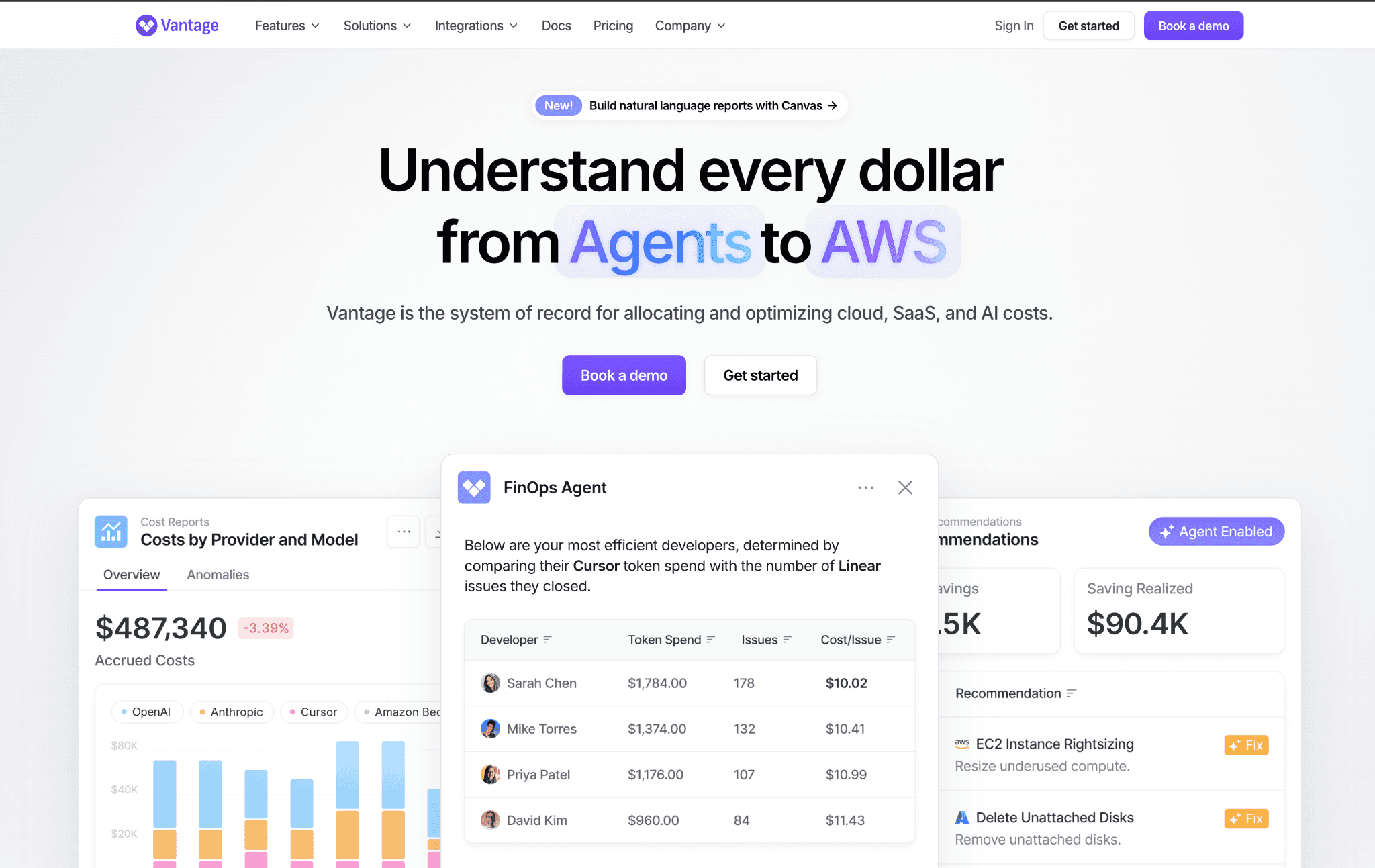
Vantage approaches Anthropic as one more billing source in a broad cloud cost tool. It connects directly to the Anthropic billing API alongside a long list of cloud and SaaS providers, ingests usage and cost data and lets you monitor Claude consumption, set budgets, detect anomalies and allocate that spend next to the rest of the infrastructure bill.
Because it reads the billing API directly, it catches direct Claude spend that cloud-native integrations miss when teams call Anthropic outside a cloud account. It pulls Google's models on the same path, which a team chasing cuts pairs with Gemini cost optimization tools. For visibility, it projects spend, sets custom budgets and alerts when cost deviates from the pattern.
The main limitation for real-time work is freshness, since the integration refreshes on a roughly daily cadence rather than streaming per request. That makes it built for cost trend visibility and allocation rather than catching a runaway loop within the hour, and its trace-level prompt detail is shallower than the dedicated observability tools, since it is cloud-FinOps first and LLM second.
Key features:
Direct Anthropic billing API connection, so direct Claude spend is captured outside any cloud account.
Coverage across a long list of cloud and SaaS providers, putting Claude next to AWS, Azure and GCP.
Budgets and custom guardrails that alert when usage or cost exceeds expectations.
Anomaly alerts when Claude cost deviates from the historical pattern.
Spend projection to forecast where the Anthropic bill is heading.
Cost allocation that splits Claude spend across teams alongside cloud cost.
A reporting layer finance can read next to the broader cloud bill.
Pricing: Vantage prices on a fixed-rate subscription rather than a percentage of spend, with a limited free tier for smaller workloads. Confirm current tiers with the vendor.
Pros:
Reads Anthropic billing directly, so direct Claude spend is not lost the way cloud-only tools lose it.
Puts Claude in the same FinOps console as the cloud bill for one allocation story.
Cons:
Daily refresh means it is not true real time, so an in-progress spike shows up later than a per-request monitor.
LLM trace depth is shallower than dedicated observability tools, since it is cloud-FinOps first.
7. Finout
Best for: teams that want Claude spend unified with cloud and SaaS cost in one shared bill rather than a separate AI dashboard.
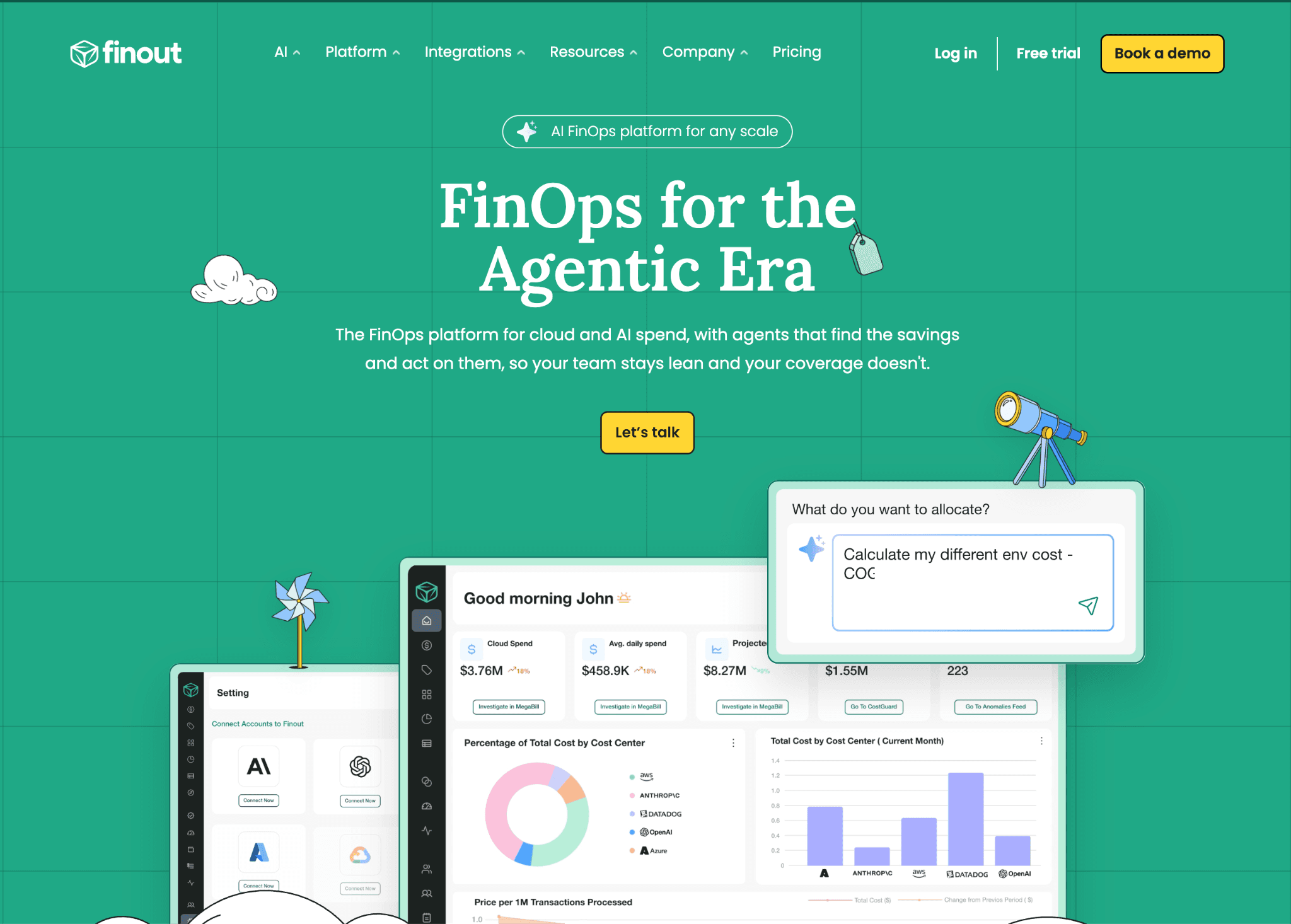
Finout is a cost observability platform that pulls cloud, SaaS and AI spend into a single normalized bill, with Claude usage ingested alongside the rest. Its virtual tagging lets you allocate spend by business dimension without re-tagging resources at the source, so a feature or team that spans several systems still rolls up to one owner.
For Claude specifically, Anthropic spend joins the same allocation model as AWS, Azure and the SaaS estate, which helps when AI is one cost among many a FinOps team has to explain. When that estate includes self-hosted inference, the GPU bill is its own discipline covered in GPU cost optimization tools. Budgets and alerts sit on top, so a deviation surfaces rather than hiding in the total.
The trade-off is that Finout is enterprise-shaped and demo-led, so it suits a formal practice more than a small team wanting a quick read. Its LLM-specific telemetry, like per-prompt trace detail, is lighter than the dedicated observability tools, since the design center is unifying the whole bill rather than instrumenting individual Claude calls.
Key features:
A unified bill that pulls cloud, SaaS and Claude spend into one normalized view.
Virtual tagging that allocates spend by business dimension without re-tagging at the source.
Cost allocation that maps Claude spend to teams, products and cost centers.
Budgets and alerts on allocated lines, so a deviation surfaces rather than hiding in the total.
Anomaly detection across the unified estate, AI included.
Shared reporting finance and engineering can read from the same source.
Broad cloud and SaaS coverage, so Claude is one line among the rest.
Pricing: Finout is priced as a custom enterprise contract, typically demo-led with no public self-serve tier. Confirm scope and pricing with the vendor.
Pros:
Strong allocation model that maps Claude spend onto the same business dimensions as cloud cost.
One shared bill keeps AI from becoming a disconnected silo.
Cons:
Enterprise contract and demo-led onboarding, so it is heavy for a small team.
LLM trace depth is lighter than the dedicated observability tools, since it unifies the bill first.
How to Choose the Right Anthropic Cost Visibility Tool
Match the tool to the problem you actually have, not to the longest feature list.
You need finance-grade attribution and chargeback: choose Amnic. Per-feature and per-customer breakdowns with budgets that alert before the invoice are what finance can act on, and the same view covers cloud spend. Pair it with cloud cost anomaly detection tools thinking so spikes never reach the bill.
You want a free starting point today: use the native Anthropic Console, and graduate when you need anomaly detection or per-customer attribution it cannot give you.
You are a developer wanting per-request cost fast: Helicone is live the same day through a base-URL swap.
You want to find the exact prompt behind a cost: Langfuse gives trace-level cost next to prompt versions and evals.
You are deep in Datadog already: add LLM Observability so Claude cost lives next to the telemetry your engineers already watch.
You run cloud FinOps and want Claude in the same console: Vantage adds direct billing and allocation, as long as a daily refresh is fresh enough for the spikes you care about.
You run a formal practice across cloud and SaaS: Finout, or treat Claude as one workload inside the broader FinOps for AI program rather than a standalone dashboard.
Common Mistakes When Choosing Anthropic Cost Visibility Tools
Confusing a usage chart with visibility: A per-model usage graph tells you what happened. Real visibility tells you the moment it starts going wrong. If the tool has no budgets, thresholds or anomaly detection, someone has to be watching the screen and nobody watches the screen at 2 a.m. Insist on alerting that fires before the invoice, which is what separates live tracking from a static monthly report.
Stopping at the org-level total: The native Console reports at workspace level, which is fine until finance asks which customer or feature drove the spike. If you cannot split spend by team, feature and customer, you cannot do chargeback or answer the margin question. Attribution depth is what a strong AI token management tools workflow depends on.
Letting the monitor become the expensive line item: Span-based and ingest-based observability pricing can climb faster than the Claude bill it watches on a high-traffic workload. Model the visibility cost at your real request volume before you commit, the same way you would sanity-check rates against Anthropic API pricing.
Treating Claude as a separate silo: AI spend that lives in its own dashboard, disconnected from AWS, Azure and GCP cost, becomes the line nobody reconciles. Keeping it next to the rest of the bill, with the same controls applied, is what keeps AI from being a blind spot and it is the same discipline a GenAI cost management platform brings to every model.
Why Decision Makers Choose Amnic for Anthropic Cost Visibility
Three things put Amnic at the top for teams that have to answer for the bill, not just read it.
Attribution that finance can use: Amnic tracks tokens per call and maps each dollar back to the team, feature or customer behind it, then shows cost and margin per feature. That turns Claude spend from one organization total into a chargeback you can defend, and it powers the unit economics view product owners ask for.
Alerts before the invoice, not after: Budgets per team and per model trip and alert as spend moves, and anomaly detection flags a spike the moment it starts. The whole point of visibility is to catch the runaway key while it is still cheap to fix, and the platform is built around that timing rather than a month-end report.
One view for AI and cloud: Claude spend sits next to AWS, Azure and GCP cost, read agentless and read-only with SOC 2, ISO and GDPR coverage. Customers report documented savings of 30% to 50%, with named teams including LambdaTest, Nanonets and Open Financial. It is the same approach buyers weigh when they compare FinOps tools for AI cost management.
Frequently Asked Questions
What is an Anthropic cost visibility tool?
It is a platform that tracks your Claude API spend in close to real time, broken down by model, key, workspace, team or feature, and shows you where the money goes. It reads Anthropic's Usage and Cost API plus request-level data so spend can be traced back to the workload that caused it.
Can I see Claude costs for free?
Yes. The native Anthropic Console is included with every account and shows Usage and Cost views, per-model breakdowns and workspace spend limits. It has no anomaly detection or per-customer attribution, so most teams add a dedicated tool once spend matters.
Does Anthropic have built-in spend controls?
The Console lets you group keys into Workspaces and set a spend limit per workspace, which is the native budget guardrail. It does not include anomaly detection, so a spike you did not predict goes unnoticed until someone opens the dashboard. Automated alerts need a third-party tool.
What is the difference between Claude cost visibility and optimization?
Visibility tracks the spend and shows you where it goes through dashboards, attribution and alerts. Optimization reduces the bill through caching, model routing and batching. Visibility tells you what is happening; optimization changes it. The two are companion jobs, not the same tool.
How do Anthropic cost visibility tools track spend?
They read Anthropic's Usage and Cost API for organization-level token and dollar data, and capture request-level telemetry at the application for per-call detail. Joining the two lets a tool map the invoice back to a specific model, workspace, team, feature or customer.
Does Amnic show Claude cost alongside cloud spend?
Yes. Amnic tracks Claude tokens per call and shows that spend next to AWS, Azure and GCP cost in one view. It attributes spend to teams and features, sets budgets per model and flags anomalies before the invoice, all read-only and agentless.
Which Anthropic cost visibility tool is best for finance teams?
Amnic suits finance and FinOps teams because it delivers attribution by team, feature and customer, budgets that alert before the invoice and one view across AI and cloud. Engineering-first tools like Datadog and Langfuse give deeper per-request traces but lighter finance chargeback.
Put the Claude Meter Where Finance Can See It
Native dashboards show you spend after it happens, and most observability tools were built for engineers debugging latency, not the person who answers for the bill. Amnic tracks Claude cost per call, attributes it to the team, feature and customer behind it, and alerts before the invoice. Book a demo and see your Claude and cloud spend in a single picture.
Better visibility and management into AI Tokens?
Start with a 30 day trial
Connect leading LLMs
24 hour time to value
Stay ahead of AI Spend

Make AI spend visible, controllable, and accountable.
Gain insights into your AI token costs at a team, customer, business unit and individual user level to measure and manage AI utilization.
Recommended Articles

8 Best Llama Cost Management Tools in 2026
Read More
8 Best Amazon Bedrock Cost Optimization Tools for 2026
Read More

7 Best Amazon Bedrock Cost Monitoring Tools
Read More

8 Best Gemini Cost Visibility Tools for 2026
Read More

7 Best Multimodal Cost Optimization Tools for 2026
Read More

5 Best Anthropic Cost Allocation Tools for 2026
Read More