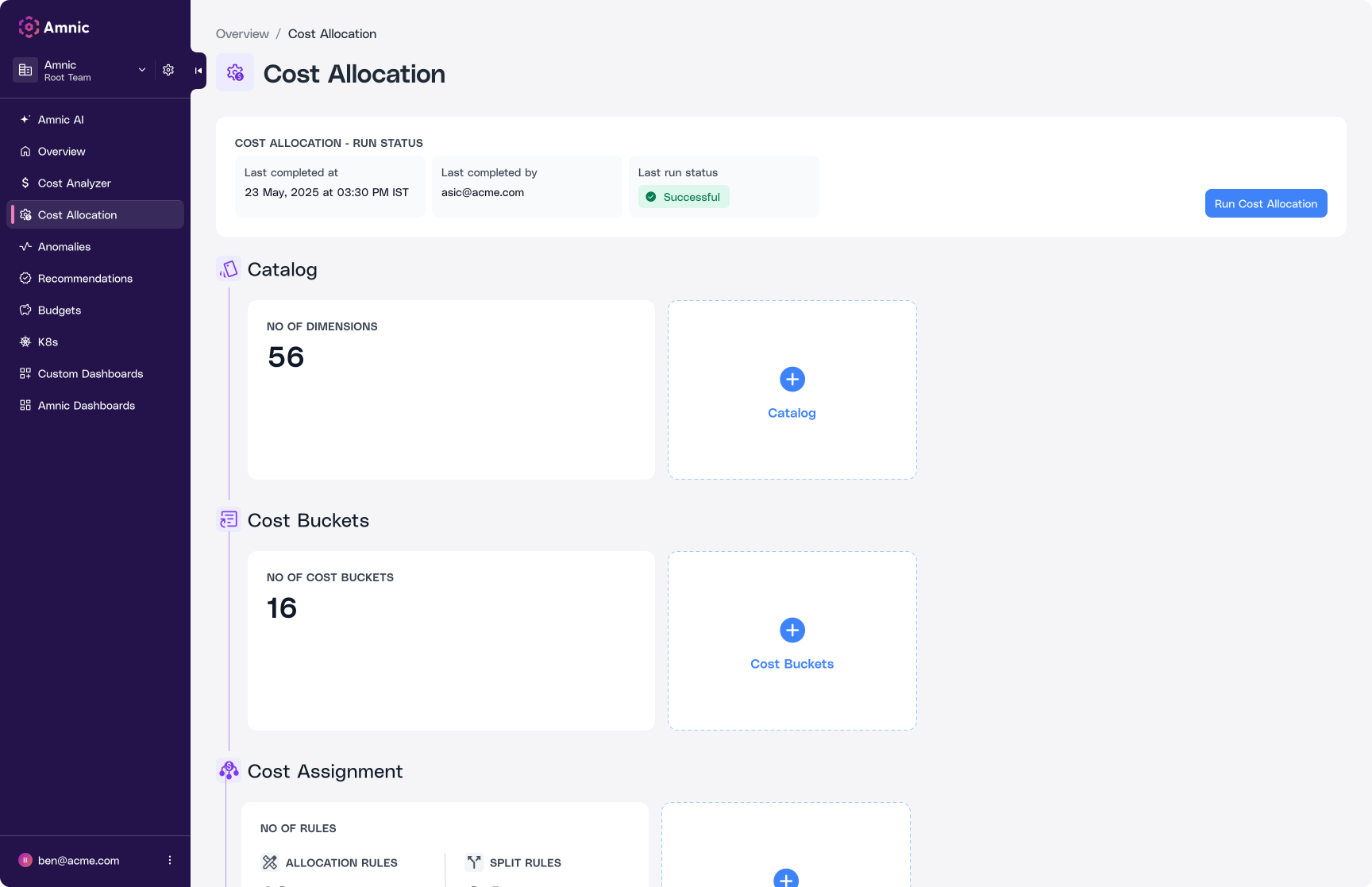













Define Cost Dimensions
Start by categorizing costs by specific dimensions like teams, environments, customers, cluster allocation, and products. The granular breakdown provides a clear understanding of where cloud spend is occurring and offers insight into how resources are allocated across the organization.

Assign Costs to Buckets
Allocate costs into easily manageable buckets tailored to your business needs. Cost buckets simplify tracking by grouping expenses, making it easy to visualize how each team, product, or environment is contributing to cloud costs.

Visualize Costs for Better Decision-Making
With cloud costs broken down at every level, you can get a comprehensive view of how each expense affects the bottom line. This can help make smarter decisions about product pricing, customer profitability, and resource allocation.



Benchmark maturity,close governance gaps,
and drive ROI in under 20 minutes








Frequently Asked Questions
1. What is cloud cost allocation and why does it matter?
Cloud cost allocation is the process of breaking down your total cloud bill and tying each dollar to the team, app, service, customer, or product that generated it. Without it, you're stuck with one giant invoice and zero accountability. With it, you get clear ownership, better margins, smarter pricing decisions, and the ability to track cloud ROI at a granular level.
2. How does Amnic's cost allocation work without agents or heavy setup?
Amnic offers the first of its kind self serve, agentless mechanism for allocating cloud costs. No scripts to deploy, no engineering lift, no complex integrations. You simply define your cost dimensions, teams, environments, customers, products, assign costs into buckets, and visualize the breakdown. Setup takes minutes, not weeks.
3. Can I allocate costs by customer or product to track margins?
Yes. Amnic links cloud spend directly to customer consumption and product usage, so you can measure true per customer and per product margins. That means you'll know exactly how infrastructure costs impact your COGS, which clients are most profitable, and where to tighten pricing or resource allocation for healthier margins.
4. What cost dimensions can I allocate spend across?
Pretty much anything that matters to your business. Allocate by team, business unit, environment (prod, staging, dev), application, service, cluster, customer, product line, or any custom dimension you define. Mix and match dimensions to build the exact view each stakeholder needs, from engineering leads to the CFO.
5. Who on my team benefits most from Amnic's cost allocation?
Everyone tied to cloud spend. FinOps gets accurate chargeback and showback data, engineering leaders spot inefficiencies by team or service, executives track cloud ROI against revenue, and product managers measure true delivery costs per customer. One allocation engine, multiple stakeholders, full financial alignment across the org.