10 Best Cloud Cost Anomaly Detection Tools 2026
13 min read
Tools
Cost Control
Table of Contents
Comparing the top cloud cost anomaly detection tools for 2026 are 1. Amnic, 2. Kubecost, 3. Cloudchipr, 4. CloudZero, 5. Vantage, 6. Finout, 7. Ternary, 8. Apptio Cloudability, 9. Datadog Cloud Cost Management and 10. Harness Cloud Cost Management.
Every pick below is judged on detection latency, root-cause depth, multi-cloud and SaaS coverage, alert routing, false-positive controls, pricing, deployment time and security posture.
Top 10 Cloud Cost Anomaly Detection Tools in 2026
Amnic: AI-agent-led FinOps OS with anomaly RCA across AWS, Azure, GCP and Kubernetes. Agentless, 5-minute deploy. From 0.25% of cloud spend.
Kubecost: Kubernetes-native anomaly detection at namespace, pod and label level. Free OSS tier; Business at $499/mo.
Cloudchipr: AI-chat anomaly investigation across AWS, Azure, GCP with automated remediation. From $49/mo.
CloudZero: Hourly anomaly detection tied to unit economics and per-feature cost. Quote-based.
Vantage: Multi-cloud plus 20+ SaaS integrations with ML anomaly alerts. Free tier for small expenses.
Finout: Seasonality-aware anomaly detection across cloud and SaaS (Snowflake, Databricks, OpenAI). ~1% of spend.
Ternary: Enterprise multi-cloud incl. OCI and Alibaba; FOCUS-native with bi-directional Jira. Quote-based.
Apptio Cloudability: Enterprise FinOps with mature anomaly, chargeback and budget governance. Quote-based.
Datadog Cloud Cost Management: Anomaly detection correlated with performance metrics. Usage-based.
Harness Cloud Cost Management: AI-powered anomaly detection with CI/CD integration and autonomous remediation. Tiered.
Comparison Table: Top 10 Cloud Cost Anomaly Detection Tools in 2026
Tool | Best For | Detection Approach | Clouds + SaaS Supported | Pricing | Free Trial |
Amnic | AI-agent FinOps across cloud + K8s | AI agents (Governance Agent) with custom thresholds | AWS, Azure, GCP, EKS, AKS, GKE | 0.25%–1% of cloud spend | Yes, 1 month |
Kubecost | Kubernetes-only spend | Prometheus-based, namespace/pod-level | EKS, AKS, GKE, self-hosted K8s | Free OSS; Business $499/mo | Yes, 30 days |
Cloudchipr | Mid-market multi-cloud | ML baselines + AI chat RCA | AWS, Azure, GCP | From $49/mo | Yes, 14 days |
CloudZero | Unit-economics-led FinOps | Self-training AI on hourly spend | AWS, Azure, GCP, K8s, Snowflake | Custom/quote | Cost Assessment |
Vantage | Multi-cloud + SaaS visibility | ML per cost category | AWS, Azure, GCP, K8s, 20+ SaaS | Free tier + tiered | Yes |
Finout | Cloud + SaaS unification | Seasonality-aware ML | AWS, Azure, GCP, OCI, K8s, SaaS | ~1% of cloud spend | On request |
Ternary | Enterprise multi-cloud incl. OCI | ML + human-tunable thresholds | AWS, Azure, GCP, OCI, Alibaba, K8s | Custom / quote | On request |
Apptio Cloudability | Fortune 500 FinOps + chargeback | ML anomaly + chargeback workflow | AWS, Azure, GCP | Custom / quote | Demo only |
Datadog CCM | Existing Datadog customers | Datadog monitors on cost metrics | AWS, Azure, GCP | Usage-based | Yes, 14 days |
Harness CCM | DevOps-led teams with CI/CD focus | AI-powered + autonomous remediation | AWS, Azure, GCP, K8s | Tiered / quote | Yes, Community tier |
How we evaluated:
Every tool was scored on detection latency, multi-cloud and SaaS breadth, Kubernetes granularity, RCA depth, alert-routing maturity, pricing transparency, deployment time and SOC 2 / ISO 27001 status. Where we deployed the tool, screenshots are first-party. Where we did not, ratings draw from G2, Gartner Peer Insights, Capterra and verified customer references.
What is cloud cost anomaly detection?
Cloud cost anomaly detection is software that uses machine learning to baseline normal cloud spend, flag deviations in near real time, route alerts to the right engineering or finance owner and surface root cause so teams can act before a spike compounds into a budget overrun. For a deeper primer, see why anomaly detection is your first line of defense.
10 Best Cloud Cost Anomaly Detection Tools in 2026
1. Amnic
Best for: Multi-cloud and Kubernetes teams that want context-aware AI agents running anomaly detection, root-cause analysis and reporting on their behalf. Amnic suits CTOs, FinOps leads, SREs and CFOs who need persona-specific insight from one platform.
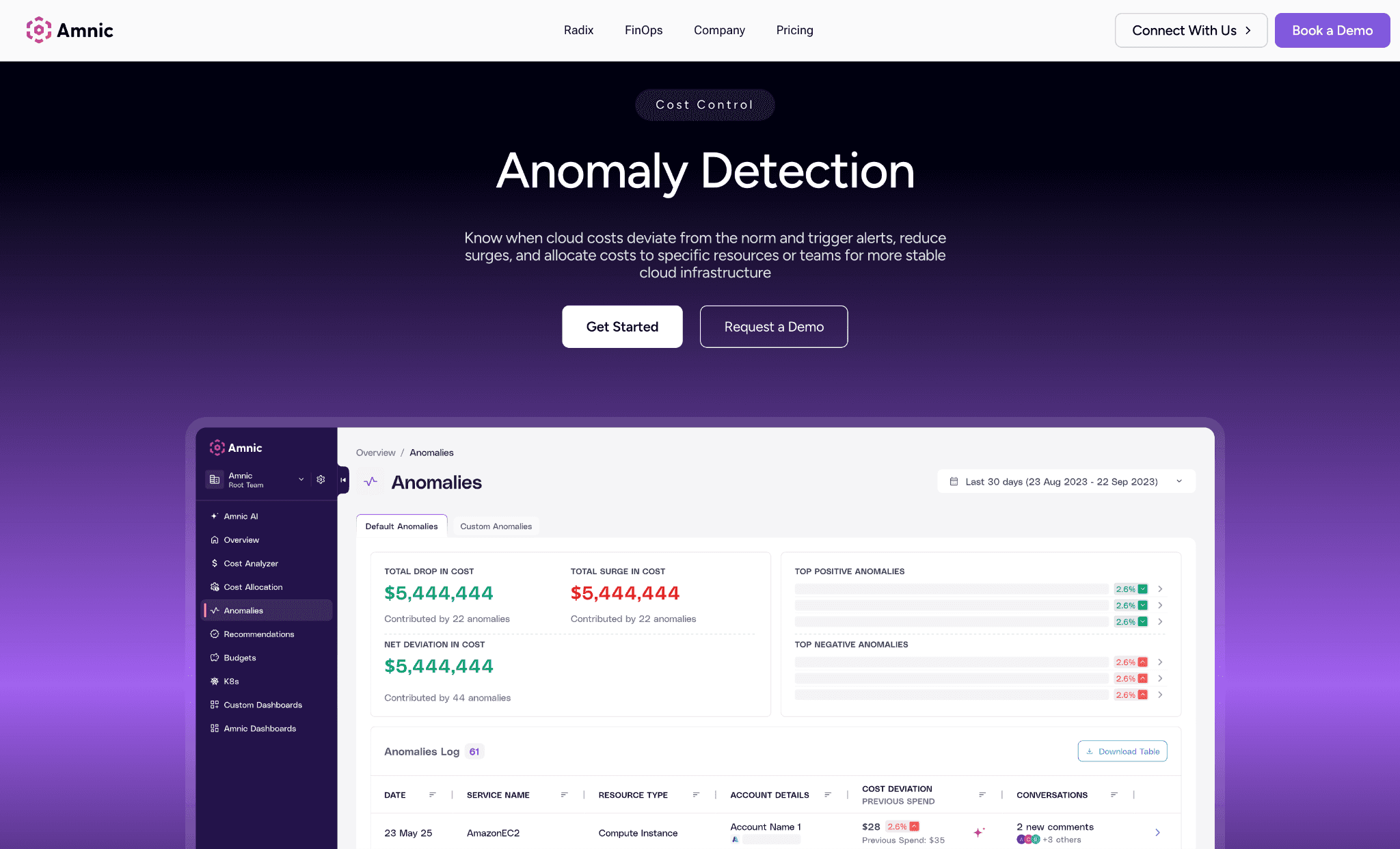
Overview: Amnic is a FinOps OS that combines a cloud cost management platform with context-aware AI agents (X-Ray, Insights, Governance, Reporting). The Governance Agent owns anomaly detection, surfacing cost spikes with full root-cause context across AWS, Azure, GCP and Kubernetes. Deployment is fully agentless with read-only access to billing and monitoring data.
Key features:
Custom anomaly thresholds at tag, product, service, or account level
Governance Agent for natural-language root cause across cost spikes
Multi-cloud and Kubernetes coverage on day one (AWS, Azure, GCP, EKS, AKS, GKE)
Persona-specific dashboards for CTO, FinOps, SRE and CFO
Slack, Microsoft Teams, email and Jira alert routing
Cost Analyzer for drill-down from anomaly to the specific resource and recent change
Virtual Tags to fix broken native tagging without infrastructure changes
5-minute onboarding; SOC 2 Type II, ISO 27001 and GDPR compliant
Pricing:
Starts at 0.25% to 1% of monthly cloud spend.
One-month free trial, no credit card required.
Pros:
Agentless deployment with read-only permissions, no infrastructure changes
AI agents reduce manual reporting and RCA from hours to minutes
Unified anomaly view across AWS, Azure, GCP and Kubernetes
Persona-specific reporting closes the engineering-to-finance gap
Transparent percent-of-spend pricing with a free trial
Listed in the AWS Marketplace AI Agents and Tools category
Cons (Amnic is our product, so here is the honest disclosure):
Newer in the category than CloudZero or Apptio Cloudability; the enterprise reference base is still growing
Single-cloud only buyers may prefer the free native tools
"Using Amnic has been nothing short of transformational. The platform is able to analyze our cloud costs at a depth that would take us several hours, if not days to understand better." - Ajeesh Achuthan, Co-Founder and CTO, Open Financial case study.
See the anomaly detection feature page for a live walkthrough.
See Amnic reviews in G2, Capterra
2. Kubecost
Best for: Kubernetes-first teams whose bill is dominated by EKS, AKS, or GKE workloads and who need anomaly detection at the namespace, deployment and pod level rather than at the account level.
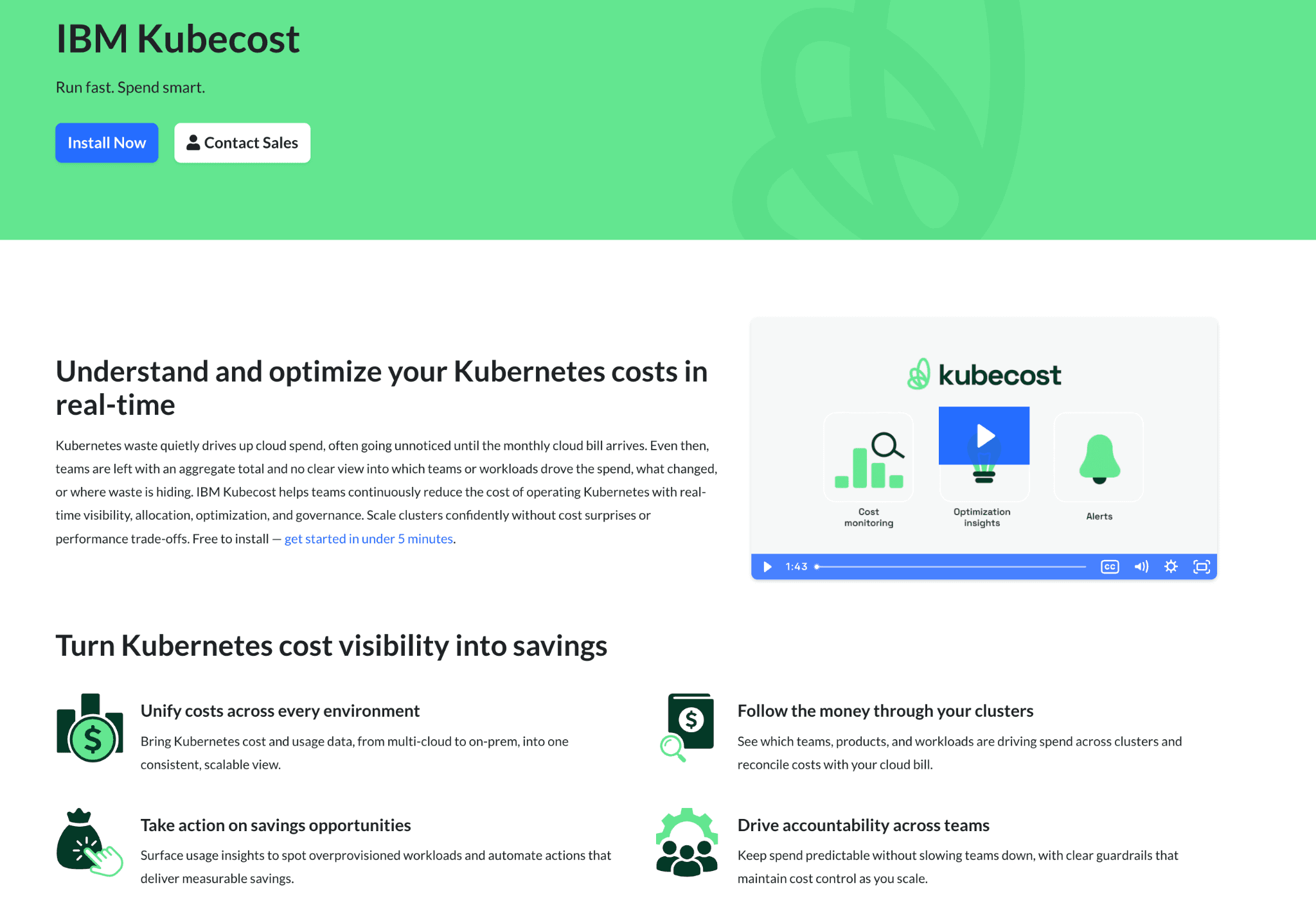
Overview: Kubecost is a Kubernetes cost monitoring platform that allocates spend to namespaces, workloads, pods and labels, then detects anomalies using Prometheus-sourced metrics. It is a commercial product built on the OpenCost specification.
Key features:
Namespace, deployment, pod and label-level anomaly tracking
Prometheus and OpenCost integration
Workload right-sizing and request/limit recommendations
Multi-cluster and multi-cloud Kubernetes coverage
Slack alerting and Grafana dashboards
Self-hosted or SaaS deployment options
Pricing:
Free OSS tier; Business at $499/month; Enterprise quote-based.
30-day free trial on Business and Enterprise plans.
Pros:
Deepest Kubernetes cost granularity in the listicle
OpenCost lineage means an open standard underneath
Self-hosted option for security-strict environments
Strong fit with existing Prometheus stacks
Cons:
Kubernetes-only; offers little value if your spend is mostly non-K8s services
Multi-cloud cost across non-K8s services needs a second tool
Anomaly logic is less ML-mature than CloudZero or Finout
Setup is heavier than SaaS-native alternatives
"Kubecost tracks spending at the namespace, deployment and pod level, real-time metrics via Prometheus." - G2 reviews.
If your stack is not Kubernetes-only, see Kubernetes cost management for a multi-cloud alternative.
3. Cloudchipr
Best for: Mid-market AWS, Azure, or GCP teams that want AI-chat-driven anomaly investigation and automated remediation playbooks without enterprise procurement.
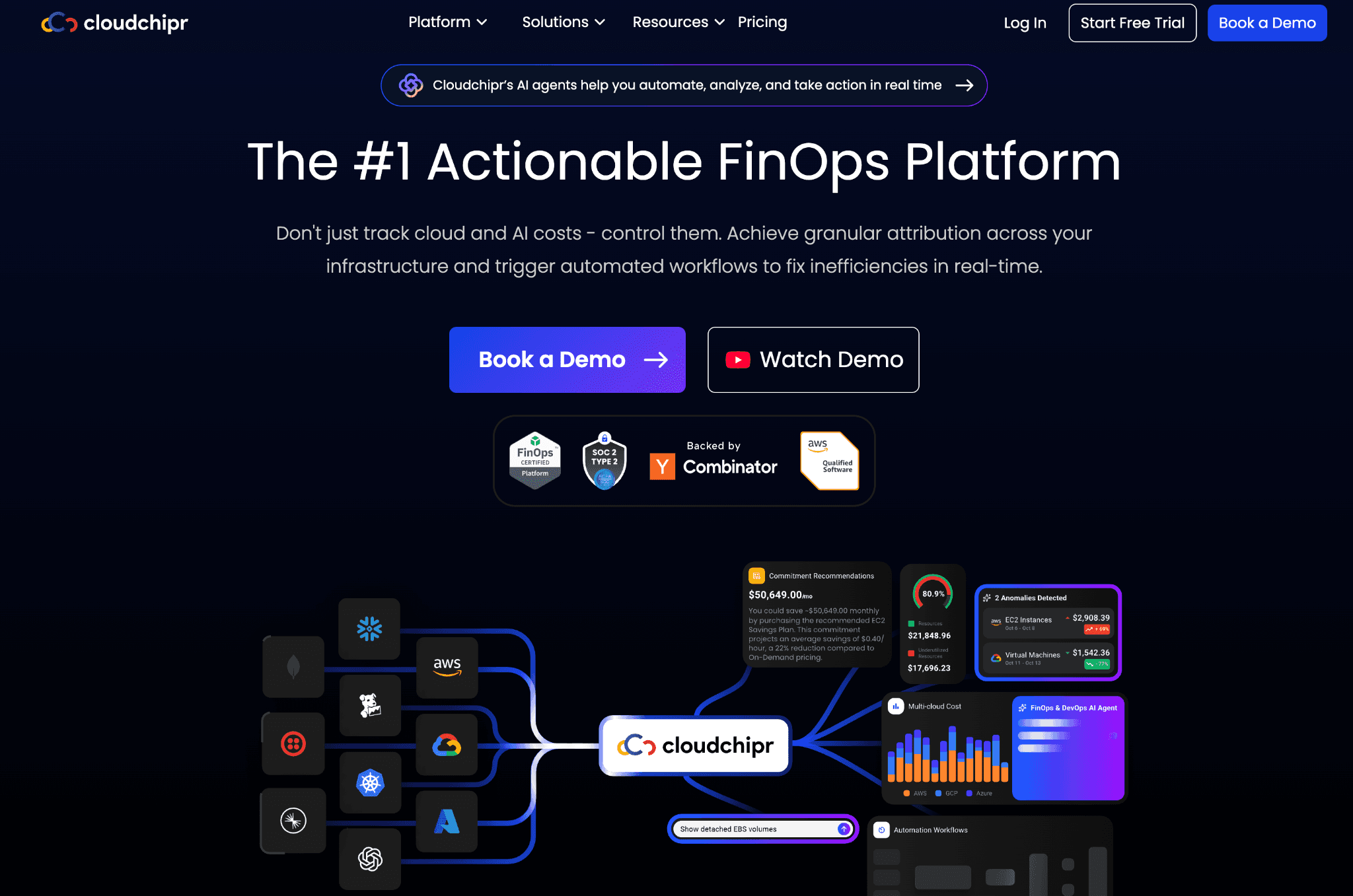
Overview: Cloudchipr is a multi-cloud cost management platform that uses machine learning to baseline spend and flag anomalies in real time. An AI chat layer answers natural-language questions about each spike and suggests the action to take.
Key features:
AI-chat investigation of anomalies and cost drivers
ML-based baselines across AWS, Azure and GCP
Automation workflows to delete or stop orphan resources
Slack, email and Microsoft Teams alerts
Tag hygiene and cost allocation
Resource-level recommendations
Pricing:
Starts at approximately $49 per month (GBP £38).
14-day free trial with no credit card required.
Pros:
Intuitive UX praised consistently across G2 reviews
Automated remediation reduces toil for small platform teams
AI chat speeds up anomaly RCA for non-engineering users
Low entry price for teams under $50K monthly cloud spend
Cons:
No mobile app
Less depth on Kubernetes than Kubecost
Smaller customer base than CloudZero or Vantage
Anomaly logic is shallower than Finout's seasonality model
"Cloudchipr is extremely easy to use, with an intuitive interface that provides extensive detail that wouldn't be found in most other tools." - G2 reviews.
4. CloudZero
Best for: Engineering-led FinOps teams that want hourly anomaly detection mapped to features, customers and products rather than just accounts and services.
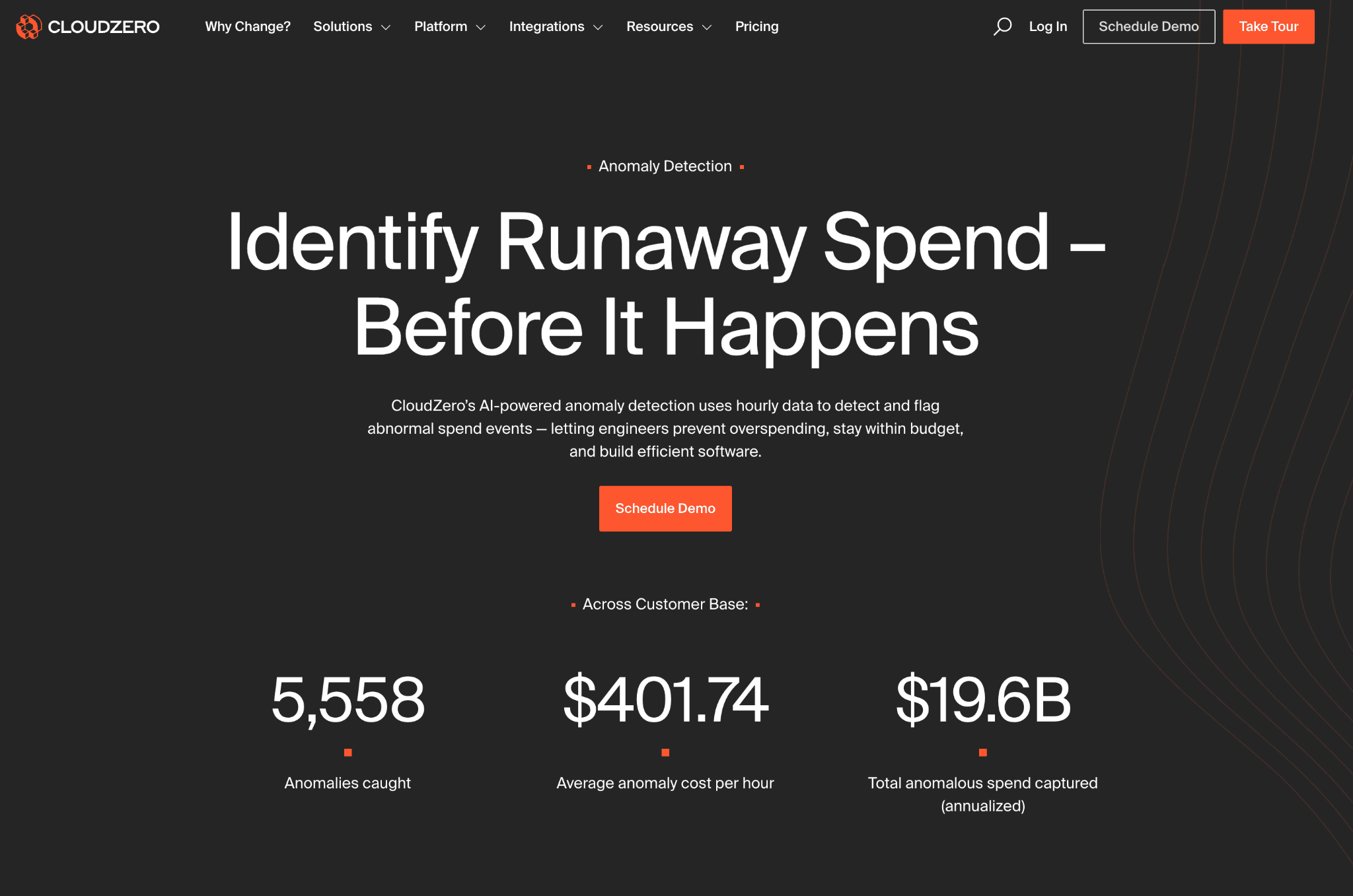
Overview: CloudZero is a cloud cost intelligence platform that uses self-training AI on hourly spend to baseline normal patterns and alert engineering owners when costs drift. Every anomaly is mapped to the business dimension that drove it.
Key features:
Hourly anomaly detection with self-training thresholds
Cost-per-customer, cost-per-feature, cost-per-product allocation
Slack, email and Microsoft Teams alert routing
AWS, GCP, Azure, Kubernetes and Snowflake coverage
Engineering-team alert subscriptions and views
Claude Code plugin for in-IDE cost intelligence
Pricing:
Custom pricing, quote-based, with no public price list.
Free Cost Assessment and product tour offered before contract.
Pros:
Strongest unit-economics use case in the category
Self-training thresholds reduce manual tuning
Mature G2 and Gartner Peer Insights review base
5,558+ anomalies caught and $19.6B in annualized anomalous spend captured across customers
Cons:
Pricing opacity raises friction for SMB and mid-market buyers
Learning curve for advanced features noted in G2 reviews
Less Kubernetes depth than Kubecost
Slower time-to-value than agentless platforms
"Holy cow, we're up 1,600% of our normal costs!" — Starchive, on catching a spike with CloudZero's anomaly detection.
5. Vantage
Best for: Multi-cloud teams that also want anomaly alerts across SaaS spend (Snowflake, Datadog, OpenAI, MongoDB) with a fast time-to-first-insight.
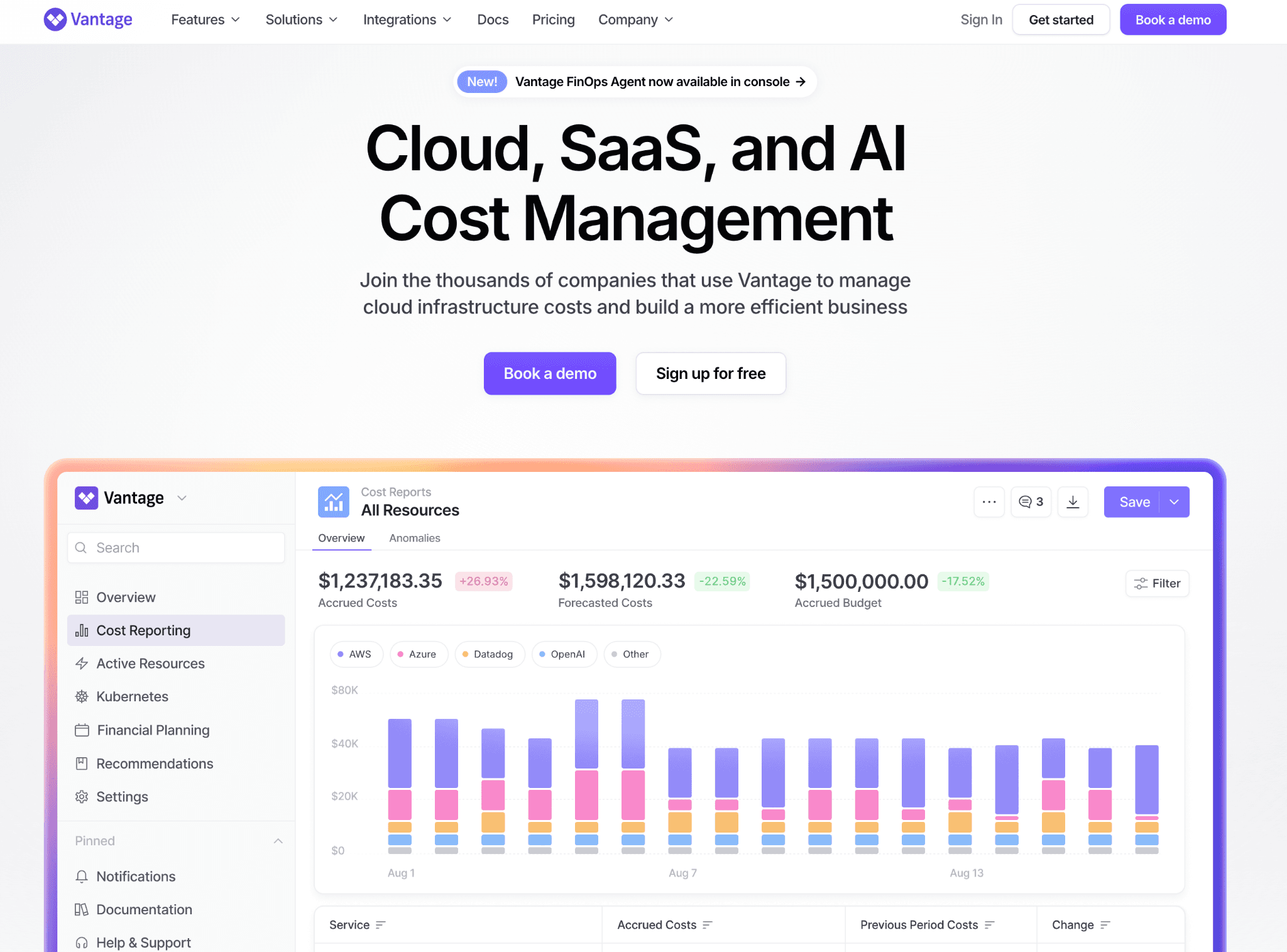
Overview: Vantage is a cloud cost visibility platform that trains an ML model on every cost category in a Cost Report and flags any deviation from expected bounds. Alerts route to Slack, email, or Microsoft Teams.
Key features:
ML anomaly detection on every cost category
20+ native integrations (AWS, Azure, GCP, Kubernetes, Snowflake, Datadog, OpenAI, MongoDB Atlas, Fastly)
Slack, Teams and email alerts
Cost reports and saved views with sharing
Public pricing and free starter tier
Pricing:
Free for small spend, with tiered pricing for larger volume.
No published enterprise cap; quotes available on request.
Pros:
Broadest SaaS-spend coverage in the listicle
Clean UX and fast setup
Transparent free tier lowers buying friction
Strong inbound ecosystem of integrations
Cons:
Anomaly RCA is shallower than CloudZero or Amnic
Limited Kubernetes-level granularity
Customizable thresholds less granular than Ternary
Anomaly model fires daily, not hourly
"Users can immediately spot cost anomalies, like misconfigured instances running 24/7 or forgotten test environments and tackle them before they become expensive problems." - G2 reviews.
For a side-by-side on broader visibility tools, see cloud cost visibility software.
6. Finout
Best for: Multi-cloud teams that need anomaly detection across cloud and SaaS together (Snowflake, Databricks, OpenAI, Anthropic) with seasonality awareness.
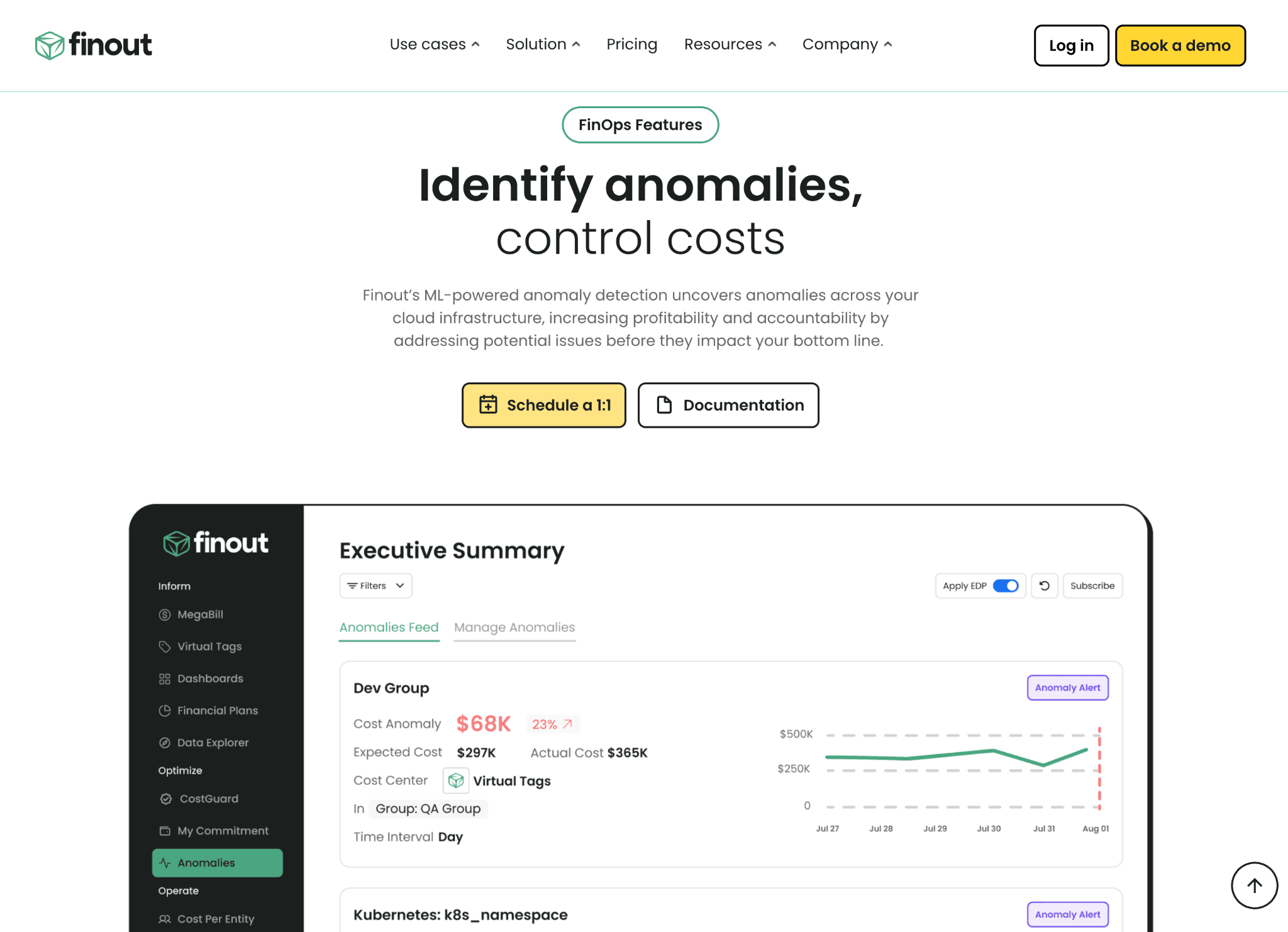
Overview: Finout is a cloud cost observability platform with seasonality-aware anomaly detection. Custom anomalies can be defined at any granularity and alerts route to Slack and email in real time.
Key features:
Seasonality-aware ML detection
Custom anomalies at any cost dimension
MegaBill across AWS, GCP, Azure, OCI, Kubernetes and SaaS
Virtual Tags for cost categorization without upstream changes
Slack, email and webhook alert delivery
CostGuard rules and FinOps dashboards
Pricing:
Approximately 1% of managed cloud spend, quote-based.
Free trial and demo available on request.
Pros:
Strongest SaaS plus cloud unification through MegaBill
Virtual Tags solve broken tag hygiene without infrastructure work
Recognized by Business Wire as the first end-to-end FinOps anomaly product
Seasonality model reduces false positives on cyclical workloads
Cons:
1%-of-spend pricing can exceed competitor flat fees at scale
Setup of Virtual Tags has a learning curve
No mobile app
Smaller K8s feature set than Kubecost
"World's first end-to-end anomaly detection for FinOps, with a centralized dashboard to monitor cost spikes across cloud providers and SaaS”.
7. Ternary
Best for: Enterprise multi-cloud teams (especially those on OCI or Alibaba alongside AWS, Azure and GCP) that need FOCUS-native data and bi-directional Jira integration.
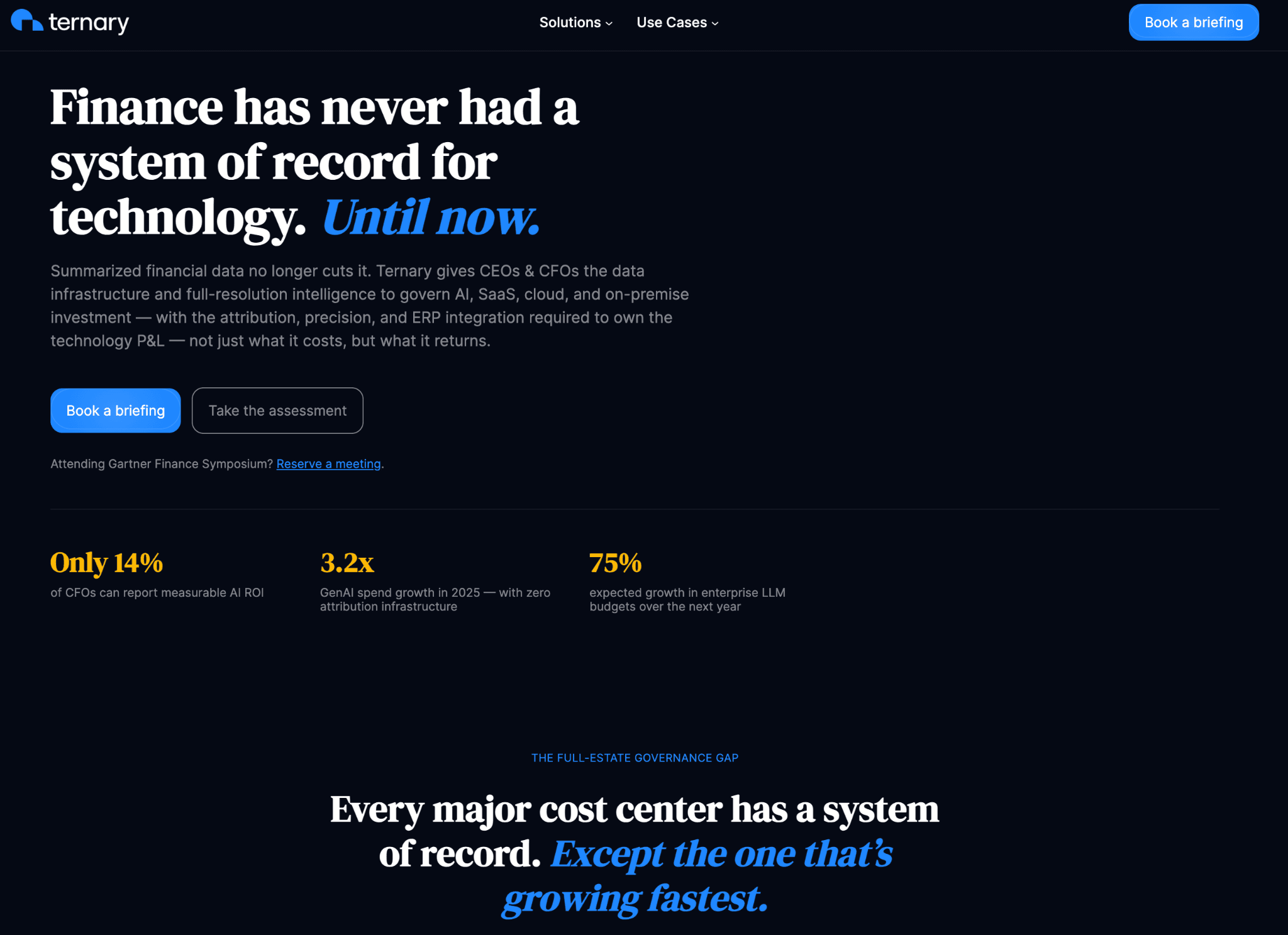
Overview: Ternary is a FinOps platform that detects anomalies using ML with human-tunable thresholds. It supports AWS, Azure, GCP, OCI, Alibaba, Kubernetes and Snowflake and was named a Leader in the 2025 ISG Provider Lens for FinOps Platforms.
Key features:
Customizable absolute or percentage anomaly thresholds
Per-service, per-SKU and per-project anomaly views
Bi-directional Jira integration for incident workflow
Archive and unarchive monitoring rules
Minimum-dollar filters to fight alert fatigue
FOCUS specification support
Pricing:
Quote-based, with no public price list.
Demo on request; free trial available for qualified enterprises.
Pros:
Deepest multi-cloud coverage including OCI and Alibaba
FOCUS-native (the FinOps Foundation standard)
Jira workflow integration is strong for incident-driven ops
Named ISG Provider Lens Leader for 2025
Cons:
Pricing opacity
Smaller user community than Vantage or CloudZero
UI is dense for non-FinOps users
Limited mid-market footprint
"Detect cloud anomalies and unexpected cost spikes across multi-cloud environments with machine learning-powered, human-tunable cloud anomaly detection”.
8. Apptio Cloudability
Best for: Large enterprises with mature FinOps practices that need anomaly detection alongside chargeback, showback and budget governance at business-unit and Cloud Center of Excellence scale.
Show Image
Overview: Apptio Cloudability (an IBM company) is an enterprise cloud financial management platform with cost anomaly detection, budget forecasting and rate optimization across AWS, Azure and GCP.
Key features:
ML-based anomaly detection
Chargeback and showback workflows
Reserved Instance and Savings Plan recommendations
Multi-account hierarchy and budget governance
Detailed dashboards for finance and engineering
SSO, RBAC and enterprise security controls
Pricing:
Quote-based, enterprise contracts only.
No free trial; demo on request.
Pros:
Most mature enterprise FinOps platform in this listicle
Strong chargeback and showback for Fortune 500 finance
Backed by IBM post-acquisition
Long-standing analyst recognition
Cons:
Heavy implementation; slow time-to-first-insight
UI legacy compared to newer entrants
Pricing inaccessible for SMB and most mid-market
Anomaly UX is less engineering-friendly than CloudZero
"Multi-cloud financial management platform that helps enterprises gain insights into cloud spending with cost anomaly detection." - Gartner Peer Insights.
9. Datadog Cloud Cost Management
Best for: Teams already running Datadog observability who want anomaly detection tied to performance metrics, logs and traces.
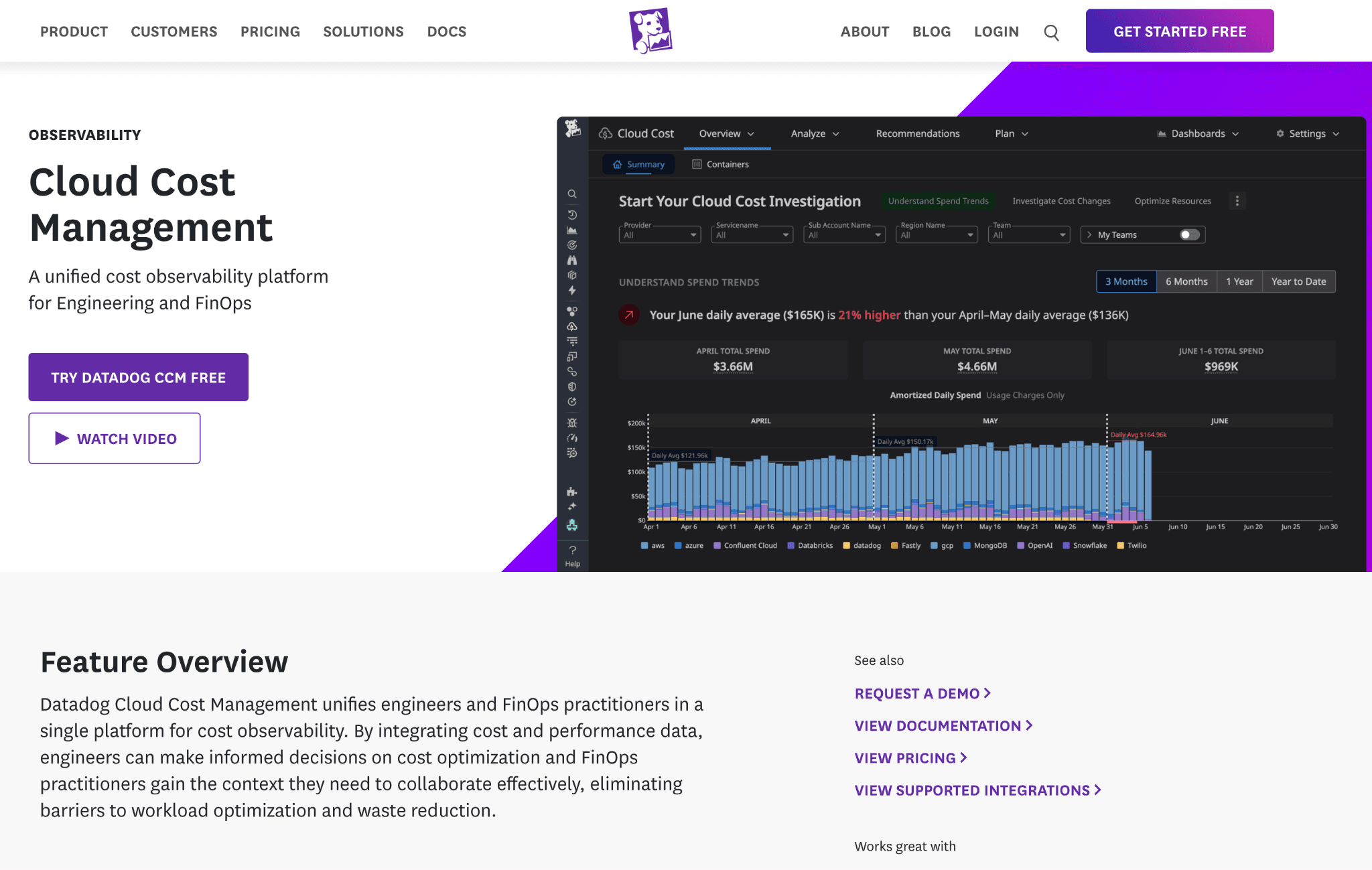
Overview: Datadog Cloud Cost Management is an extension of the Datadog platform that unifies cost and performance data. Anomaly detection runs on cost metrics and correlates with infrastructure and APM data already in Datadog.
Key features:
Cost anomaly detection inside the Datadog UI
Correlation with APM, logs and infrastructure metrics
Cost allocation by tag, service and team
AWS, Azure and GCP support
Same alerting backbone as Datadog monitors
Pricing:
Usage-based, with published per-host and per-resource rates.
14-day free trial on the Datadog platform.
Pros:
Zero new vendor if you already use Datadog
Direct correlation between cost and performance signals
Reliable alert delivery via existing Datadog channels
One pane of glass for ops and cost
Cons:
Cost-only buyers pay for the full Datadog footprint
Weaker FinOps-specific workflows (chargeback, allocation) than dedicated platforms
No persona-specific FinOps dashboards out of the box
Limited multi-cloud SaaS coverage compared to Vantage or Finout
"Datadog ties infrastructure metrics to spending data so engineers can make informed decisions on cost optimization." - G2 reviews.
10. Harness Cloud Cost Management
Best for: DevOps-led teams that want anomaly detection embedded in CI/CD with autonomous remediation across pipelines.
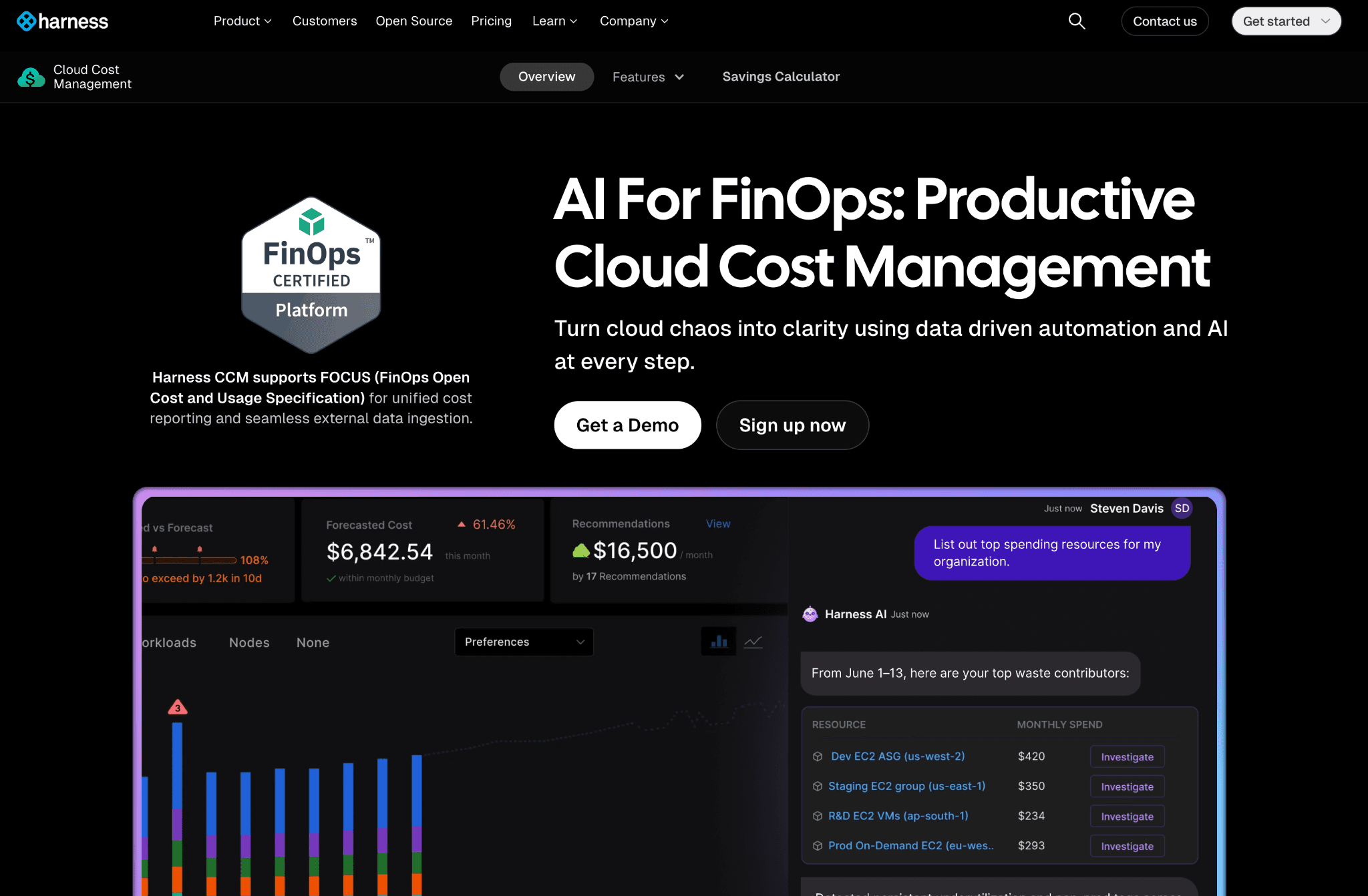
Overview: Harness Cloud Cost Management is part of the Harness platform that delivers AI-powered anomaly detection, forecasting and autonomous resource management across AWS, Azure, GCP and Kubernetes.
Key features:
AI-powered anomaly detection and forecasting
Auto-stopping idle resources
Cluster orchestration and right-sizing
CI/CD-native cost gates
Slack and email alerting
Governance policies and approval workflows
Pricing:
Tiered pricing; quote-based for enterprise.
Free Community tier and trial available.
Pros:
Cost decisions live where deployments happen (CI/CD)
Autonomous remediation reduces engineering toil
Single vendor for delivery plus cost
Strong DevOps persona fit
Cons:
Best value only if Harness is your existing CI/CD vendor
Anomaly workflows less mature than CloudZero or Amnic
Pricing opaque at the enterprise tier
Limited SaaS-spend coverage
"AI-powered insights to forecast spending, detect anomalies and automate cloud resource management." - G2 reviews.
What to look for in a cloud cost anomaly detection tool
Use this checklist when comparing tools. Skip any vendor that fails more than two boxes.
Detection latency: Hourly or sub-hourly beats daily. Daily windows let spikes compound for 24 hours before anyone sees them.
Multi-cloud and SaaS coverage: If your bill includes Snowflake, Databricks, or OpenAI, native AWS, Azure, or GCP tools will not catch SaaS spikes. Pick a platform that covers both.
Kubernetes granularity: Anomaly detection at the cluster level is too coarse. Look for namespace, pod and label-level support.
Root-cause depth: A dollar-amount alert is useless without the resource, owner and recent change that caused it.
Alert routing: Slack, Microsoft Teams, email, PagerDuty and Jira out of the box. Bonus points for routing by tag owner.
False-positive controls: Seasonality, holiday awareness, minimum-dollar thresholds and a feedback loop on every alert.
Pricing model: Percent-of-spend, flat fee, or usage-based. Model your spend at 12 and 24 months; some pricing structures punish growth.
Deployment time: Agentless and read-only beats agents with write access on both security review and time-to-value.
Security posture: SOC 2 Type II and ISO 27001 are table stakes. Add GDPR if you operate in the EU.
Vendor stability: Native AWS, Azure and GCP anomaly detection are free but single-cloud and shallow on RCA. For multi-cloud or SaaS, a third-party platform is required.
For broader context on the category, see our guide to cloud cost management tools and cloud cost optimization tools.
When to switch from your current tool
Replace your current anomaly detection setup if two or more of these apply.
Your AWS, Azure, or GCP native anomaly detection misses spikes outside that one cloud, or never alerts on SaaS spend.
Alerts arrive daily, not hourly and your team is firefighting yesterday's spike instead of catching today's.
Engineers ignore alerts because they fire on noise, not real anomalies. (More than 30% false positives is the typical breaking point.)
You cannot answer "who owns this spike" within two clicks.
Your CFO and your platform engineering lead look at different dashboards and disagree on the same number.
Kubernetes spend is a black box because your tool reports at cluster level only.
Procurement says no to another year of opaque, quote-only pricing.
If two or more are true, book demos with Amnic, CloudZero and one Kubernetes-specific tool before your next quarterly close.
Why decision-makers choose Amnic
Cloud cost anomaly detection is not just an alerting feature. It is the front door to FinOps. Amnic puts that front door inside an AI-agent layer so anomaly detection, root-cause analysis and persona-specific reporting all run on one platform.
The Governance Agent flags anomalies, runs RCA in natural language and routes the alert to the right CTO, FinOps, SRE, or CFO view. Deployment is agentless, read-only and SOC 2 Type II, ISO 27001 and GDPR compliant. Pricing is transparent at 0.25% to 1% of cloud spend, with a one-month free Startup trial and no credit card.
Customers like Open Financial cut overall cloud costs by 30%. Nanonets cut compute by 40%, S3 storage by 50% and intra-region network costs by 60%. LambdaTest cut NAT and CloudWatch costs by 30% each. Every one of those started with anomaly visibility.
If you are comparing this list, the fastest test is a 5-minute Amnic deploy on your live billing data. Request a demo.
Frequently Asked Questions
What should you look for in a cloud cost anomaly detection tool?
Detection latency (hourly or better), multi-cloud plus SaaS coverage, Kubernetes granularity, root-cause depth, alert routing into Slack/Teams/Jira, false-positive controls, transparent pricing, agentless deployment and SOC 2 plus ISO 27001 security posture. Skip any tool that fails more than two of these.
Are AWS, Azure and GCP native anomaly tools enough for production teams?
For single-cloud, single-account workloads, sometimes. For multi-cloud, multi-account, or SaaS-heavy environments, no. Native tools miss spend outside their own cloud, do not correlate across providers and rarely surface root cause with the depth FinOps and engineering teams need to act in hours rather than days.
How much do cloud cost anomaly detection tools cost?
Pricing falls into three models. Percent-of-spend (Amnic 0.25 to 1%, Finout around 1%) scales with your bill. Flat or tiered fees (Cloudchipr from $49 per month, Kubecost $499 per month Business) suit predictable footprints. Quote-only (CloudZero, Apptio Cloudability, Ternary, Harness) suits enterprise but slows procurement.
How do you reduce false positives without missing real spikes?
Set minimum-dollar thresholds so noise below a chosen amount never alerts. Tune seasonality and holiday awareness for predictable cycles. Give every alert a feedback loop so the model learns from true and false labels. Route alerts to the tag owner, not a shared channel. Target a false-positive rate under 10%.
Cut your cloud bill this quarter
Start the free 30-day trial. 5-minute agentless deploy, no credit card. For broader FinOps context, see our guide to FinOps tools and our FinOps platform overview.
Better visibility and management into AI Tokens?
Start with a 30 day trial
Connect leading LLMs
24 hour time to value
Stay ahead of AI Spend

Make AI spend visible, controllable, and accountable.
Gain insights into your AI token costs at a team, customer, business unit and individual user level to measure and manage AI utilization.
Recommended Articles

8 Best Llama Cost Management Tools in 2026
Read More
8 Best Amazon Bedrock Cost Optimization Tools for 2026
Read More

7 Best Amazon Bedrock Cost Monitoring Tools
Read More

8 Best Gemini Cost Visibility Tools for 2026
Read More

7 Best Multimodal Cost Optimization Tools for 2026
Read More

5 Best Anthropic Cost Allocation Tools for 2026
Read More