Multi-Cloud Inventory Management: How to Track Assets Across AWS, Azure, and GCP
8 min read
General
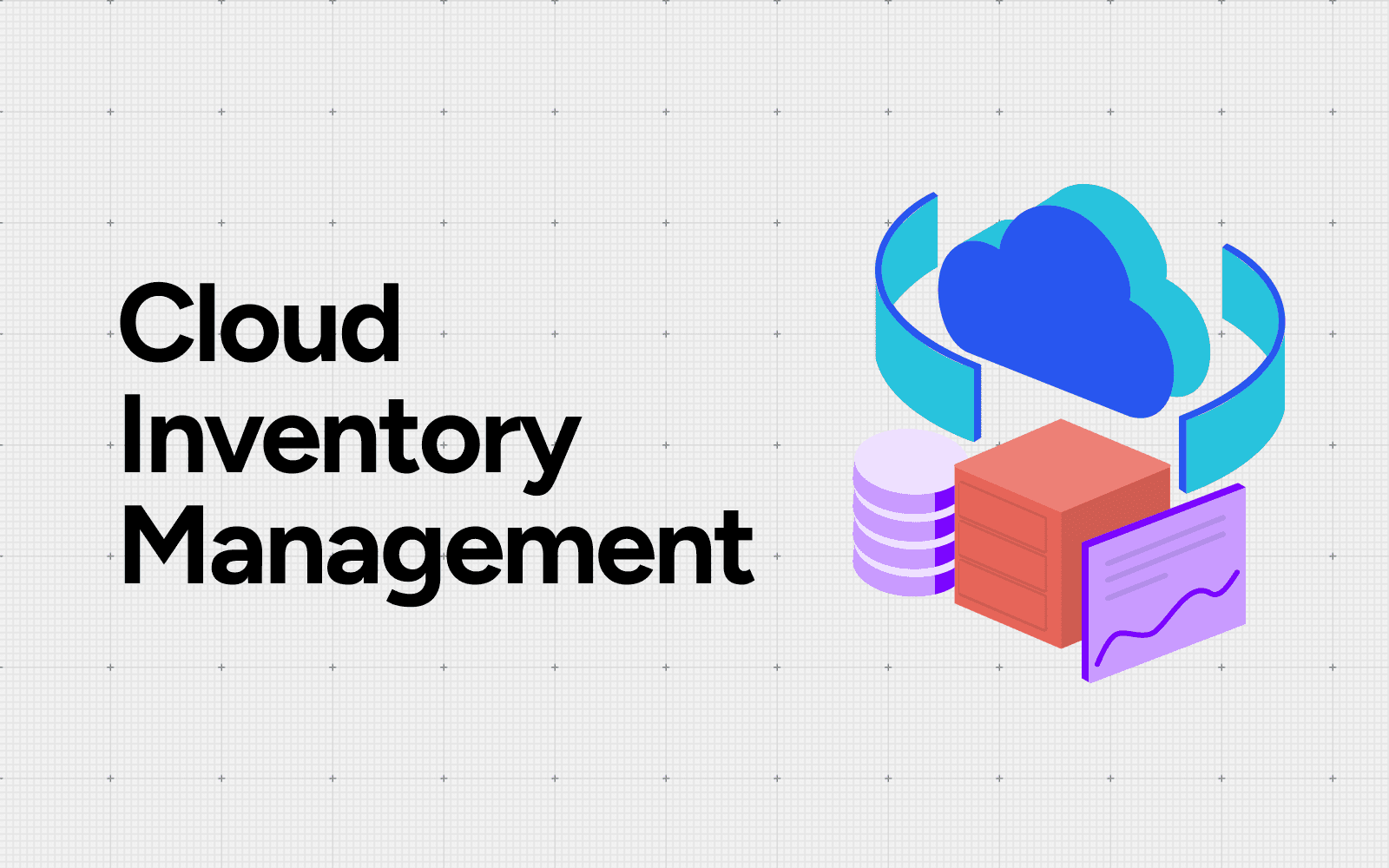
Table of Contents
Most companies don't sit down one day and decide, "We're going to go multi-cloud." It usually happens more organically, and honestly, a little messily.
Maybe the data team fell in love with BigQuery. The dev team was already deep into AWS. Then someone bought a Microsoft-heavy company, and Azure came along for the ride. Before you know it, you're running workloads across three different clouds, with three different dashboards, three different billing models, and absolutely no single source of truth for what you actually have running.
That's the reality for most engineering teams today. And the first thing to go? Visibility.
When you can't see your assets clearly, you can't manage them. Costs pile up. Security gaps open. Teams duplicate work. It's a mess, and it's fixable.
This blog covers what multi-cloud inventory management actually is, why it matters, and how to get started doing it well in 2026.
What is Multi Cloud Inventory Management?
At its core, multi-cloud inventory management is the practice of tracking every cloud resource you have, across every cloud provider, in one unified view.
An asset here means a lot of things: compute instances, storage buckets, databases, networking components, Kubernetes clusters, IAM roles, snapshots, load balancers, basically anything you're spinning up and paying for.
Why is it harder than a single-cloud inventory?
Managing resources on a single cloud is already a challenge. Go multi-cloud, and the complexity multiplies fast. Each provider has its own naming conventions, its own tagging structure, its own native tools, and its own way of reporting usage. There's no common language between them.
AWS calls something a "Security Group." Azure calls a similar concept a "Network Security Group." GCP has its own version. Trying to build a consistent inventory across all three without a proper strategy is like trying to consolidate three different expense reports written in three different currencies with no exchange rate.
What native tools can and can't do
AWS, Azure, and GCP each have their own built-in asset visibility tools: AWS Config, Azure Resource Graph, and GCP Cloud Asset Inventory. They're useful within their own cloud, but they're not designed to talk to each other. If you want a cross-cloud view, you're on your own with native tools.
The Real Problems That Come Without It
Let's be honest, "poor visibility" sounds like a vague problem. Here's what it actually looks like in practice.
Orphaned and idle resources nobody knows about
A developer spins up a test environment for a sprint. The sprint ends. They move on. The environment doesn't.
According to a 2025 FinOps in Focus report, enterprises take an average of 31 days to identify and eliminate idle or orphaned cloud resources. That's 31 days of paying for something nobody's using.
Across a large organization, this adds up fast. Orphaned storage artifacts alone can account for 3-6% of monthly cloud spend. Idle compute instances add another 10-15%. And most teams have no visibility into where this is happening, let alone across three clouds simultaneously.
Tagging chaos that makes cost attribution impossible
Tagging is supposed to be how you know which team, product, or environment a resource belongs to. In practice, every team has done it differently. AWS might have a tag called "team," Azure calls it "owner," and GCP uses "department" for the same concept.
The result: "Only 30% of organizations know exactly where their cloud budget is going, according to CloudZero's State of Cloud Cost report. That means 70% of companies are guessing."
Security blind spots
You can't secure what you can't see. Untracked resources are unmonitored resources. An EC2 instance spun up for a proof-of-concept six months ago that nobody remembered to shut down is also a resource that's probably not patched, not monitored, and not inside your security perimeter.
In a multi-cloud environment, these gaps multiply. A misconfigured S3 bucket on AWS is bad enough. Not knowing you have one is worse.
Teams duplicating work
Without a shared inventory, teams can't see what already exists. So they rebuild it. Two teams end up running similar infrastructure independently, on different clouds, paying twice for the same capability. It happens more than you'd think.
78% of organizations estimate that between 21% and 50% of their cloud spend is wasted annually. (Stacklet, State of Cloud Usage Optimization 2024)
4. What Good Multi-Cloud Inventory Management Looks Like
Here's the thing: getting this right isn't about having the fanciest tooling. It's about building a clear, consistent picture of what you have and keeping it updated.
A single unified view across all clouds
This sounds obvious, but it's the hardest part to achieve in practice. A good inventory system normalizes data from AWS, Azure, and GCP into a common structure so you can see everything in one place, by team, by environment, by cost center, by region, without logging into three separate consoles.
Consistent tagging and metadata standards
Before anything else works, you need every resource to have the same minimum set of tags, regardless of which cloud it's on. Think of it as your universal language across clouds. Common tag categories to standardize include: environment (prod/dev/staging), team or owner, cost center or project, application name, and creation date.
Without this, even the best inventory tool can't help you make sense of what you're looking at.
Real-time vs. periodic sync
Not everything needs to be tracked in real-time. For cost attribution and reporting, a daily or weekly sync might be enough. For security and compliance purposes, you want it closer to real-time. Understanding the difference helps you pick the right approach without overcomplicating the implementation.
Connecting inventory to cost, security, and compliance
Inventory data on its own is just a list. The real value comes when you connect it to cost data (so you know what each resource costs), security posture (so you know if it's configured correctly), and compliance requirements (so you know if it meets policy). This is where inventory management becomes genuinely strategic.
How to Get Started
The good news: you don't need to solve everything at once. Here's a step-by-step list to follow:
Step 1: Audit what you have
Before you can manage your inventory, you need to know what's in it. Pull a full list of resources from each cloud, AWS Config, Azure Resource Graph, and GCP Cloud Asset Inventory are your starting points. Expect to find things that surprise you.
One company discovered they were still paying for 30 virtual machines deployed during a Kubernetes training session six months prior. Nobody had thought to clean them up.
Step 2: Establish a tagging strategy first
This is the step most teams want to skip and the step that causes the most pain later. Define your mandatory tags before you touch any tooling. Get buy-in from engineering, finance, and security on what those tags are and what they mean. Document it. Enforce it.
Even a simple standard, five mandatory tags applied consistently, is worth more than a sophisticated tool sitting on top of inconsistent data.
Step 3: Decide on tooling
You have three broad options: native cloud tools (AWS Config, Azure Resource Graph, GCP Asset Inventory), open-source solutions, or a dedicated third-party platform. Native tools are free, but don't cross cloud boundaries. Open-source tools require engineering time to maintain. Third-party platforms cost money but save significant operational overhead, especially at scale.
The right choice depends on your team's size, technical capacity, and how complex your multi-cloud environment already is.
Step 4: Assign ownership
Inventory management without ownership is just a spreadsheet that gets outdated. Someone needs to own this, typically sitting across FinOps, platform engineering, or both. Define who is responsible for keeping the inventory current, who reviews it, and what the process is when something doesn't have a known owner.
Native Tools vs. Dedicated Platforms
Let's break down what you're actually working with.
What the native tools can do
AWS Config tracks configuration changes and lets you audit resource states over time.
Azure Resource Graph lets you query your Azure resources using Kusto Query Language (KQL) and run complex filters across subscriptions.
GCP Cloud Asset Inventory gives you a snapshot and history of your GCP assets, with export options to BigQuery.
Each of these is genuinely useful, within its own cloud. They're well-integrated, free to use, and maintained by the cloud providers themselves.
Where they break down
The moment you need to answer a question like "show me all untagged compute instances across all three clouds" or "which resources have no owner tag and cost more than $500/month", native tools can't help you. There's no cross-cloud query layer, no unified tagging schema, and no combined cost view.
You end up exporting data from three different tools, stitching it together in a spreadsheet or a custom data pipeline, and maintaining that pipeline forever. It works, but it's fragile and expensive to maintain.
What to look for in a third-party solution
When evaluating platforms for multi-cloud inventory management, the key things to look for are:
Cross-cloud normalization: Does it map resources from all three providers into a common schema?
Cost integration: Can it connect resource data with actual spend?
Tagging enforcement: Can it identify and alert on resources that don't meet your tagging policy?
Real-time or near-real-time sync: How fresh is the data?
Access controls: Can different teams see only their own resources?
The global multi-cloud management market was valued at $16 billion in 2025 and is projected to reach $147 billion by 2034, a sign of just how fast this space is growing. (Precedence Research)
Summing up
Multi-cloud inventory management isn't glamorous. Nobody's going to write a blog post about how excited they are to tag their cloud resources. But it's foundational.
Every cloud cost optimization initiative, every security audit, every compliance review, all of it depends on knowing what you have. Without that foundation, you're optimizing in the dark.
The companies that get this right early, that build a consistent tagging strategy, maintain a unified view of their assets, and connect inventory data to cost and security, end up with a significant structural advantage over those that don't.
You can't optimize what you can't see. Start with visibility.
Want to see how Amnic helps teams get visibility across their cloud environments?
[Request a demo and speak to our team]
[Sign up for a no-cost 30-day trial]
[Check out our free resources on FinOps]
[Try Amnic AI Agents today]
Frequently Asked Questions
Q1. What is multi-cloud inventory management?
Multi-cloud inventory management is the process of tracking and managing all your cloud assets, compute, storage, databases, networking, and more, across multiple cloud providers like AWS, Azure, and GCP in a single unified view. It gives engineering and FinOps teams the visibility they need to control costs, reduce waste, and maintain security across environments.
Q2. Why is tracking cloud assets across AWS, Azure, and GCP so difficult?
Each cloud provider has its own naming conventions, tagging structure, and native visibility tools. AWS Config, Azure Resource Graph, and GCP Cloud Asset Inventory don't talk to each other, making it nearly impossible to get a consolidated view of your multi-cloud infrastructure without a dedicated strategy or third-party platform.
Q3. What are the biggest risks of poor cloud asset visibility?
Without proper multi-cloud inventory management, teams commonly deal with orphaned and idle resources driving up cloud costs, inconsistent tagging making cost attribution impossible, security blind spots from untracked infrastructure, and duplicate resources being built by teams who can't see what already exists.
Q4. How do I get started with multi-cloud inventory management?
Start with a full audit of your existing cloud resources across all providers. Then establish a consistent tagging strategy before touching any tooling, this is the most overlooked but most critical step. From there, evaluate whether native tools are enough for your scale or whether a third-party cloud asset management platform makes more sense.
Q5. What should I look for in a multi-cloud asset management tool?
Look for a platform that normalizes resource data across AWS, Azure, and GCP into a common schema, integrates with your cloud billing data for cost attribution, enforces tagging policies, and gives different teams scoped access to their own resources. The goal is a single pane of glass across your entire multi-cloud environment.
Recommended Articles
8 FinOps Tools for Cloud Cost Budgeting and Forecasting in 2026
5 FinOps Tools for Cost Allocation and Unit Economics [2026 Updated]
Read Our Breaking Bill Edition
Better visibility and management into AI Tokens?
Start with a 30 day trial
Connect leading LLMs
24 hour time to value
Stay ahead of AI Spend

Make AI spend visible, controllable, and accountable.
Gain insights into your AI token costs at a team, customer, business unit and individual user level to measure and manage AI utilization.
Recommended Articles
What Is a Network Gateway? Types, Functions and Real-World Use Cases
Read More
What Is Platform as a Service (PaaS) in Cloud Computing?
Read More
The Bill Nobody Could Explain: Inside Amazon Athena’s Hidden Cost Spikes
Read More
What Is Vendor Lock-In and How Can You Avoid It?
Read More
Why FinOps and GreenOps Are Better Together in 2026
Read More
Context Graphs: The $1 Trillion AI Backbone Enterprises Can't Ignore in 2026
Read More