Forecasting
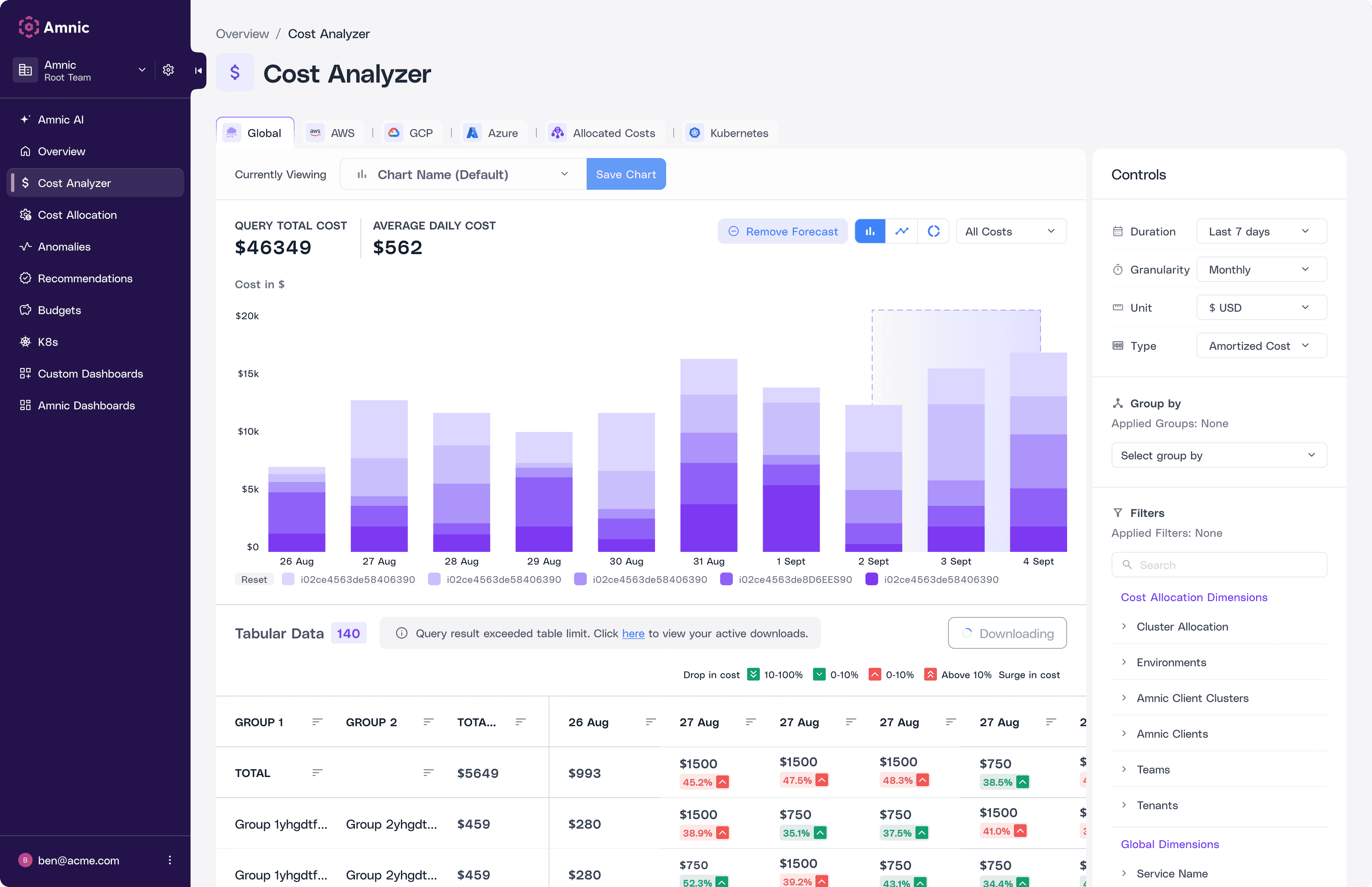
Gain a predictive view into anticipated cloud costs based on historical data and trends














Benchmark maturity,close governance gaps,
and drive ROI in under 20 minutes








Frequently Asked Questions
1. How does Amnic's cloud cost forecasting work?
Amnic generates cloud cost forecasts with a single click. Just pick your date range, monthly, quarterly, or further out, and Amnic projects your spend based on historical usage patterns and trends. No spreadsheets, no manual modeling, no data wrangling. Just fast, reliable forecasts you can actually plan against.
2. How accurate are Amnic's cloud cost forecasts?
Amnic uses the ARIMA model, a proven statistical forecasting method, to deliver accurate, data-backed predictions. It learns from your historical cloud spend patterns to project future costs with high confidence, so finance teams get forecasts they can trust for budgeting, planning, and reporting.
3. Can I forecast costs for specific cloud providers or for all spend combined?
Both. View forecasts across your entire cloud footprint for a top-down picture, or break them down by individual providers like AWS, Azure, or GCP for deeper analysis. That flexibility lets you compare platforms, optimize provider mix, and allocate resources where they deliver the most value.
4. How is forecasting integrated with Cost Analyzer?
Forecasts live right inside Cost Analyzer, so you never have to switch tools. See projected spend alongside your current cost breakdowns, drill into specific dimensions, and spot where future costs are trending high. It turns forecasting from a quarterly exercise into a daily decision-making tool.
5. Who benefits most from Amnic's forecasting feature?
Finance teams get reliable projections for budgeting and board reporting, FinOps teams can spot trends before they become overruns, engineering leaders plan infrastructure investments with cost clarity, and CFOs align cloud spend with revenue forecasts. One forecasting engine, every stakeholder covered.