What Is IAM (Identity and Access Management) in Cloud Computing?
10 min read
Cloud 101
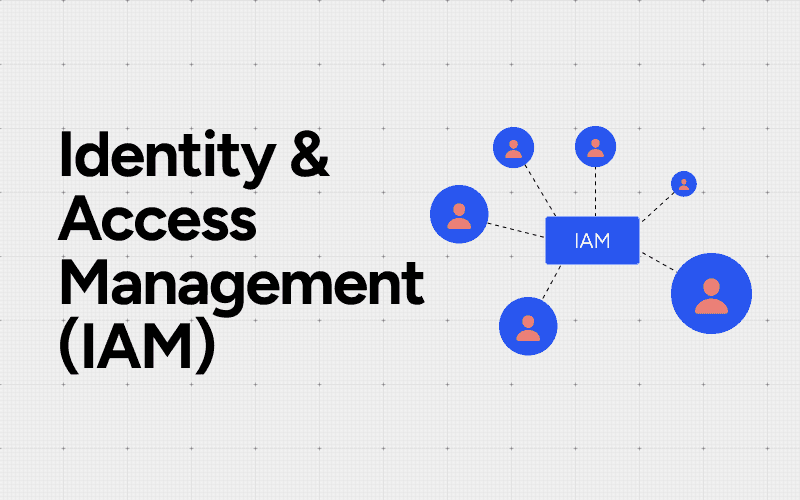
Table of Contents
Identity and Access Management (IAM) is a crucial part of cloud computing security. It is a comprehensive cybersecurity approach that controls who can access what within your digital infrastructure. IAM manages digital identities and regulates user access permissions to IT systems and cloud resources, ensuring that the right individuals have the right access to the right resources at the right time.
How IAM Works
Think of IAM as an advanced digital gatekeeper for your cloud environment. It verifies identities, grants appropriate permissions, and continuously monitors access patterns to safeguard sensitive data and critical systems. Here's how it works:
Identity Verification: When a user tries to access a cloud resource, IAM systems spring into action, authenticating their identity.
Authorization Check: After verifying the user's identity, IAM checks their authorization level.
Activity Logging: Finally, IAM logs the activity for future audits.
Why IAM Matters
In today's time, where organizations prioritize cloud solutions, managing digital identities and access permissions is more important than ever. Here's why:
Multiple Cloud Platforms: Organizations operate across various cloud platforms.
Remote Workforces: Supporting remote employees is now a common practice.
Numerous User Accounts: Managing thousands of user accounts, both human employees and automated systems, is a challenge.
Without effective IAM practices, this complexity can lead to vulnerabilities that cybercriminals are eager to exploit.
Key Functions of IAM
IAM serves several critical purposes in enhancing security:
Preventing Unauthorized Access: By controlling who can access sensitive data and applications.
Reducing Attack Surface: Limiting permissions to only what's necessary decreases potential entry points for attackers.
Maintaining Visibility: Keeping track of who accessed which resources and when helps in identifying suspicious activities.
Ensuring Compliance: Meeting regulatory requirements and industry standards is essential for avoiding penalties.
The Role of IAM in Cybersecurity
IAM strengthens cybersecurity measures in cloud environments by implementing multiple layers of defense. Instead of relying solely on passwords, modern IAM systems use advanced authentication methods, enforce specific access controls, and continuously analyze user behavior for any irregularities.
This proactive approach shifts security from being reactive (only responding after an incident occurs) to intelligent (adapting based on emerging threats while allowing legitimate users seamless access).
Benefits Beyond Security: Cost Optimization
Effective IAM can also contribute significantly to cloud cost optimization strategies. Here's how:
Preventing Unnecessary Usage: By managing user access effectively, organizations can prevent unnecessary usage of cloud resources, which often leads to inflated costs.
Simplified Understanding of Cloud Costs: With proper IAM practices in place, businesses can gain a simplified understanding of their cloud costs, making it easier to navigate the intricacies associated with cloud spending.
Optimizing Specific Platforms: This knowledge not only empowers organizations to make informed financial decisions but also aids in optimizing specific platforms like Google Cloud, further enhancing their overall cloud strategy.
The outcome is that organizations can confidently embrace the flexibility offered by cloud computing without compromising security or incurring unnecessary expenses.
Key Components of Identity and Access Management
Identity and access management operates through four interconnected pillars that work together to create a comprehensive security framework for cloud environments.
Identity lifecycle management
Identity lifecycle management serves as the foundation of any IAM system, governing how digital identities move through their entire existence within an organization. This process begins with creation, where new user accounts are provisioned with appropriate credentials and initial access rights.
During the maintenance phase, administrators update user profiles, modify permissions based on role changes, and ensure identity information remains current and accurate. The lifecycle concludes with deletion, where accounts are deprovisioned when employees leave or when service accounts are no longer needed, preventing orphaned credentials from becoming security vulnerabilities.
Authentication methods
Modern identity access management systems employ multiple authentication methods to verify user identities with varying levels of security:
Passwords remain the most common method, though increasingly supplemented by stronger alternatives
Biometric authentication leverages fingerprints, facial recognition, or retinal scans for unique physical verification
Multi-factor authentication (MFA) combines two or more verification methods, dramatically reducing unauthorized access risks
Single sign-on (SSO) enables users to authenticate once and access multiple applications seamlessly
Adaptive authentication analyzes contextual factors like location, device, and behavior patterns to adjust security requirements dynamically
These layered approaches create robust defenses against credential theft and unauthorized access attempts.
Authorization concepts
Once identity is verified, authorization concepts determine what resources users can access. Role-based access control (RBAC) assigns permissions based on job functions, grouping users with similar responsibilities under predefined roles. This approach simplifies access management across large organizations while maintaining security standards.
The principle of least privilege ensures users receive only the minimum access necessary to perform their duties. This containment strategy limits potential damage from compromised accounts or insider threats by restricting lateral movement within systems.
Auditing processes
Auditing processes provide the visibility needed to maintain security and demonstrate compliance. These systems continuously monitor and log user activities, tracking:
Login attempts and authentication events
Resource access patterns and data modifications
Permission changes and policy updates
Anomalous behavior that may indicate security incidents
Securing Cloud Resources with IAM Security Measures
IAM security is the first line of defense in protecting cloud infrastructure from sophisticated threats. With credential-based attacks accounting for majority of of data breaches, implementing strong identity and access management protocols has become essential for organizations operating in cloud environments.
How IAM prevents credential-based attacks
The power of IAM lies in its multi-layered approach to preventing credential-based attacks. When attackers try to compromise user credentials through phishing, brute force attacks, or social engineering, properly configured IAM systems create significant barriers:
Multi-factor authentication requirements force adversaries to breach multiple security checkpoints
Adaptive authentication analyzes login patterns and device fingerprints to flag suspicious access attempts before they succeed
Reducing attack surfaces with IAM
Cybersecurity risk management through IAM goes beyond blocking unauthorized users. The system actively reduces attack surfaces by:
Enforcing time-bound access credentials that automatically expire
Limiting lateral movement within cloud networks through granular permission controls
Detecting anomalous behavior patterns that indicate compromised accounts
Revoking access immediately when security threats are identified
Ongoing security audits with continuous permission analysis
Continuous permission analysis serves as an ongoing security audit mechanism. Instead of setting access policies once and forgetting them, modern IAM platforms constantly evaluate whether users maintain appropriate privilege levels. This dynamic approach identifies permission creep, where users accumulate unnecessary access rights over time, and flags over-privileged accounts that pose insider threat risks.
Consistent security standards with policy enforcement automation
Policy enforcement automation ensures security standards remain consistent across sprawling cloud infrastructures. IAM systems validate every access request against established policies in real-time, preventing configuration drift and human errors that create vulnerabilities. When developers spin up new cloud resources or teams restructure, IAM policies automatically apply appropriate security controls without manual intervention.
Adapting to evolving threats with proactive threat detection
The combination of proactive threat detection, automated policy enforcement, and continuous monitoring transforms IAM from a simple gatekeeper into an intelligent security ecosystem that adapts to evolving threats while maintaining seamless access for legitimate users.
Exploring Identity Management Tools and Solutions for Effective IAM Implementation
Organizations navigating cloud security have access to a wide range of identity management tools designed to make access control easier and improve security. The top IAM solutions providers offer platforms that work smoothly with cloud systems, allowing administrators to set specific access rules, track user activity in real-time, and quickly address security issues.
Types of IAM solutions
There are various types of IAM solutions available to meet the different needs of organizations:
1. Enterprise IAM platforms
These are comprehensive identity management solutions designed for large organizations:
Microsoft Azure Active Directory provides centralized identity services with conditional access policies
Okta delivers cloud-native identity management with extensive third-party integrations
Ping Identity specializes in hybrid and multi-cloud environments with intelligent authentication
AWS IAM offers native controls for Amazon Web Services resources with policy-based permissions
2. Open-source alternatives
For organizations seeking flexibility and customization, open-source options can be considered:
Keycloak enables customizable single sign-on capabilities for organizations seeking flexibility
FreeIPA provides integrated security information management for Linux environments
Advanced features of IAM solutions
In addition to basic authentication and authorization functions, advanced identity and access management solutions offer additional capabilities:
1. Identity governance
This feature automates compliance processes by managing user entitlements throughout their lifecycle, conducting regular access reviews, and enforcing separation of duties policies. It is particularly important for organizations that need to demonstrate compliance with regulatory requirements.
2. Identity threat detection and response (ITDR)
ITDR represents a significant advancement in IAM identity access management. These sophisticated systems analyze user behavior to identify compromised credentials, detect privilege escalation attempts, and flag unusual access requests. Machine learning algorithms continuously assess risk scores based on factors such as login location, device fingerprinting, and time-of-day patterns.
The rise of Identity-as-a-Service (IDaaS)
Many providers now offer Identity-as-a-Service (IDaaS) models, which simplify the process of managing identity services by eliminating the need for on-premises infrastructure. This allows organizations to easily scale their identity solutions and deliver them through the cloud.
IDaaS solutions are particularly beneficial for distributed workforces that require access to resources across multiple clouds, devices, and geographic locations. By using unified identity platforms, organizations can ensure consistent and secure access for all users regardless of their location or device being used.
Access Management Strategies to Ensure Secure Cloud Environments
Implementing robust access management techniques for cloud computing requires a strategic approach that balances security with operational efficiency. Cloud Management Essentials has developed sophisticated mechanisms that allow organizations to control who accesses what resources and under which circumstances.
Fine-grained permission controls
Cloud platforms like AWS enable administrators to define precise access policies at granular levels. Rather than granting broad permissions that could expose sensitive resources, organizations can specify exact actions users can perform on individual resources. For example, a developer might receive permission to read from a specific S3 bucket but not delete objects, while a data analyst could query certain database tables without modifying underlying schemas.
This level of precision extends to:
Resource-specific policies that apply to individual cloud assets
Attribute-based access control (ABAC) using tags and metadata to determine permissions dynamically
Condition-based restrictions that limit access based on IP addresses, time of day, or device security status
Service control policies that set permission guardrails across entire organizational units
Temporary security credentials for enhanced protection
Static credentials pose significant security risks when compromised. Modern access management strategies emphasize temporary security credentials that automatically expire after a defined period. These short-lived tokens reduce the attack window if credentials fall into unauthorized hands.
Applications and workloads can assume IAM roles that provide temporary credentials for specific tasks. A containerized application might receive credentials valid for one hour to access a database, eliminating the need to embed long-term passwords in code or configuration files. This approach proves particularly valuable for:
Cross-account resource access in multi-cloud architectures
Third-party integrations requiring limited-time permissions
Automated workflows and CI/CD pipelines
Federated access for external partners or contractors
Moreover, as organizations scale their cloud usage, understanding how to manage costs effectively becomes crucial. Implementing robust cloud cost management strategies will ensure that your business leverages the power of the cloud without breaking the bank while maintaining high IT productivity.
Emerging Trends Shaping the Future of IAM in Cloud Computing
The world of identity and access management (IAM) is constantly changing as organizations face more complex security threats. Innovations in IAM driven by artificial intelligence (AI) are transforming how businesses safeguard their cloud infrastructure and handle user identities on a large scale.
AI-powered intelligent authentication
Artificial intelligence now powers intelligent authentication systems that adapt in real-time to user behavior patterns. These systems analyze thousands of data points, from login locations and device fingerprints to typing patterns and access times, to build comprehensive user profiles. When anomalies appear, AI algorithms can instantly trigger additional verification steps or block suspicious access attempts without requiring manual intervention. This automated approach eliminates the delays inherent in traditional authentication methods while maintaining robust security standards.
Machine Learning for Threat Detection
Machine learning models embedded within modern IAM platforms continuously learn from security datasets across the organization. They identify subtle patterns that human analysts might miss, such as unusual permission requests, abnormal data access volumes, or suspicious lateral movement between cloud resources. The technology doesn't just detect threats after they occur; it predicts potential vulnerabilities before attackers can exploit them.
AI-enhanced policy management
Intelligent policy generation represents another breakthrough in AI-enhanced IAM. Rather than security teams manually crafting access policies for every role and resource, AI systems analyze actual usage patterns to recommend optimal permission sets. These recommendations align with the principle of least privilege while ensuring users maintain the access they genuinely need for their work. The systems continuously refine these policies based on changing business requirements and emerging security risks.
Contextual risk assessment
Risk-based authentication powered by AI evaluates the context of each access request. Low-risk scenarios, such as a user accessing familiar resources from their usual location, proceed with minimal friction. High-risk situations trigger stronger authentication requirements automatically. This dynamic approach balances security with user experience, adapting protection levels to match actual threat levels rather than applying blanket policies across all situations.
Benefits Realized Through Effective Implementation of IAM Practices in Cloud Computing
Organizations that deploy robust IAM frameworks experience tangible advantages that extend beyond basic security.
Improved user experience with IAM solutions
The improved user experience with IAM solutions stands out as a primary benefit, particularly in today's distributed work environments. Employees can seamlessly access applications and data across laptops, smartphones, tablets, and cloud platforms without repeatedly entering credentials. Single sign-on capabilities eliminate password fatigue while maintaining security standards, allowing teams to focus on productivity rather than authentication hurdles.
Compliance benefits of IAM in cloud computing
What Is IAM (Identity and Access Management) in Cloud Computing? becomes clearer when examining its compliance benefits. Modern IAM systems automatically generate detailed audit trails that document every access request, permission change, and user activity. These comprehensive logs prove invaluable during regulatory audits, demonstrating adherence to frameworks like GDPR, HIPAA, SOC 2, and PCI DSS. Automated reporting features transform months of manual compliance work into streamlined processes, reducing the burden on security and legal teams.
Consistency across hybrid and multi-cloud architectures
The centralized nature of cloud IAM solutions creates consistency across hybrid and multi-cloud architectures. IT administrators gain unified visibility into access patterns, quickly identifying anomalies or policy violations. This consolidation reduces administrative overhead while strengthening security postures, as teams no longer juggle disparate identity systems across different platforms. The result is a more agile organization capable of adapting to changing business needs without compromising security or compliance requirements.
Bottom Line
The digital world needs strong security measures, and Identity and Access Management (IAM) is a key part of secure cloud computing. Organizations dealing with the complexities of cloud environments cannot afford to overlook the critical role IAM plays in protecting sensitive data, managing user permissions, and defending against sophisticated cyber threats.
Understanding IAM (Identity and Access Management) in Cloud Computing is just the beginning. The real change happens when businesses put into action detailed IAM solutions designed for their specific security needs. These systems create multiple layers of protection, from authentication and authorization to continuous monitoring and threat detection, ensuring that your cloud infrastructure stays strong against evolving security challenges.
The stakes are clear: attacks based on stolen credentials continue to be a major threat, regulatory requirements are becoming stricter, and users expect easy access across different platforms. IAM addresses all these issues at once, providing security without slowing down productivity.
But achieving this level of security isn't just about IAM. It also requires getting your engineering organization in sync with principles that encourage efficiency and excellence. Here are 5 principles to align your engineering organisation with frugal excellence, which could be beneficial in this regard.
Additionally, as organizations work to optimize their spending on cloud services while still keeping strong security measures, implementing FinOps can make a big difference. Understanding how to implement FinOps in your organization can help streamline financial operations related to your cloud resources.
[Request a demo and speak to our team]
[Sign up for a no-cost 30-day trial]
[Check out our free resources on FinOps]
[Try Amnic AI Agents today]
FAQs (Frequently Asked Questions)
What is Identity and Access Management (IAM) in cloud computing?
Identity and Access Management (IAM) in cloud computing is a framework of policies and technologies that ensures the right individuals access the appropriate cloud resources securely. It acts as a digital gatekeeper, managing user identities and controlling access to cloud services.
How does IAM enhance cybersecurity in cloud environments?
IAM strengthens cybersecurity by implementing multi-layered security measures such as authentication, authorization, auditing, and continuous permission analysis. These functions help prevent credential-based attacks, reduce attack surfaces, enforce consistent security standards, and adapt proactively to evolving threats.
What are the key components of an effective IAM system?
Effective IAM systems operate through four interconnected components: Identity Lifecycle Management, Authentication Methods, Authorization Concepts, and Auditing Processes. Together, these components manage user identities from creation to deactivation while ensuring secure access control and compliance monitoring.
What types of IAM solutions are available for organizations?
Organizations can choose from various IAM solutions including Enterprise IAM Platforms that offer comprehensive management features, Open-Source Alternatives for customization flexibility, and Identity-as-a-Service (IDaaS) models that provide cloud-based identity management services with advanced features like identity governance and threat detection.
How do emerging technologies like AI and machine learning impact IAM in cloud computing?
Artificial intelligence and machine learning enhance IAM by enabling intelligent authentication methods, AI-powered policy management, contextual risk assessment, and advanced threat detection. These innovations allow for more dynamic, accurate security controls that adapt to real-time risks in cloud environments.
What are the benefits of implementing robust IAM practices in cloud computing?
Implementing robust IAM practices improves overall security posture by preventing unauthorized access and reducing risks. It also optimizes costs through efficient permission management, enhances user experience with streamlined access controls, ensures compliance across hybrid and multi-cloud architectures, and provides consistent security standards organization-wide.
Recommended Articles
Better visibility and management into AI Tokens?
Start with a 30 day trial
Connect leading LLMs
24 hour time to value
Stay ahead of AI Spend

Make AI spend visible, controllable, and accountable.
Gain insights into your AI token costs at a team, customer, business unit and individual user level to measure and manage AI utilization.
Recommended Articles
What Is Cloud Cost Observability? Definition, Capabilities and Tools
Read More
Cloud Cost Anomaly Detection: How to Catch Surprise Spend Early
Read More

Cloud Cost Allocation Methods: 5 Models to Assign Cloud Spend Accurately
Read More

10 Cloud Cost Observability Metrics You Should Track
Read More

Cloud Adoption: Key Drivers, Challenges and How to Get It Right
Read More
What is a Content Delivery Network (CDN)? How It Works and What It Costs
Read More