10 Best Cloud Cost Forecasting Tools in 2026
16 min read
Tools
Cost Control
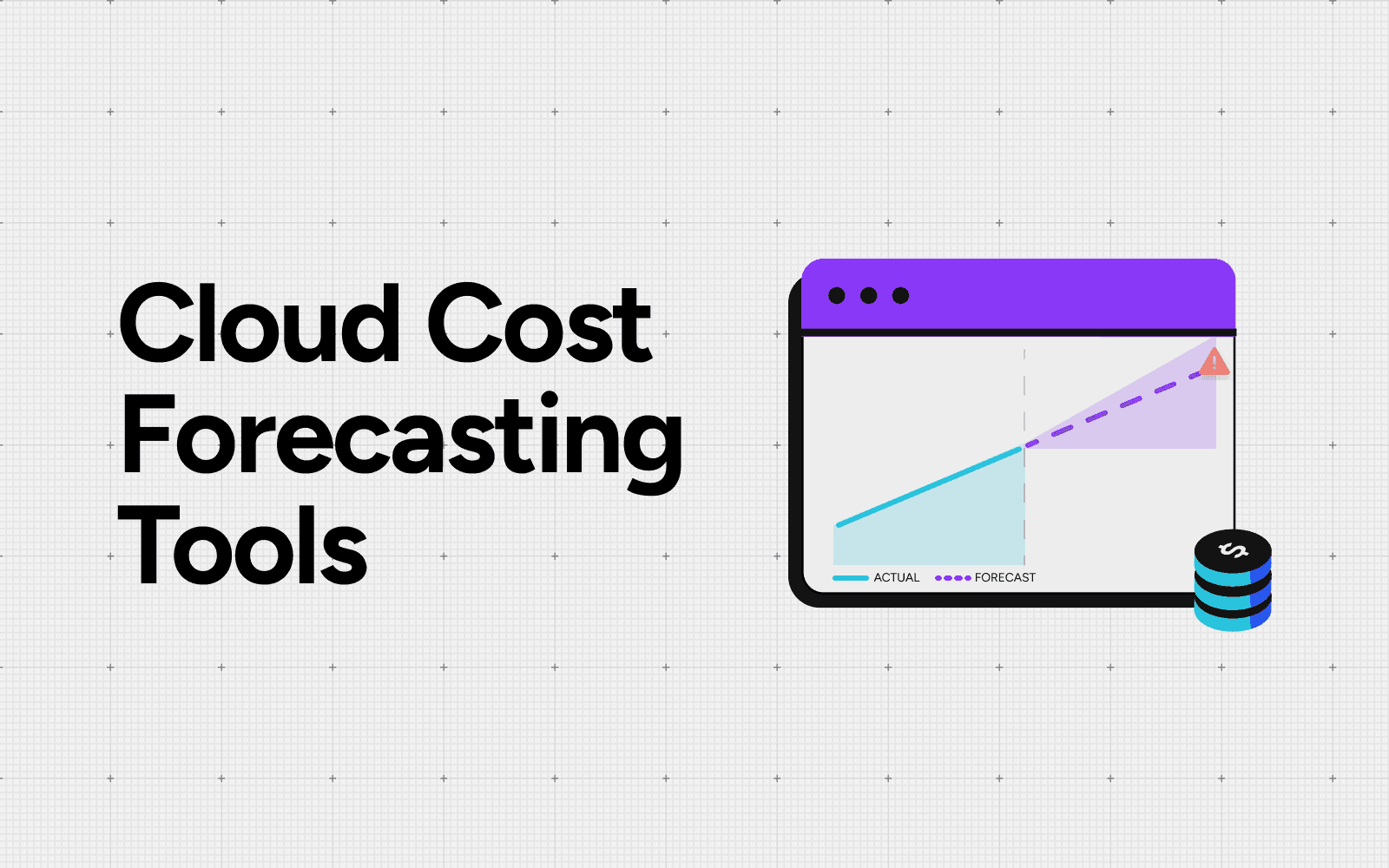
Table of Contents
Comparing the top 10 best cloud cost forecasting tools of 2026 are 1. Amnic, 2. Apptio Cloudability, 3. VMware Aria CloudHealth, 4. Flexera One, 5. CloudZero, 6. Harness CCM, 7. Ternary, 8. Anodot, 9. ProsperOps and 10. Vantage.
Cloud cost forecasting tools help finance, engineering and FinOps teams predict cloud spend 3 to 18 months out, so budgets hold and surprise bills do not derail the quarter.
Amnic ranks first for multi-cloud teams that want AI-driven forecasts across AWS, Azure, GCP, Oracle, Alibaba, Cloudflare and Kubernetes with read-only deployment and documented customer savings of 20% to 50%.
Top 10 Cloud Cost Forecasting Tools in 2026
Amnic - Multi-cloud and Kubernetes forecasting with persona-aware AI agents and read-only access; best for teams that want AWS plus Azure plus GCP plus Oracle plus Alibaba in one forecast view.
Apptio Cloudability (IBM) - Finance-grade ML forecasting with what-if scenarios and audit-ready chargeback for enterprises running monthly cloud close.
VMware Aria CloudHealth - 36-month forecast horizon with growth-factor modeling for mature multi-cloud enterprises already on VMware tooling.
Flexera One - Hybrid forecasting that covers cloud spend plus software licenses for IT estates with on-prem and SaaS commitments.
CloudZero - Forecasts tied to product features, customers and deployments for engineering-led SaaS teams measuring unit economics.
Harness CCM - AI-powered forecasting paired with AutoStopping for engineering teams already paying for Harness CI/CD.
Ternary - Purpose-built multi-cloud forecasting engine with feature parity across AWS, Azure and GCP for dedicated FinOps teams.
Anodot - ML-driven forecasting plus anomaly detection for teams that need spike prediction over budget planning.
ProsperOps - Commitment-aware forecasting that models savings-plan and reserved-instance scenarios for AWS-heavy estates.
Vantage - Fast multi-cloud forecasting with a free tier and 25-plus SaaS integrations for startups and SMBs.
Comparison Table: Top 10 Cloud Cost Forecasting Tools in 2026
Tool | Forecast Horizon | ML/AI Forecasting | Multi-Cloud Coverage | Free Trial | Pricing Tier | G2 Rating |
Amnic | Up to 12 months | Yes (Amnic AI + 4 agents) | AWS, Azure, GCP, Oracle, Alibaba, K8s | Yes (Startup) | % of cloud spend | 4.8 / 5 |
Apptio Cloudability | Up to 12 months | Yes (ML) | AWS, Azure, GCP | No | Enterprise | 4.3 / 5 |
VMware Aria CloudHealth | Up to 36 months | Yes (ML) | AWS, Azure, GCP | No | Enterprise | 4.2 / 5 |
Flexera One | Up to 12 months | Limited | AWS, Azure, GCP, on-prem | No | Enterprise (~$50K minimum) | 4.1 / 5 |
CloudZero | Up to 12 months | Limited | AWS, Azure, GCP | No | Enterprise | 4.5 / 5 |
Harness CCM | Up to 12 months | Yes (AI) | AWS, Azure, GCP | Yes | Tiered | 4.5 / 5 |
Ternary | Up to 12 months | Yes (ML) | AWS, Azure, GCP, Oracle, Alibaba | Yes | % of cloud spend | 4.6 / 5 |
Anodot | Up to 12 months | Yes (ML) | AWS, Azure, GCP | Yes | Subscription | 4.4 / 5 |
ProsperOps | Commitment-scoped | Yes (autonomous) | AWS, GCP | Yes | % of savings | 4.8 / 5 |
Vantage | Up to 12 months | Limited | AWS, Azure, GCP + 25 SaaS | Yes | Tiered, from $0 | 4.7 / 5 |
Pricing tiers and ratings reflect public sources as of May 2026. Always confirm current pricing with the vendor.
What is cloud cost forecasting?
Cloud cost forecasting is the practice of predicting future cloud spend by combining historical billing data, current usage trends and business drivers like new features, customer growth and commitment purchases, so finance and engineering can plan against a number instead of reacting after the bill arrives.
For deeper context on methods see our guide on cloud cost forecasting strategies. The rest of this page focuses on which tool to pick.
How we evaluated these cloud cost forecasting tools
Cloud cost forecasting tools are scored on how reliably they predict spend at the scope a buyer plans against, not on how many dashboards they ship.
We tested each platform against six forecasting-specific criteria a real FinOps buyer cares about:
Forecast horizon: Does it project 3, 6, 12 or 18-plus months ahead and at what granularity?
Accuracy methodology: Is the forecast trend-based, driver-based or ML-trained, and is the error reported?
What-if scenario modeling: Can a user simulate the impact of a release, a region launch or a commitment purchase before signing off?
Commitment-aware forecasting: Does the forecast account for active reserved instances, savings plans and committed-use discounts?
Multi-cloud parity: Is forecast quality the same across AWS, Azure and GCP, or does one cloud lag?
Role-based forecast views: Can a CFO, an SRE and a FinOps lead each pull a forecast in the format they need?
The list below is ranked by total score against these six criteria for mid-market and enterprise FinOps teams. See our FinOps overview for the broader practice context.
10 Best Cloud Cost Forecasting Tools in 2026
These 10 platforms cover the full forecasting workflow, from raw billing ingest to ML-trained predictions to commitment-scoped scenarios across AWS, Azure, GCP and Kubernetes.
1. Amnic
Best for: Multi-cloud teams that want AI-driven forecasts across five public clouds plus Kubernetes, with read-only deployment and persona-specific forecast views for CFO, FinOps, SRE and CTO.
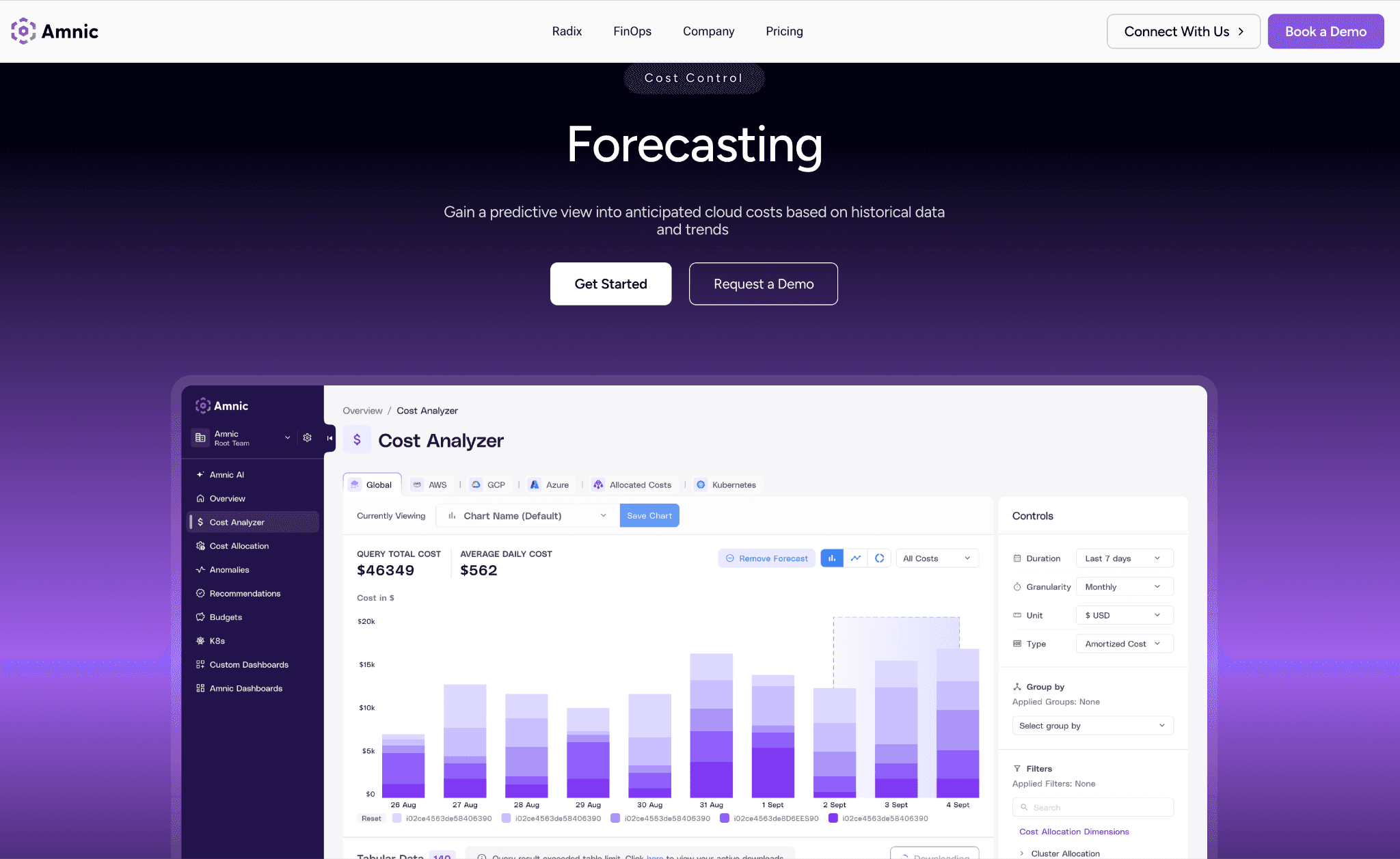
Amnic is a FinOps OS powered by context-aware AI agents that ingests billing data from AWS, Azure, GCP, Oracle and Alibaba plus Kubernetes telemetry, then surfaces forecasts at the account, service, product, team or customer level. The platform runs ML-trained forecasts against your full historical CUR plus normalized usage data, and lets any user query results in plain language.
The forecast view sits inside the same workspace as anomaly alerts, recommendations and budgets, so a team does not switch tools to act on a predicted breach. Engineering owns every change because Amnic uses read-only access. For deeper detail see the cloud cost forecasting feature page.
Key features that matter for forecasting:
ML-based forecast engine that projects spend up to 12 months ahead across AWS, Azure, GCP, Oracle and Alibaba in one view
Amnic AI with four agents (X-Ray, Insights, Governance, Reporting) that let a CFO ask "what will Q3 cost look like if we onboard the new region" in natural language
Anomaly detection tied to forecasts, so a predicted breach turns into a tagged owner and a Jira ticket
Cloud budgeting with alerts at 50%, 70% and 85% consumption against forecast-aligned product budgets
Kubernetes cost management forecasts at the cluster, namespace, pod and PVC level, with rightsizing recommendations that have saved customers up to $20M on a single cluster
Virtual tags that unify inconsistent tags like "prod", "production" and "PROD" before they pollute the forecast
Unit economics models that tie forecast spend to cost per customer, cost per transaction or cost per query
AI cost management tracking on Amazon Bedrock today, with OpenAI and Anthropic coverage rolling out
Read-only access plus SOC 2 Type II, ISO 27001 and GDPR compliance, so security teams approve the deployment in days
5-minute onboarding and SSO with Okta and Entra ID
Pricing: Amnic offers a one-month free trial on the Startup tier with no credit card required.
Paid plans are scoped as a percentage of monitored cloud spend, typically between 0.25% and 1%.
Enterprise contracts include access to dedicated Amnic cost experts.
Pros:
Only platform in this list that forecasts across AWS, Azure, GCP, Oracle and Alibaba plus Kubernetes in one view
Four AI agents let a CFO, SRE or FinOps analyst query the forecast in plain language without SQL
Read-only architecture clears security review in days rather than months
Documented customer outcomes span 20% to 50% reduction on targeted cost lines across SaaS, AI/ML and fintech
Unit-economics modeling ties the forecast to business metrics native cloud tools cannot produce
Cons:
LLM forecasting today covers Amazon Bedrock spend, with OpenAI and Anthropic coverage on the roadmap
The percentage-of-spend model means cost scales with the cloud bill, so very large enterprises should negotiate a spend cap during contracting
What customers say:
"Using Amnic has been nothing short of transformational. The platform is able to analyze our cloud costs at a depth that would take us several hours, if not days to understand better. We are able to spend a few hours each week and save costs that run into thousands of dollars."
- Ajeesh Achuthan, Co-Founder and CTO, Open Financial
"Amnic is playing the long-term role of watching out for unprecedented costs and giving us insights into spends that could be better managed over time."
- Abhra Dasgupta, Uni
See Amnic forecasting in action
2. Apptio Cloudability (IBM)
Best for: Large enterprise finance teams that need ML-based forecasts plus audit-ready chargeback reports for the monthly cloud close.
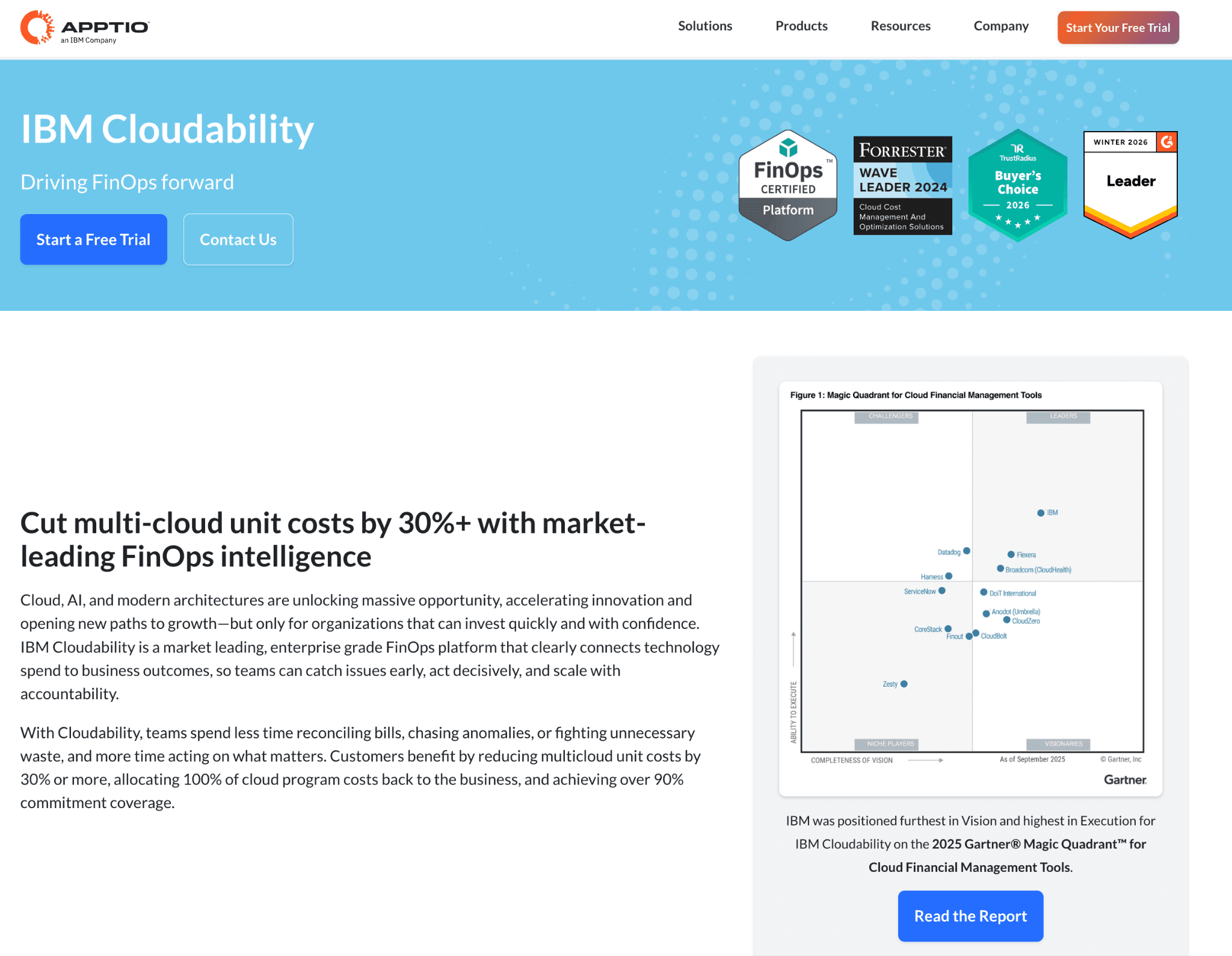
Apptio Cloudability, now part of IBM, brings veteran forecasting depth and the deepest chargeback engine in the category. The platform models multi-cloud spend with ML algorithms that vendor materials cite at over 95% accuracy on stable workloads, and supports what-if scenarios for budget approvals.
It is the choice for organizations with a dedicated FinOps team that runs monthly business reviews and reports to a CFO. The reporting layer integrates with Tableau, Power BI and other enterprise BI tools that finance already uses.
Key features:
ML-based multi-cloud forecasting with what-if scenario modeling for releases and commitment purchases
Detailed chargeback and showback reports with shared-services allocation audit trails
Reservation and savings-plan recommendations modeled against forecast usage
Policy enforcement that triggers alerts or approval workflows when teams breach forecast variance
BI exports to Tableau, Power BI and Looker on a schedule
Pricing: Cloudability is sold through IBM enterprise agreements with no public rate card.
Pricing is tied to managed cloud spend and starts at a six-figure minimum for most accounts.
There is no self-serve trial, and procurement cycles typically run weeks.
Pros:
Most mature forecasting accuracy in the category for stable enterprise workloads
Chargeback engine produces audit-ready reports that satisfy finance and compliance
Strong policy and governance layer for organizations with hundreds of accounts
Cons:
Enterprise-only contracts and minimum spend put it out of reach for mid-market and growth-stage teams
UI is widely cited as dated; non-technical users need training before they can build their own forecast view
Kubernetes forecasting lags dedicated K8s tools and most multi-cloud-native platforms
What customers say:
"I greatly value the almost real-time data, which ensures I can modify forecasts as necessary."
- Verified user, G2 Cloudability reviews
3. VMware Aria CloudHealth
Best for: Mature multi-cloud enterprises that already run VMware tooling and need a 36-month forecast horizon for capital planning.
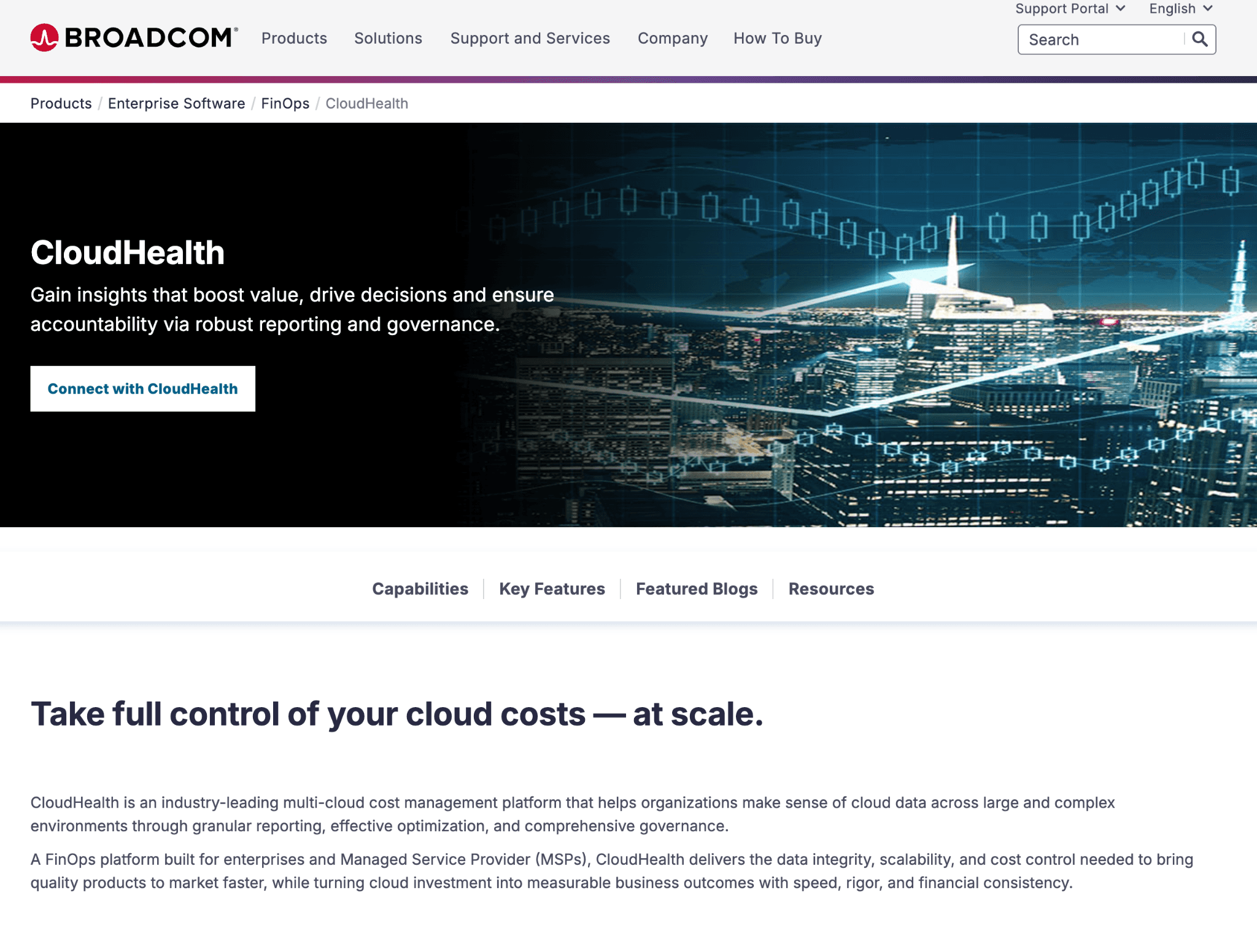
VMware Aria CloudHealth, now officially branded as Tanzu CloudHealth, powered by the legacy CloudHealth platform, ships one of the longest forecast horizons in the category. Users can project spend out to 36 months, slice by Perspective (team, product, environment), and apply Growth Factors to model roadmap changes against budget.
The platform is built for large enterprises with formal capital-planning cycles, where finance needs to compare forecasts versus budgets across multiple business units at once.
Key features:
36-month forecast horizon with growth-factor modeling
Perspectives engine that slices forecast by team, product or environment without re-tagging
ML-powered forecasting layered on historical CUR data
Reservation and savings-plan recommendations modeled against forecast usage
Multi-cloud parity across AWS, Azure and GCP
Pricing: Aria CloudHealth is sold through Broadcom enterprise agreements with no public list price.
Contracts are typically annual and scoped to cloud spend under management.
There is no free trial; expect a guided proof-of-concept cycle.
Pros:
Longest forecast horizon in the list at 36 months, useful for multi-year capital plans
Growth Factor modeling lets a planner test forecast sensitivity to roadmap shifts
Strong enterprise procurement and contract governance experience
Cons:
Reviewers cite a "lacking central view of cost savings recommendations" and no single page to act on suggestions
UI feels dated next to newer platforms; engineering personas often prefer a second tool
Kubernetes coverage is shallower than dedicated K8s forecasting tools
What customers say:
"Forecast out to 36 months, slice by Perspective (team, product, env), apply Growth Factors to model roadmap changes, and compare forecast vs. budget in one view."
- Verified reviewer, G2 VMware Aria Cost (CloudHealth) reviews
4. Flexera One
Best for: Hybrid IT estates that need a single forecast across cloud spend, software licenses and on-prem infrastructure.
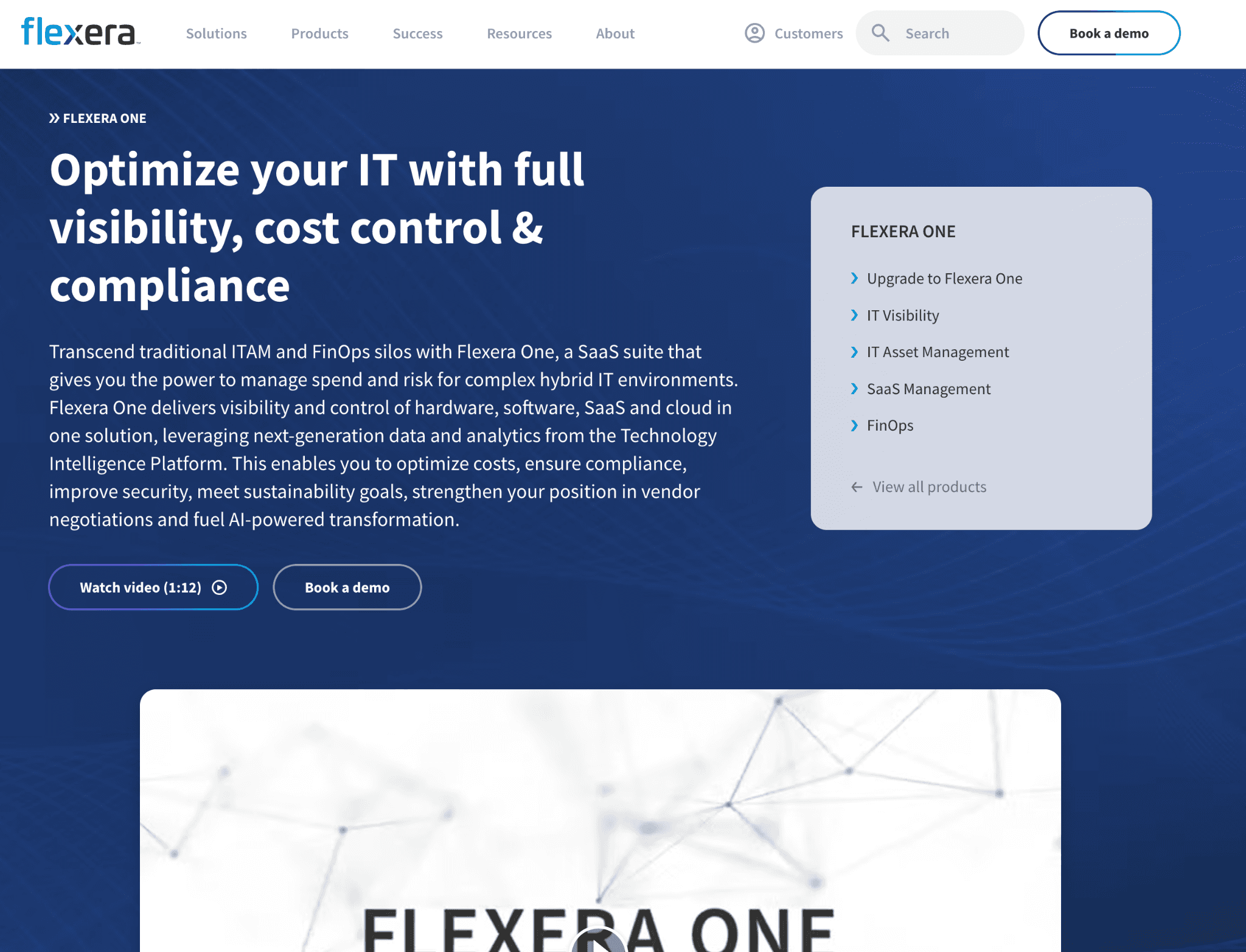
Flexera One sits at the intersection of FinOps and IT Asset Management. The platform forecasts cloud spend alongside software-license obligations and on-prem hardware costs, which is rare in the category.
It is the choice for organizations that need a single forecast covering AWS, Azure, GCP plus VMware, Oracle and Microsoft license commitments, where the cloud bill is one of three large line items leadership tracks.
Key features:
Forecast across cloud, on-prem and software licenses in a single view
Cloud License Management feature that ties license entitlement to cloud workload forecasts
Multi-cloud cost optimization recommendations
Hybrid governance and policy enforcement
Detailed reservation and commitment recommendations
Pricing: Flexera One is sold through enterprise contracts with minimums typically around $50,000 annually.
Cloud management is priced at roughly 5% of annual cloud spend.
Long-term, multi-year contracts are the norm.
Pros:
Only platform in this list that forecasts cloud, on-prem and software-license obligations together
Strong license compliance engine reduces audit and true-up risk
Veteran procurement experience and predictable enterprise support
Cons:
Pricing model is widely cited as expensive, with a high minimum that excludes mid-market buyers
Cloud-only buyers pay for asset-management capabilities they may not use
Pure-cloud forecasting depth is lighter than Apptio Cloudability or Ternary
What customers say:
"Cloud management provides visibility into multi-cloud environments (AWS, Azure, Google Cloud), making it easier to monitor spend and forecast costs."
- Verified reviewer, G2 Flexera One reviews
5. CloudZero
Best for: Engineering-led SaaS teams that need forecasts tied to product features, customers or deployments rather than service-level totals.
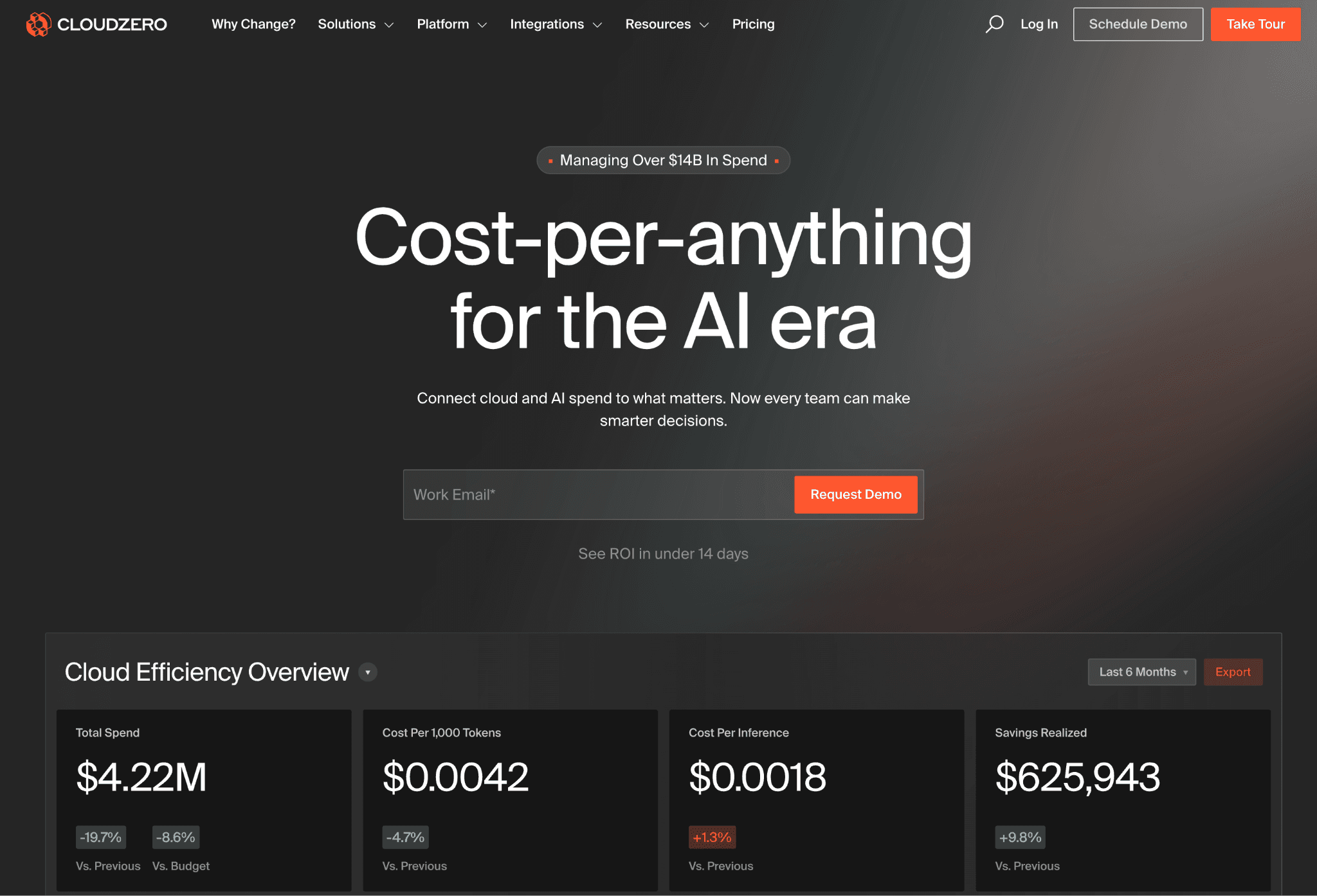
CloudZero is built around the idea that a forecast should answer "what will it cost to run this feature next quarter," not "what will AWS bill us next month." The CostFormation allocation engine lets engineering teams define custom cost dimensions tied to product features and customers, then run forecasts against those dimensions.
The platform is the reference choice for growth-stage SaaS companies that already have strong product analytics and want forecast accountability at the engineering-team level.
Key features:
CostFormation engine maps every cloud dollar to a product, feature, customer or deployment
AnyCost API pulls in non-cloud SaaS spend such as Snowflake and Databricks for total infrastructure forecasting
Forecast models that run against historical CUR data, scoped by business dimension
Anomaly alerts tagged to the team or product that owns the forecast
Reporting built for VPs of engineering and product cost reviews
Pricing: CloudZero sells exclusively through enterprise contracts with no public rate card.
Pricing is tied to cloud spend volume under management.
There is no self-serve trial, which makes evaluation slower than self-onboarding platforms.
Pros:
CostFormation is one of the most flexible allocation layers in the category, tied directly to engineering ownership
AnyCost API extends forecasts to SaaS dependencies that other tools miss
Strong reputation among engineering leadership at growth-stage SaaS companies
Cons:
Enterprise-only pricing rules it out for teams under $500K cloud spend
Kubernetes forecasting lacks the depth of dedicated K8s tools
A reviewer noted forecasts can be imprecise when usage patterns shift quickly: "sometimes the forecasting isn't accurate, and the dashboards should be easier to refresh after any change"
What customers say:
"Sometimes the forecasting isn't accurate, and the dashboards should be easier to refresh after any change."
- Verified user from G2
6. Harness CCM
Best for: Engineering teams already paying for Harness CI/CD that want AI-powered forecasts and idle-resource shutdown in the same workflow.
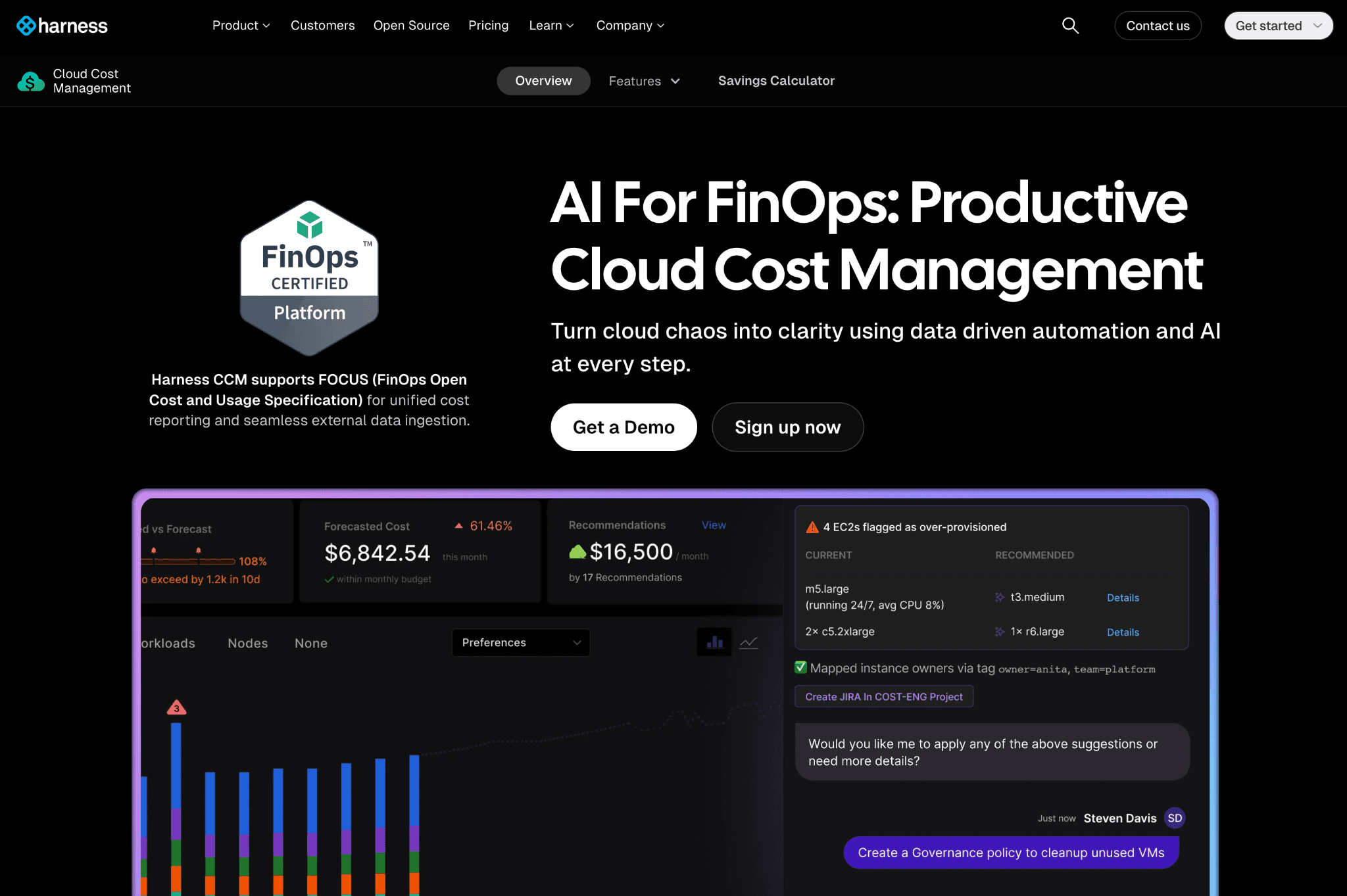
Harness CCM lives inside the Harness platform alongside CI/CD, feature flags and chaos engineering. The forecasting engine pairs predictive analytics with AutoStopping, which automatically shuts down idle non-production resources and can save up to 70% on non-prod spend per vendor claims.
It is the natural choice for teams already on Harness who want cloud cost forecasting in the same workspace where they ship code.
Key features:
AI-powered spend forecasting based on historical usage and deployment patterns
AutoStopping that detects, shuts down and auto-starts idle cloud resources
Continuous anomaly detection with AI-prioritized alerts
Cost perspectives tied to deployment, service or environment
Native integration with Harness CI/CD and feature-flag workflows
Pricing: Harness CCM offers a free tier with limited features.
Paid plans are tiered, with enterprise pricing tied to managed cloud spend.
Existing Harness customers can add CCM as a module rather than a separate contract.
Pros:
Tight integration with CI/CD means forecast variance can trigger pipeline-level alerts
AutoStopping documented to cut non-production spend up to 70%
AI anomaly engine produces actionable alerts rather than dashboard noise
Cons:
A reviewer notes "Autostopping was difficult to get working" and "not all the features were fully fleshed out yet"
Buyers not already on Harness have to onboard the broader platform to get full value
Multi-cloud parity across Azure and GCP lags AWS depth
What customers say:
"Intuitive dashboards which provide real-time insights into cloud spending, and AI-powered continuous cost anomaly monitoring."
- Verified user from G2
____________________________________________________________
7. Ternary
Best for: Dedicated FinOps teams that want a purpose-built multi-cloud forecasting engine with feature parity across AWS, Azure and GCP.
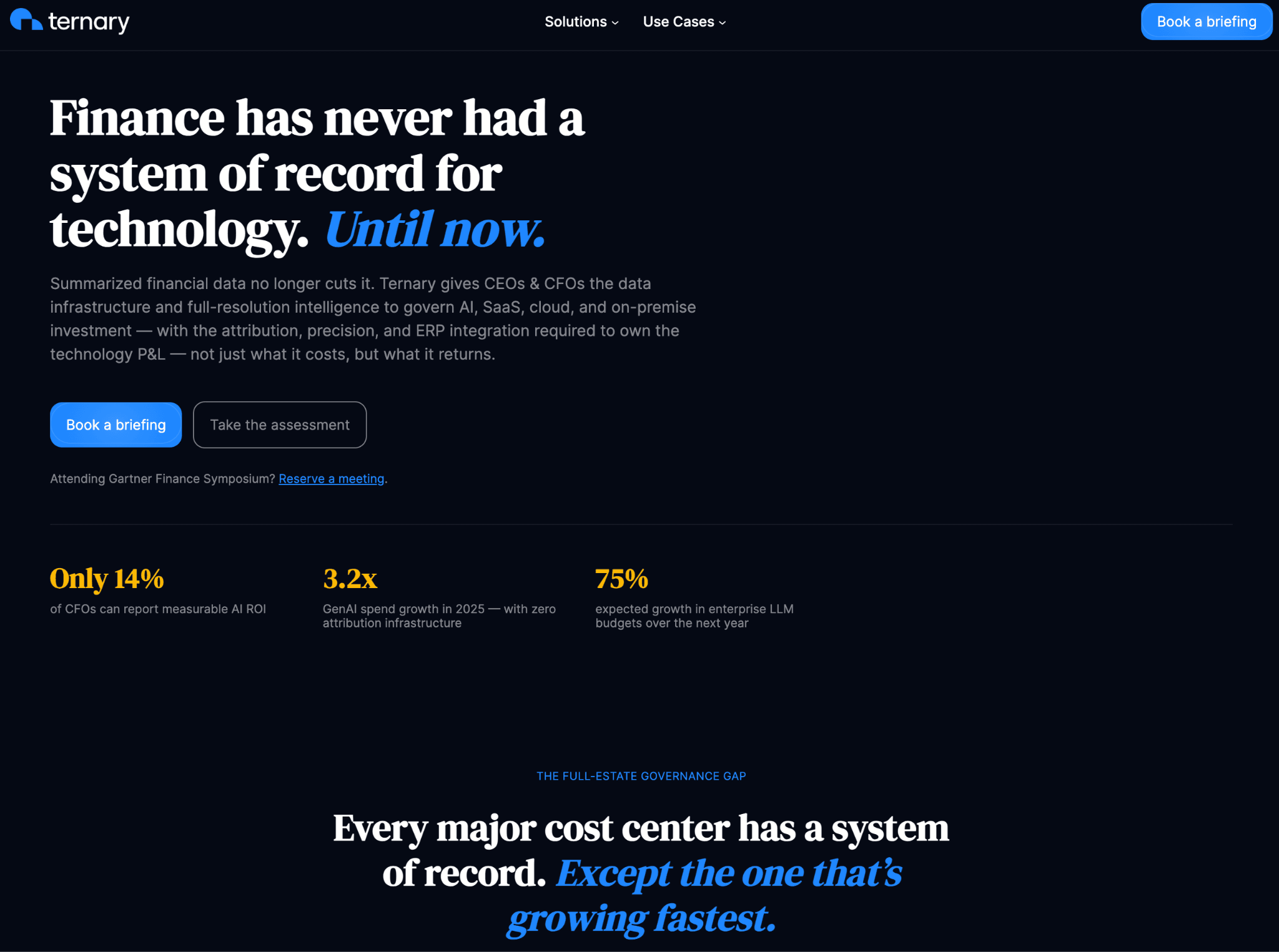
Ternary is a modern FinOps platform built natively for AWS, Azure and GCP with ML-driven forecasting at the core. The multi-cloud forecasting engine breaks down forecasted spend by business dimensions and supports customizable lookback windows.
The platform manages over $7.5 billion in cloud spend across AWS, Azure, GCP, Oracle Cloud and Alibaba Cloud, and is built for organizations where FinOps is a formal practice with dedicated headcount.
Key features:
ML-powered multi-cloud forecasting engine with breakdown by business dimension
Customizable lookback periods for trend-based forecasting
Commitment management for reservations, savings plans and CUDs
Cost allocation engine with feature parity across AWS, Azure and GCP
Anomaly detection and unit-economics modeling
Pricing: Ternary offers tiered pricing scaled to managed cloud spend.
Self-serve onboarding is available alongside enterprise contracts.
A guided trial is available for qualified teams.
Pros:
Feature parity across AWS, Azure and GCP is rare in the category
Purpose-built FinOps platform without the legacy ITAM overhead
Strong commitment-aware forecasting for organizations with active RI portfolios
Cons:
Smaller customer base than veteran platforms means a shorter reference list
LLM and AI agent layer is earlier-stage than Amnic or Harness CCM
Less third-party integration depth than CloudZero or Vantage
What the platform delivers:
"Ternary introduced its multi-cloud forecasting engine powered by machine learning algorithms that provides a detailed breakdown of forecasted spend by business dimensions."
— Source: Ternary product announcement
8. Anodot
Best for: Teams that need ML-based forecasting paired with real-time anomaly detection, where spike prediction matters more than long-horizon planning.
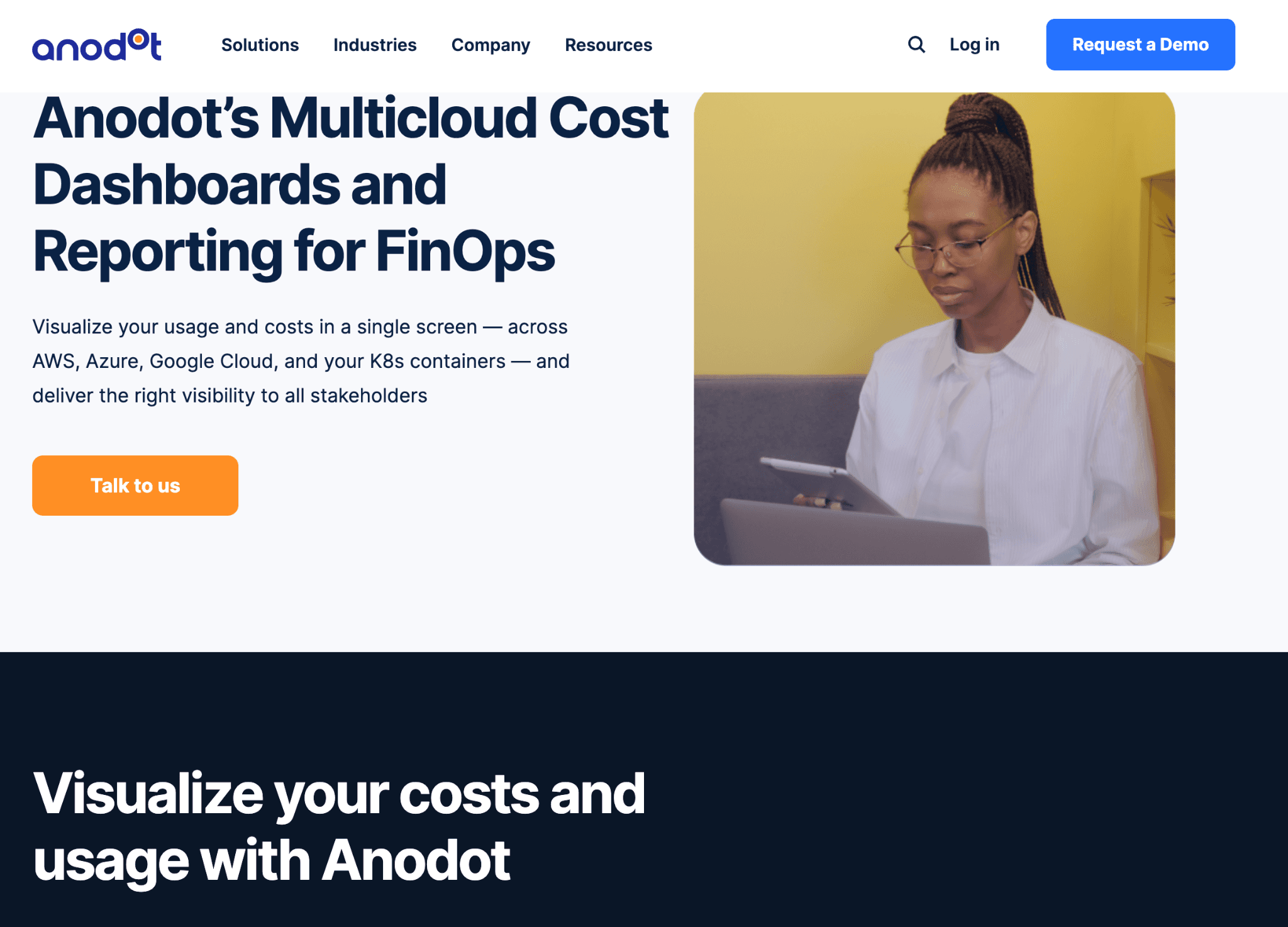
Anodot is best known for autonomous anomaly detection across business and cloud metrics, with cost forecasting layered on top. The platform applies ML models to identify and predict cost anomalies, and the vendor cites up to 40% reductions in annual cloud spend for customers that act on the alerts.
It is the right pick for teams whose primary pain is "we did not see the spike coming" rather than "we cannot plan next year's budget."
Key features:
ML-driven forecasting and anomaly detection with autonomous learning
Real-time alerting on cost deviations across services, accounts and tags
Savings recommendations targeting up to 40% annual reduction
Multi-dimensional drill-down on root cause for spikes
Integration with Slack, PagerDuty and other alert channels
Pricing: Anodot offers tiered subscription pricing.
Cost scales with the number of monitored metrics and cloud spend.
A guided trial is available; self-serve is limited.
Pros:
Best-in-class anomaly detection paired with cost forecasting
Documented savings outcomes from acting on predicted spikes
Strong fit for organizations that already use Anodot for business-metric anomaly detection
Cons:
A reviewer notes "pricing can be expensive for some organizations" and "the user interface can be a bit clunky"
Users find it "confusing for non-technical product managers" with "a lack of proper role-based access"
Cost forecasting is narrower than purpose-built FinOps platforms
What customers say:
"Anodot spots problems in the data fast and lets them know right away, it saves a lot of time and stress."
— Verified user, G2 Anodot reviews
9. ProsperOps
Best for: AWS-heavy estates that want commitment-aware forecasting modeled against reserved-instance and savings-plan scenarios.
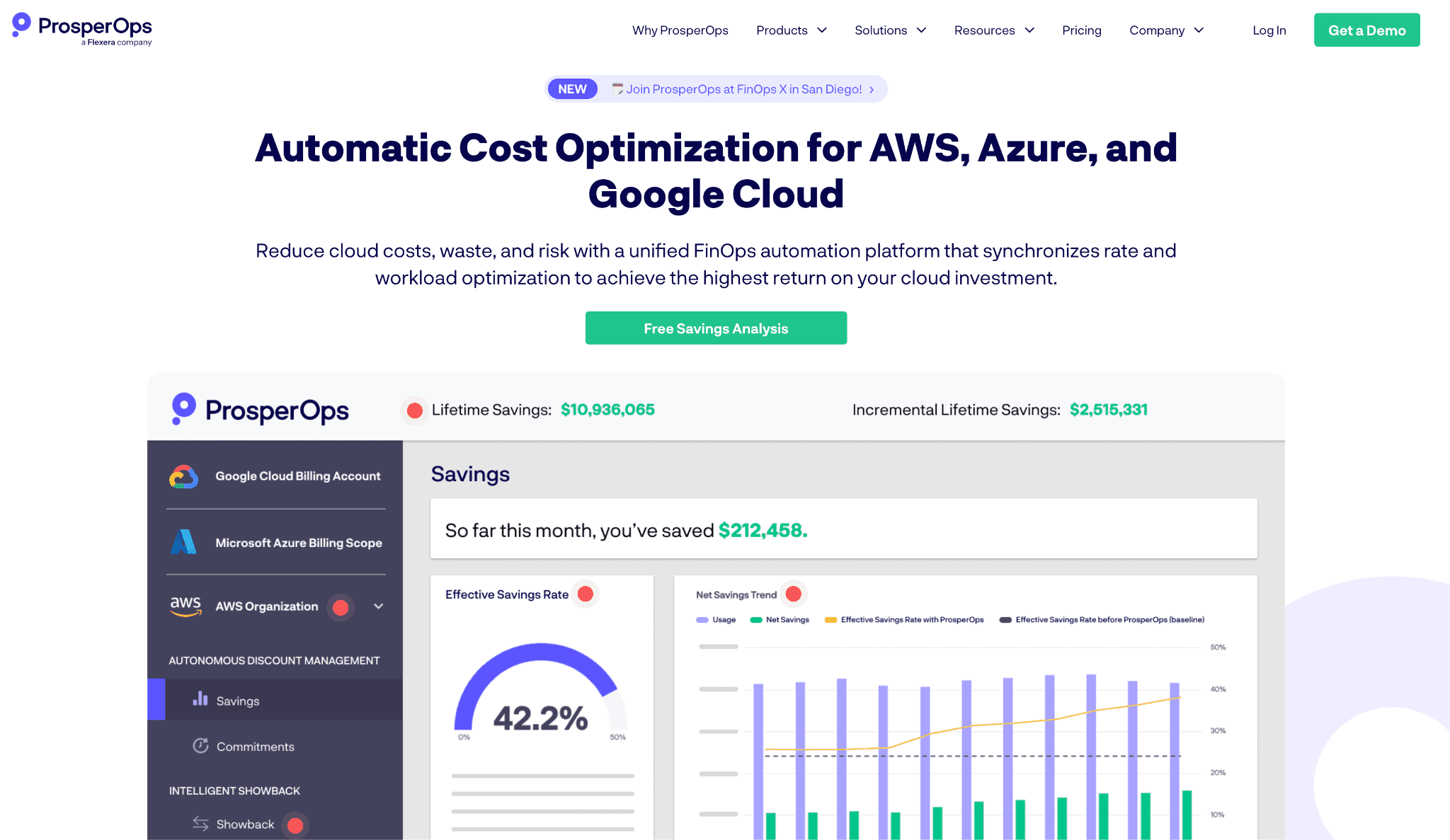
ProsperOps takes a narrower angle: the platform automates AWS Savings Plan and Reserved Instance management, and forecasts the financial impact of every laddering decision before it commits. The autopilot model removes manual quarterly reviews and ladders commitments to maximize the Effective Savings Rate.
It is a complement to a broader forecasting platform rather than a replacement, and customers often pair it with Amnic, CloudZero or Cloudability.
Key features:
Autonomous commitment management for AWS Savings Plans and Reserved Instances
Effective Savings Rate as a single forecasting metric
Scenario modeling for laddered commitment purchases
GKE Autopilot and Cloud Run support added in 2025
AWS-first with growing Google Cloud coverage
Pricing: ProsperOps charges a percentage of customer savings rather than a flat license.
There is no upfront cost; revenue is performance-aligned.
A short evaluation cycle is available before activation.
Pros:
Performance-based pricing aligns vendor incentives with customer outcomes
Removes manual quarterly RI and SP laddering, which is a major FinOps time sink
Reviewers cite hands-off operation: "simple to use and almost entirely hands-free after setup"
Cons:
Forecasting is scoped to commitment savings, not full cloud spend planning
Customers need a separate platform for broader forecast horizons and unit economics
What customers say:
"We already had over 90% RI and Savings Plans coverage before using ProsperOps, but managed to cut EC2 rates by almost 20% more thanks to them."
— Verified reviewer, G2 ProsperOps reviews
10. Vantage
Best for: Startups and mid-market teams that need fast multi-cloud forecasting with a free tier and broad SaaS integrations.
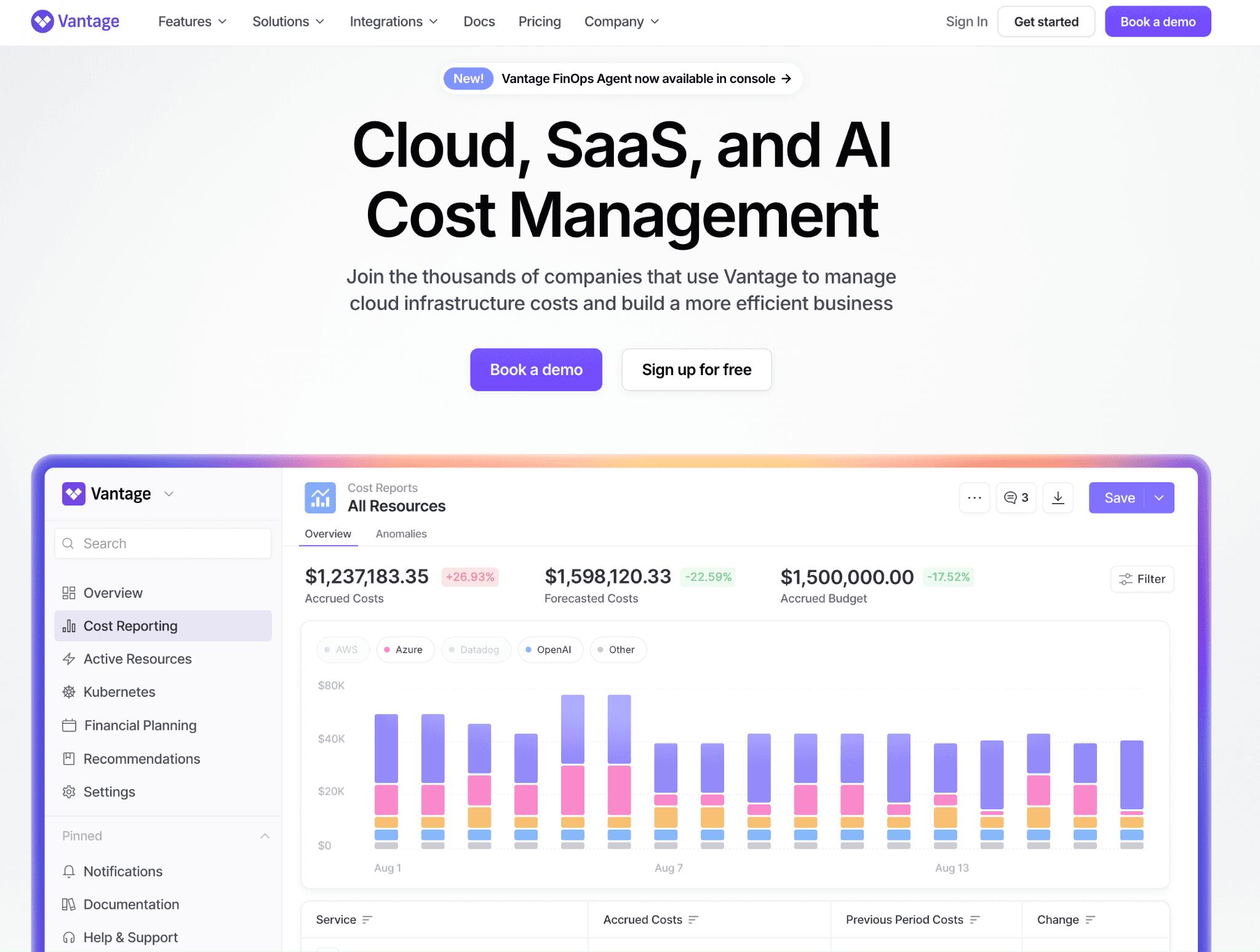
Vantage offers 25+ integrations and a clean dashboard for AWS, Azure, GCP and SaaS tools. A no-time-limit free tier covers up to $2,500 of cloud spend with three users and six months of data history, which is rare in the category.
The platform suits startups and mid-market teams that want forecasting alongside Snowflake, Datadog and MongoDB costs in one view, without a sales process.
Key features:
25+ integrations spanning AWS, Azure, GCP plus Snowflake, Datadog, MongoDB Atlas
Reservation reporting and savings-plan tracking
Active anomaly notifications with team-level routing
Per-team cost views built without admin access
Free tier with no time limit for small cloud footprints
Pricing: Vantage offers a free Starter tier covering up to $2,500 of monthly cloud spend.
Paid plans scale as a percentage of spend under management.
Most tiers are self-serve and do not require a sales conversation.
Pros:
Fastest onboarding in this list, with most teams seeing a forecast within the first day
Free tier with no time limit lets startups use it as a long-term solution
Broad SaaS coverage means total infrastructure cost lives in one forecast
Cons:
Predictive analytics and ML forecasting depth is lighter than Amnic, Apptio or Ternary
Anomaly governance is alert-based; teams that need ownership routing build that layer themselves
No Oracle or Alibaba support, which rules it out for multi-cloud teams outside AWS, Azure and GCP
What customers say:
"Before Vantage, we struggled with fragmented visibility into multi-cloud spending. Vantage centralized all our cloud cost data in one place."
- Verified user, G2 Vantage reviews
Which cloud cost forecasting tool should you pick? Decision matrix
Use this scenario matrix to shortlist before the trial.
Your situation | Pick | Why |
5+ clouds (AWS + Azure + GCP) plus Kubernetes, persona-aware forecasts, read-only access mandatory | Amnic | Only platform covering 5+ public clouds + K8s with read-only AI agents |
Single dedicated FinOps team, monthly cloud close, audit-ready chargeback | Apptio Cloudability | Most mature ML forecasting and chargeback in the category |
Multi-year capital planning, 24+ month forecast horizon, already on VMware | VMware Aria CloudHealth | Longest horizon at 36 months with Growth Factors |
Hybrid estate, cloud + on-prem + software licenses in one forecast | Flexera One | Only tool that forecasts cloud, on-prem and license obligations together |
SaaS product, forecast tied to cost per feature or cost per customer | CloudZero | CostFormation allocation engine is purpose-built for unit economics |
Already a Harness customer, forecasting inside CI/CD | Harness CCM | Native integration plus AutoStopping for non-prod savings |
Dedicated FinOps practice, feature parity across AWS + Azure + GCP | Ternary | Purpose-built multi-cloud forecasting without legacy ITAM weight |
Primary pain is unexpected spikes, not next quarter's plan | Anodot | Anomaly detection paired with ML forecasting |
AWS-heavy estate, want autonomous Savings Plan and RI laddering | ProsperOps | Performance-based pricing on commitment savings |
Startup or SMB, need a free tier and fast setup | Vantage | Free Starter tier with no time limit, 25+ integrations |
What you give up choosing each tool
Tool | What you trade off |
Amnic | Active LLM rightsizing for OpenAI and Anthropic is on the roadmap; Bedrock is live today |
Apptio Cloudability | Six-figure floor, no self-serve trial, slower procurement |
VMware Aria CloudHealth | Dated UI, no central recommendations view, weak Kubernetes depth |
Flexera One | ~$50K minimum and ~5% of cloud spend; long inflexible contracts |
CloudZero | Enterprise-only contracts; shallow Kubernetes; no native LLM tracking |
Harness CCM | Need the broader Harness platform to extract full value; AutoStopping setup friction |
Ternary | Smaller reference base; earlier-stage AI agent layer |
Anodot | Subscription pricing called expensive; clunky UI for non-technical users |
ProsperOps | Commitment-only; not a broader forecasting platform; AWS-first |
Vantage | Lighter predictive analytics; no Oracle or Alibaba; alert-only governance |
FAQs about cloud cost forecasting tools
Which cloud cost forecasting tool is best for multi-cloud teams?
Amnic is the only platform on this list that forecasts across AWS, Azure, GCP, Oracle, Alibaba and Kubernetes in one view, with AI agents that let any persona query results in plain language. Ternary is the strongest alternative if you only need AWS, Azure and GCP. Apptio Cloudability fits if monthly chargeback matters more than coverage.
Which cloud cost forecasting tools offer a real free trial?
Amnic offers a one-month free trial on the Startup tier with no credit card. Vantage has a free Starter tier with no time limit up to $2,500 monthly spend. Harness CCM, Ternary, Anodot and ProsperOps offer guided trials. CloudZero, Apptio Cloudability, VMware Aria CloudHealth and Flexera One require a sales process before access.
Which tools deploy without write access to your cloud accounts?
Amnic is read-only across AWS, Azure, GCP, Oracle and Alibaba and clears most security reviews in days. Vantage, CloudZero and Apptio Cloudability are also read-only for forecasting. Harness CCM AutoStopping, CAST AI rightsizing and ProsperOps commitment management require write access for their core automation, which adds weeks to security review.
What is the lowest entry pricing for a serious cloud cost forecasting tool?
Vantage Starter is $0 up to $2,500 monthly spend. Amnic Startup tier is free for one month, then scales as a percentage of cloud spend, typically 0.25% to 1%. ProsperOps charges a percentage of commitment savings with no upfront cost. Enterprise-tier tools like Flexera One start near $50,000 annually.
How do you switch from AWS Cost Explorer to a third-party cloud cost forecasting tool?
You connect the third-party tool to your billing account through read-only IAM access, point it at your Cost and Usage Report bucket, and the tool ingests 6 to 12 months of history during onboarding. Amnic onboards in 5 minutes for a single cloud. Switching does not require leaving Cost Explorer; most teams run both during the first quarter to validate forecast parity.
Pick the forecasting tool that matches your environment
If your team runs across three or more clouds and Kubernetes, and you want a forecast any persona can query in plain language without granting write access, Amnic is built for that exact shape. If you only need AWS Savings Plan laddering, ProsperOps does that one job well. If you live inside Harness already, Harness CCM is the obvious add.
For everyone in between, the question is which six evaluation criteria matter most: forecast horizon, accuracy methodology, what-if scenarios, commitment-awareness, multi-cloud parity, or role-based views. Pick the tool whose strengths match your top two.
Better visibility and management into AI Tokens?
Start with a 30 day trial
Connect leading LLMs
24 hour time to value
Stay ahead of AI Spend

Make AI spend visible, controllable, and accountable.
Gain insights into your AI token costs at a team, customer, business unit and individual user level to measure and manage AI utilization.
Recommended Articles

8 Best Llama Cost Management Tools in 2026
Read More
8 Best Amazon Bedrock Cost Optimization Tools for 2026
Read More

7 Best Amazon Bedrock Cost Monitoring Tools
Read More

8 Best Gemini Cost Visibility Tools for 2026
Read More

7 Best Multimodal Cost Optimization Tools for 2026
Read More

5 Best Anthropic Cost Allocation Tools for 2026
Read More