12 Best Multi-Cloud Cost Reporting Tools Compared 2026
13 min read
Cost Control
Tools
Table of Contents
Comparing the top multi-cloud cost reporting tools for 2026 are 1. Amnic, 2. CloudZero, 3. Vantage, 4. Apptio Cloudability, 5. Finout, 6. Datadog Cloud Cost Management, 7. Harness CCM, 8. CloudHealth by Broadcom, 9. Ternary, 10. Flexera One, 11. Anodot, and 12. nOps.
Top 12 Best Multi-cloud cost reporting tools
Amnic is the strongest pick if you want four AI agents (X-Ray, Insights, Governance, Reporting) producing role-specific reports across AWS, Azure, GCP, Oracle, Alibaba, and Kubernetes from one dashboard.
CloudZero wins on unit-economics reporting and ships an MCP server so LLMs can query your cost data in natural language.
Vantage offers FOCUS-native multi-cloud reports with AI forecasting and 12+ billing integrations.
Apptio Cloudability is the default for enterprise finance teams running a monthly cloud cost close with audit-ready chargeback and showback.
Finout centralizes cross-cloud cost in the MegaBill dashboard and schedules reports via Slack, Microsoft Teams, and email.
Datadog Cloud Cost Management sits alongside observability metrics, so engineers see cost reports next to performance data.
Harness CCM brings cost reporting into the CI/CD pipeline through Perspectives and custom dashboards.
CloudHealth by Broadcom suits large enterprises that need policy-based governance plus executive reporting.
Ternary is FOCUS-native by design and reports across AWS, Azure, GCP, and Kubernetes with a clean data model.
Flexera One is built for global software contract managers who need multi-cloud chargeback with audit trails.
Anodot uses machine learning to surface multi-cloud anomalies inside scheduled reports.
nOps delivers automated multi-cloud cost reports with stronger AWS depth.
Comparison table: 12 best multi-cloud cost reporting tools 2026
Tool | Cloud Coverage (AWS / Azure / GCP / K8s / SaaS) | FOCUS Compliance | Reporting AI Capability | Pricing Model |
|---|---|---|---|---|
Amnic | AWS, Azure, GCP, Oracle,Cloudflare, Alibaba, K8s, SaaS | FOCUS-aligned | 4 AI agents plus Amnic Assistant for natural-language query | Free tier; paid tiers by cloud spend |
CloudZero | AWS, Azure, GCP, K8s, Snowflake, Databricks, OpenAI | FOCUS-aligned | MCP server for LLM cost queries; AnomalyDetector | Custom / contact sales |
Vantage | AWS, Azure, GCP, Oracle, Alibaba, Snowflake, SaaS | FOCUS-native | AI forecasting; cost recommendations | Free starter; paid by cost under management |
Apptio Cloudability | AWS, Azure, GCP, Oracle, IBM | FOCUS-aligned | TrueOps anomaly detection; AI-assisted forecasts | Custom / contact sales |
Finout | AWS, Azure, GCP, K8s, Snowflake, Databricks, SaaS | FOCUS-native | Anomaly detection; ML-based pattern alerts | Custom / contact sales |
Datadog CCM | AWS, Azure, GCP, SaaS | FOCUS-aligned | Watchdog AI for cost anomalies tied to metrics | Per-host pricing; CCM add-on |
Harness CCM | AWS, Azure, GCP, K8s | FOCUS-aligned | Anomaly detection; AI recommendations | Per-module pricing |
CloudHealth | AWS, Azure, GCP, Oracle | FOCUS-aligned | Anomaly detection inside policies | Custom / contact sales |
Ternary | AWS, Azure, GCP, K8s | FOCUS-native | Anomaly insights; natural-language search (Q4 2025) | Custom / contact sales |
Flexera One | AWS, Azure, GCP, Oracle | FOCUS-aligned | AI-assisted forecasting | Custom / contact sales |
Anodot | AWS, Azure, GCP, Snowflake | FOCUS-aligned | ML anomaly detection (core product) | Custom / contact sales |
nOps | AWS, Azure, GCP | FOCUS-aligned | AI agent for cost recommendations | Free tier; paid by cloud spend |
What are multi-cloud cost reporting tools?
Multi-cloud cost reporting tools are software platforms that pull billing and usage data from AWS, Azure, Google Cloud, and other providers, normalize it into a single data model, and produce dashboards, scheduled reports, and AI-driven insights for engineering, finance, and leadership.
They differ from native cloud cost tools (AWS Cost Explorer, Azure Cost Management, GCP Billing) in two ways. First, they cover more than one provider in one view. Second, they add allocation, showback, chargeback, anomaly reporting, and natural-language query on top of raw billing data.
Most multi-cloud cost reporting tools in 2026 ingest the AWS Cost and Usage Report (CUR), Azure Cost Management exports, and GCP Billing Export to BigQuery, then map those feeds into the FinOps Open Cost and Usage Specification (FOCUS) for consistency. The result is one report you can send to a CFO, a platform lead, and an SRE without rebuilding it three times.
Why multi-cloud cost reporting needs a different approach than single-cloud reporting
Single-cloud reporting works inside one provider's pricing model, one billing format, and one set of resource IDs. Multi-cloud reporting works across three different pricing models (AWS, Azure, GCP), three different billing schemas, and overlapping tagging conventions that rarely match.
A report that shows "compute spend by team" in AWS Cost Explorer relies on AWS tags. The same report in Azure Cost Management relies on Azure tags, which often use different keys. GCP Billing Export uses labels with their own syntax. Without a normalization layer, the same engineering team appears under three different names in three different reports.
The FinOps Foundation's 2026 State of FinOps report places allocation, reporting, and analytics in the top three prioritized capabilities for the third year running. According to the report, over 89% of enterprises now run two or more clouds, up from 87% in 2025. That growth makes single-cloud reporting a partial answer.
Multi-cloud reporting tools solve four problems that single-cloud tools cannot. They normalize tagging and labeling across providers. They allocate shared costs (network egress, observability, data platforms) across business units that span clouds. They produce one report per persona, not per provider. And they support the FOCUS specification, which has become the standard for cross-cloud billing data in 2026.
The 12 best multi-cloud cost reporting tools in 2026
1. Amnic
Best for: Engineering, finance, and leadership teams that want one cost report covering AWS, Azure, GCP, Oracle, Alibaba, and Kubernetes, with reports tailored per persona (CFO, CTO, FinOps lead, SRE) and natural-language query through Amnic Assistant.
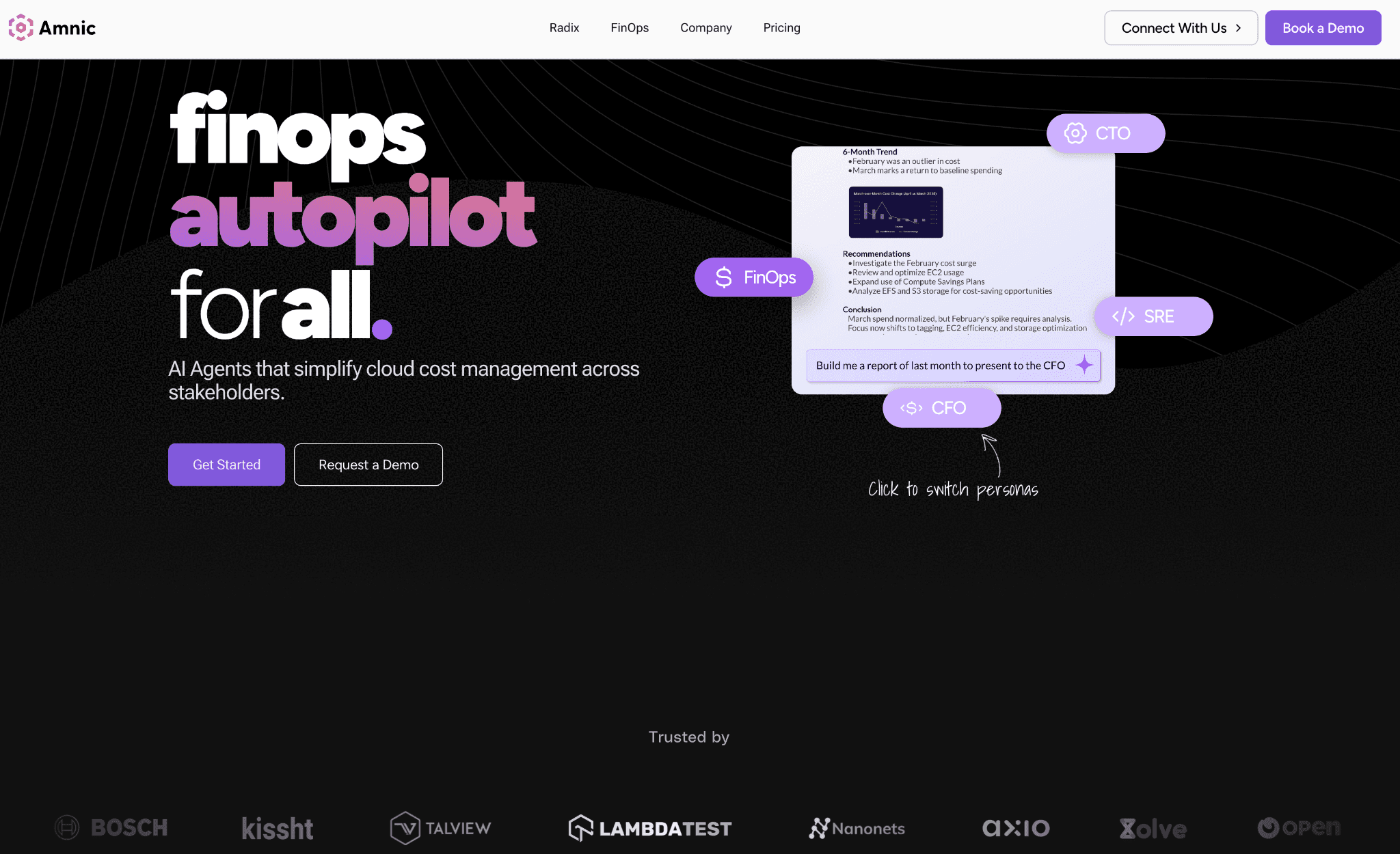
Amnic is a FinOps platform built for multi-cloud cost reporting from day one. The platform ingests billing data from AWS, Azure, GCP, Oracle, Alibaba, and Kubernetes, normalizes it into a FOCUS-aligned data model, and exposes the result through four AI agents (X-Ray, Insights, Governance, Reporting) plus the Amnic Assistant for natural-language query.
Key features:
AI agents that generate reports, surface anomalies, enforce governance, and answer natural-language questions about spend.
Role-specific dashboards for CFO, CTO, FinOps lead, and SRE personas, deployed read-only.
Automated report scheduling via email, Slack, and Microsoft Teams with daily, weekly, and monthly cadences.
Shared cost allocation across business units that span multiple clouds.
Customizable cost views and perspectives with drill-down to resource-level detail.
Audit-ready chargeback and showback reports with RBAC for finance vs engineering visibility.
FOCUS-aligned exports to BigQuery, Snowflake, and S3 for downstream BI.
Pricing: Amnic offers a free tier with full multi-cloud cost reporting on capped cloud spend. Paid tiers scale by cloud spend under management. Try your free Demo.
Pros:
Multi-cloud coverage extends beyond the big three to Oracle and Alibaba.
Natural-language query through Amnic Assistant works on reports, not just dashboards.
Free tier lets engineering teams trial the reporting agent without procurement.
Cons:
Newer to the market than Cloudability or Flexera, so fewer reference deployments in Fortune 500 finance teams.
Some advanced report customization requires a paid tier.
What customers say:
"Working with Amnic has paved the way for a journey where we have control and comprehension of the overall cloud spend."
- Abhra Dasgupta, Uni, case study
"Amnic's astute recommendation engine helped us reduce our cloud bill through optimization of network and cloudwatch costs."
- Mayank Bhola, Co-Founder and Head of Products, LambdaTest, case study
2. CloudZero
Best for: Engineering and product teams that want unit-economics reporting (cost per customer, cost per feature, cost per environment) plus an MCP server that lets LLMs query their cost data through natural language.
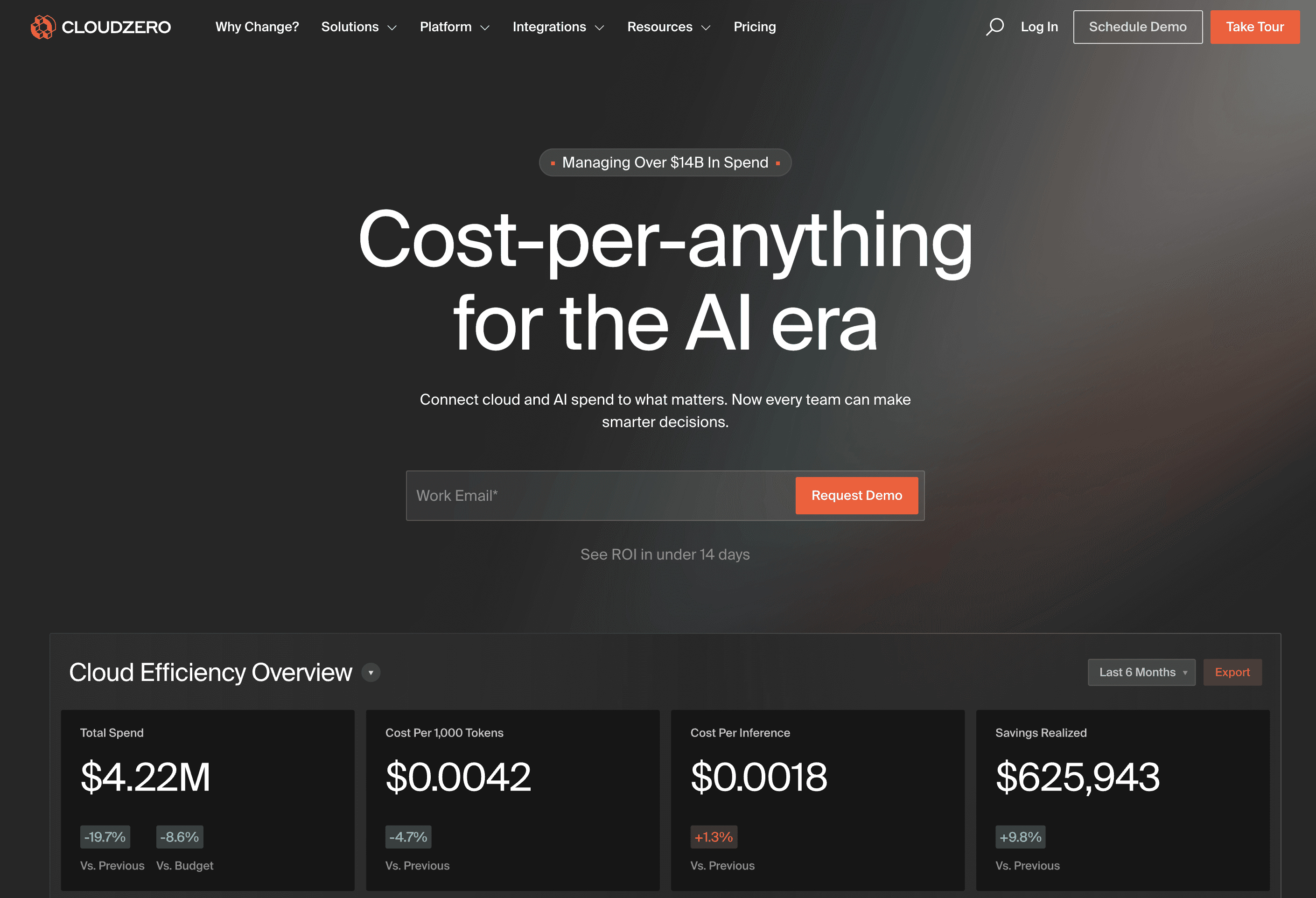
CloudZero is a multi-cloud cost reporting platform that maps every cloud dollar to business outcomes. It supports AWS, Azure, GCP, Kubernetes, Snowflake, Databricks, and OpenAI billing. Its differentiator in 2026 is the CloudZero MCP Server, which lets ChatGPT, Claude, and other LLMs pull live cost data and answer natural-language questions through the v2 API.
Key features:
Cost Per Customer, Cost Per Product, and Cost Per Feature reports out of the box.
AnomalyDetector with Slack and email alerting on unusual cost patterns.
CloudZero MCP Server for LLM-driven cost queries (added 2025).
Multi-cloud and SaaS cost ingestion through over 20 billing connectors.
Customizable allocation rules for shared infrastructure (observability, K8s overhead).
Scheduled reports delivered by email with PDF and CSV exports.
Pricing: Custom, based on cloud and SaaS spend under management. Contact sales for quotes.
Pros:
Unit-economics reporting is more mature here than in most competitors.
MCP server is a real innovation for AI-driven cost analysis in 2026.
Strong customer roster (Drift, Skyscanner, Remitly).
Cons:
No free tier; smaller teams may find pricing high.
Reports focused on cost per X assume strong tagging discipline upstream.
What customers say:
"Within two weeks, we had already found enough savings to pay for a year's worth of license."
- Stuart Davidson, Platform Engineering Lead, Skyscanner
"With CloudZero, we can see what we're spending per individual feature and product easier than within the AWS billing console."
- Freedom Dumlao, Chief Architect, Drift
3. Vantage
Best for: Self-service buyers who want FOCUS-native multi-cloud reports with strong virtual tagging and AI forecasting, plus the broadest set of billing integrations.
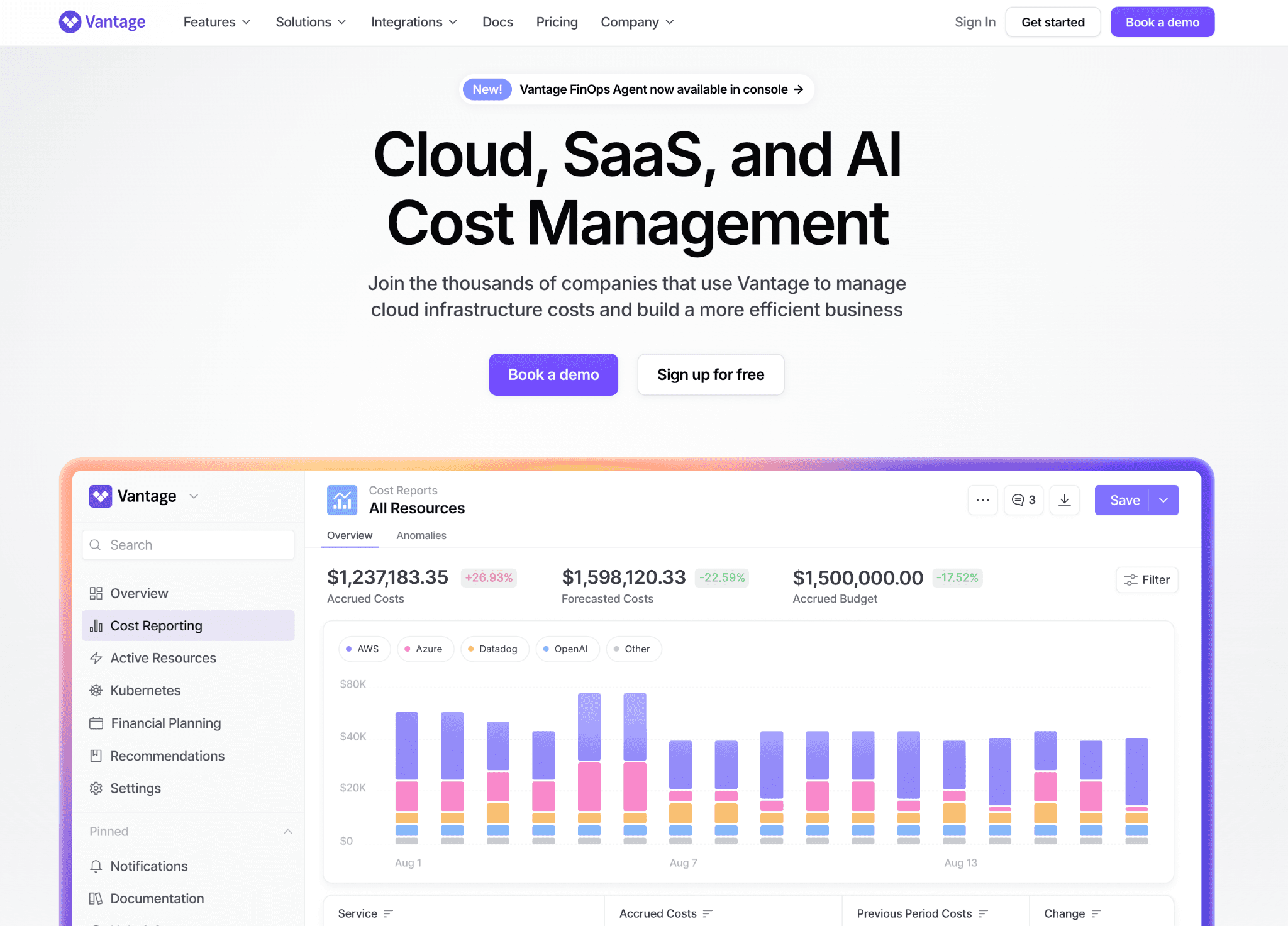
Vantage is a multi-cloud cost reporting platform with FOCUS-native architecture and over 12 billing integrations including AWS, Azure, GCP, Oracle, Alibaba, Snowflake, Databricks, and a long tail of SaaS providers. It is widely used by platform engineering teams that want reports without procurement friction.
Key features:
FOCUS-native data model with FOCUS exports available on every plan.
Virtual Tagging that retroactively assigns tags to historical billing data.
Customizable cost reports with hierarchical filters (account, region, service, tag).
AI forecasting that projects spend based on historical patterns.
Anomaly detection with Slack and email notifications.
Scheduled report delivery via email, Slack, and Microsoft Teams.
Pricing: Free starter tier for cost under $2,500/month. Paid tiers scale by cost under management. Public pricing page.
Pros:
Broadest billing integration coverage in this list.
Virtual Tagging closes the historical tagging gap that plagues most multi-cloud setups.
Self-service pricing lets engineers start without sales conversations.
Cons:
Less polished for finance personas than Cloudability or Flexera.
AI features are forecasting and anomaly only; no natural-language query yet.
What customers say:
"I was able to use my modified script that talks to Vantage instead of Cost Explorer for our reporting this month. All the numbers I expected to be the same as from Cost Explorer were the same and some of our shared costs were more appropriately spread around to various teams because of the Vantage queries being more powerful than Cost Explorer."
- Michael Norton, VP Cloud Services and Operations, PBS
"Vantage Virtual Tagging quickly helped take us from 30% to 99%+ allocation of resources, because I had control."
- Binh Nguyen, Cloud Operations Leader, VGS
4. Apptio Cloudability (IBM)
Best for: Enterprise finance teams running monthly cloud cost closes, where audit-ready chargeback and showback are the primary deliverables.
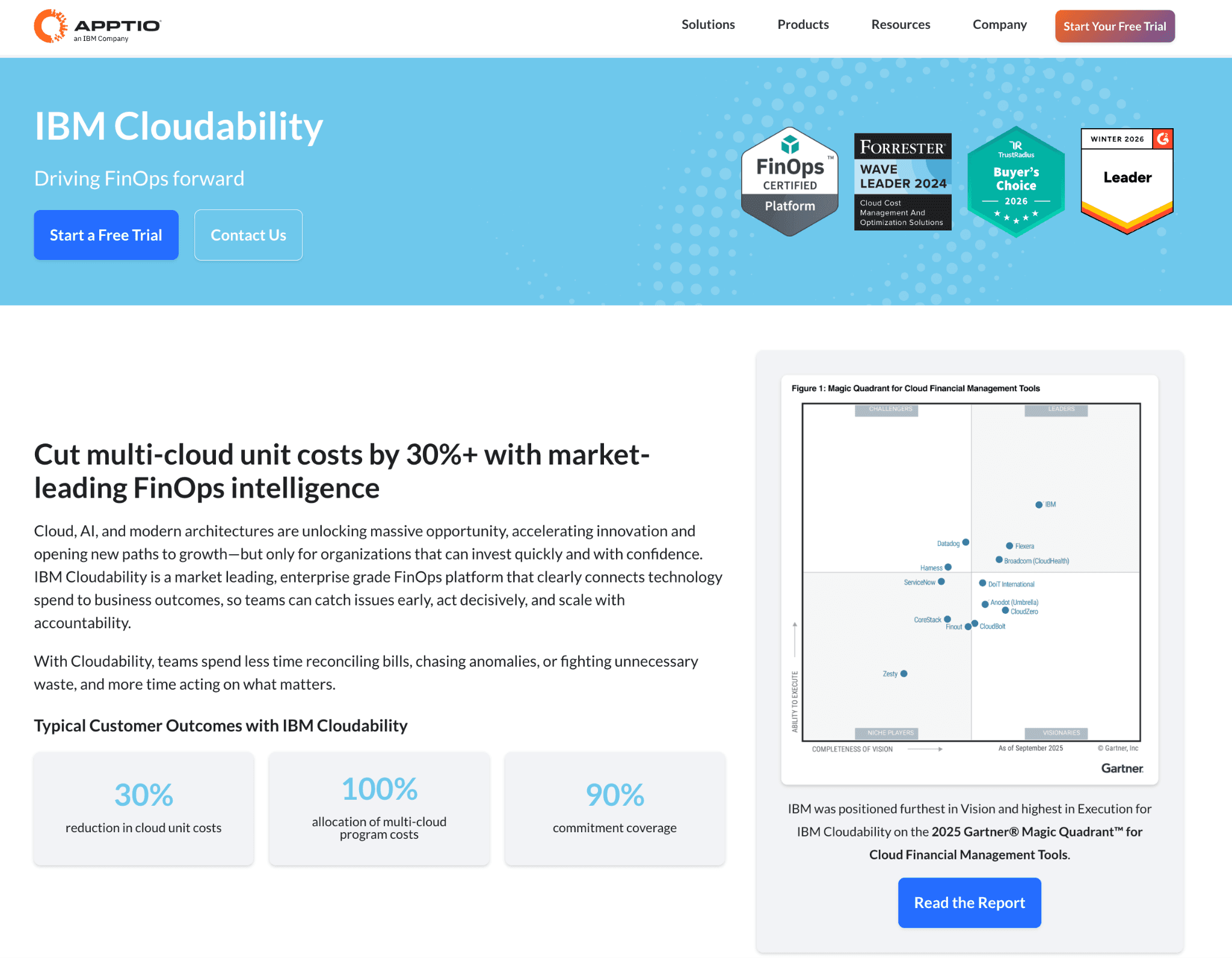
Apptio Cloudability, now part of IBM, is one of the longest-running cloud cost management platforms. It targets enterprise FinOps teams that report to a CFO and need detailed audit trails on every cost allocation. It covers AWS, Azure, GCP, Oracle, and IBM Cloud.
Key features:
Audit-ready chargeback and showback reports with full allocation history.
TrueOps anomaly detection with AI-assisted forecasts.
Business Mappings for retroactive allocation across complex organizational structures.
Budget tracking and variance analysis at department, project, and product level.
Scheduled reports for finance with monthly close support.
FOCUS-aligned exports.
Pricing: Custom, contact IBM/Apptio sales. Typically enterprise-scale (annual contracts).
Pros:
Audit depth is unmatched in this list. Finance teams pass internal audits faster.
Strong forecasting accuracy at enterprise scale.
Backed by IBM's customer support.
Cons:
Onboarding is heavier than self-service tools like Vantage.
Pricing is opaque and aimed at large enterprises.
What customers say:
"We looked at several CCM (cloud cost management) tools and chose IBM Cloudability because it was easy to use and inherently knows AWS cost data."
- Joseph Quinto, Cloud Business Operations Manager, Hyland
5. Finout
Best for: Teams that want one MegaBill view across AWS, Azure, GCP, Kubernetes, Snowflake, and Databricks, with scheduled reports going to Slack and Microsoft Teams.
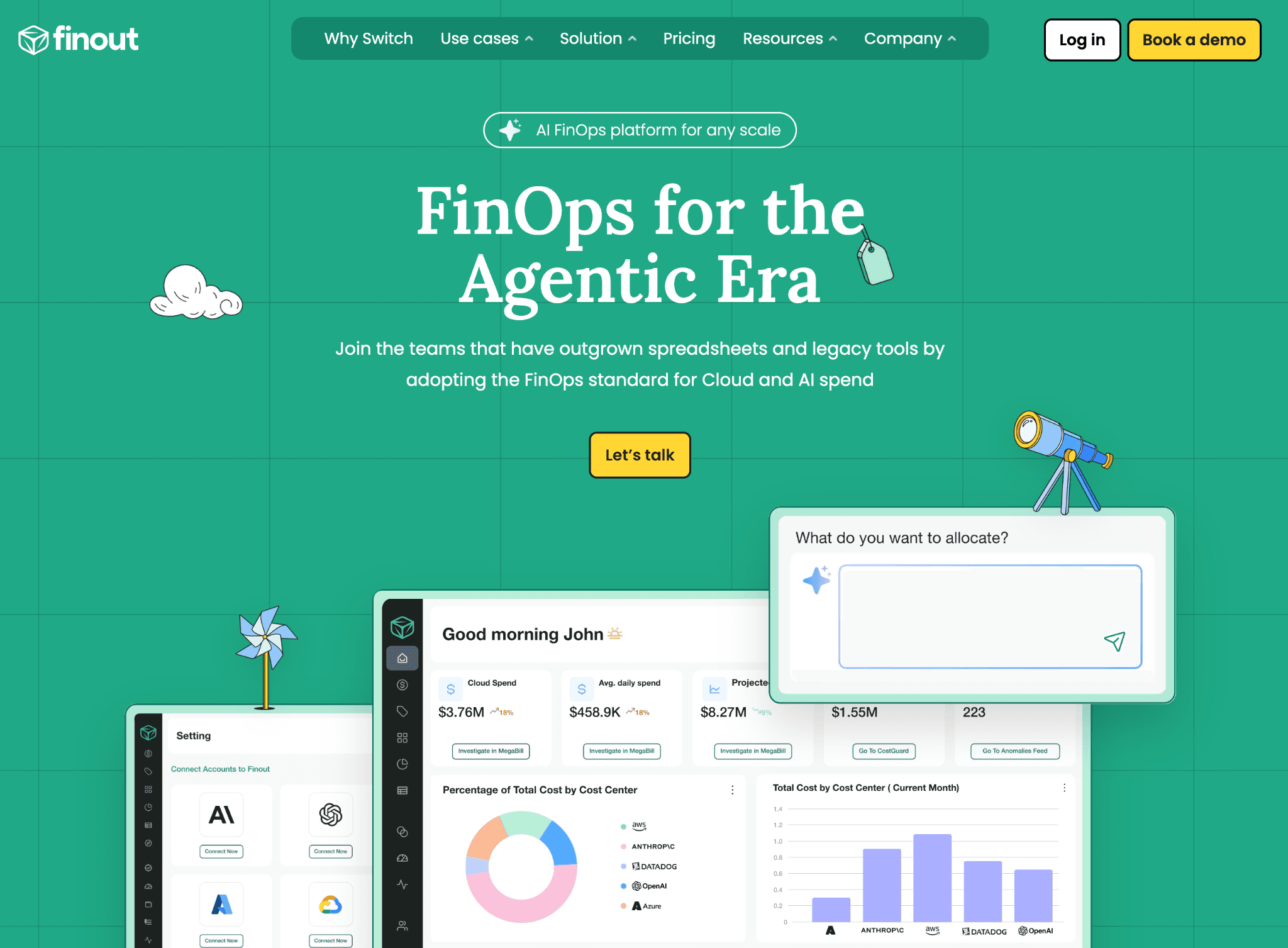
Finout consolidates cost data from AWS, Azure, GCP, Kubernetes, Snowflake, Databricks, and several SaaS providers into a single MegaBill dashboard. Its reporting strength is scheduled multi-cloud digests tailored per team.
Key features:
MegaBill cross-cloud dashboard that rolls up costs in real time.
Virtual Tagging and Shared Cost Reallocation features.
Scheduled daily, weekly, and monthly reports via email, Slack, and Microsoft Teams.
Per-team customized reports (engineering, finance, product) with role-based filtering.
Anomaly detection with ML-based pattern alerts.
FOCUS-native exports.
Pricing: Custom, contact sales. Pricing scales by cloud and SaaS spend under management.
Pros:
Customizable per-team reports keep stakeholders aligned without manual emails.
MegaBill makes the executive review easier than provider-native tools.
Strong customer roster (Lyft, Wiz, PandaDoc).
Cons:
No free tier.
Initial setup of allocation rules requires FinOps maturity.
What customers say:
"Finout's shared cost feature lets us break down huge platform costs across teams based on usage, something cloud providers alone simply couldn't do."
Nic Baumann, Manager TPM-Infrastructure, Lyft
"The native tools like Cost Explorer and Kubecost didn't allow us to create a proper dashboard with a combination of AWS and Kubernetes costs, but Finout does this easily."
Ivan Polonevich, DevOps Team Lead, PandaDoc
"With Finout, it is easy to gather huge amounts of data from a range of sources and create reports that suit each department, tailored to their specific KPIs."
Ron Tzrouya, Lead Cloud FinOps and Analysis, Wiz
6. Datadog Cloud Cost Management
Best for: Engineering teams already running Datadog for observability, who want cost reports adjacent to performance metrics in the same dashboards.
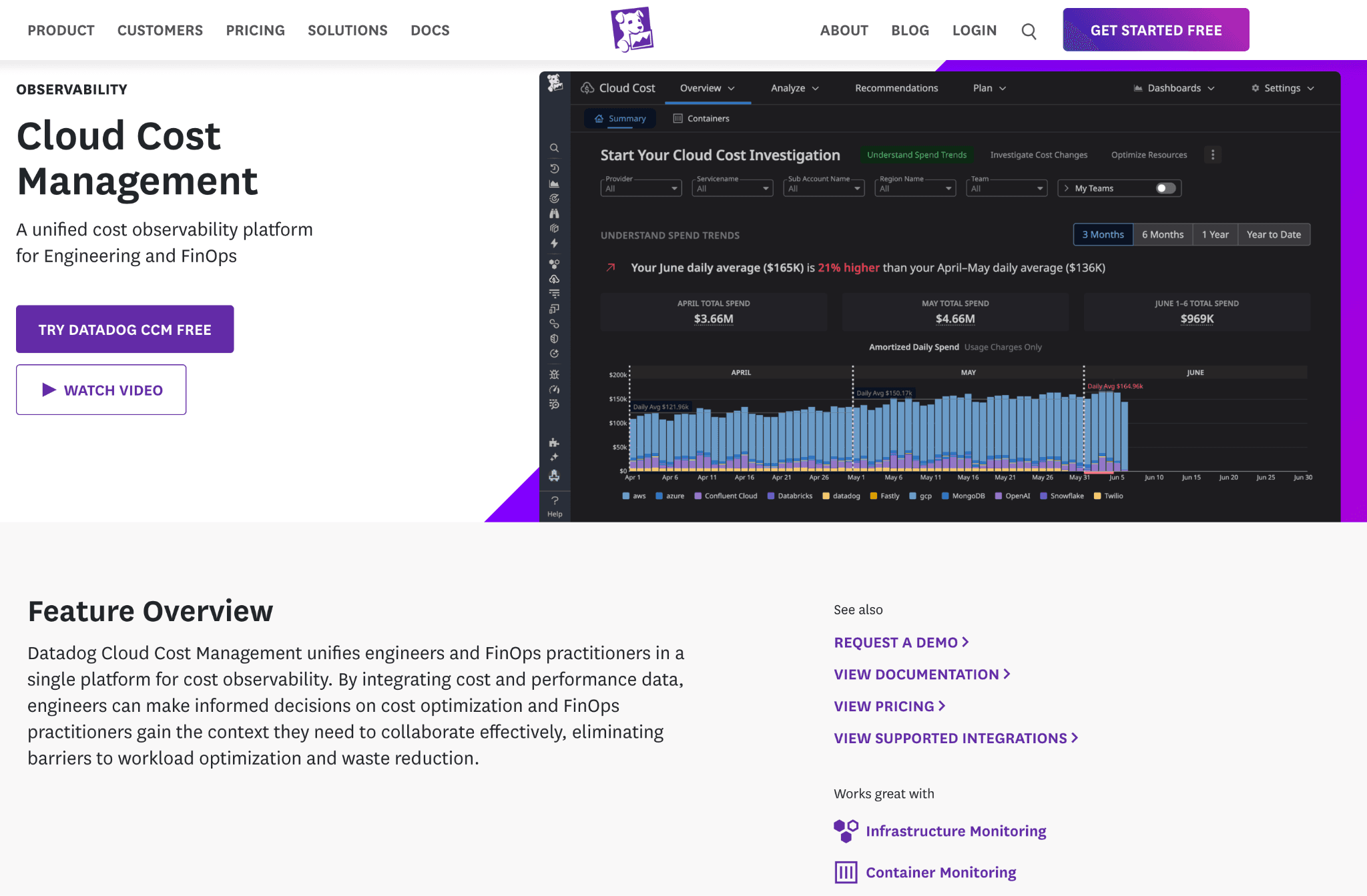
Datadog Cloud Cost Management sits inside the broader Datadog platform, which gives it a unique reporting angle: cost data lives next to APM, infrastructure, and log data. It supports AWS, Azure, GCP, and over 20 SaaS billing integrations including Datadog itself.
Key features:
Cost data in the same dashboards as APM, infrastructure, and logs.
Watchdog AI for cost anomaly detection tied to operational metrics.
Customizable cost monitors with alerting to Slack, email, and PagerDuty.
Scheduled multi-cloud cost reports via email and Datadog Sheets.
Cost data merged with external sources for contextual chargeback reports.
FOCUS-aligned exports.
Pricing: CCM is a paid add-on to existing Datadog subscriptions, priced per host with volume discounts.
Pros:
Engineers see cost without leaving their existing tool.
Cost-to-performance correlation is unique to this platform.
Strong if you already pay for Datadog.
Cons:
Requires Datadog as the primary observability platform.
Finance-persona reporting is lighter than purpose-built FinOps tools.
What customers say:
"Cost can be a canary in a coal mine, and some AWS costs are really hard to understand. With Datadog, we have an overview dashboard and graphs to each component to ensure costs reflect what we were expecting."
Tim Ewald, CTO, Kevel
"Datadog Cloud Cost Management helped us attribute spend at a granular level over dozens of accounts to achieve significant savings. It also enabled us to bring cost data adjacent to operational metrics in a familiar environment for our engineering teams to monitor cost as part of overall service health."
Martin Amps, Principal Engineer, Stitch Fix
7. Harness CCM
Best for: DevOps teams that want cost signals reported alongside CI/CD pipelines, with cost reviews built into sprint cadences.
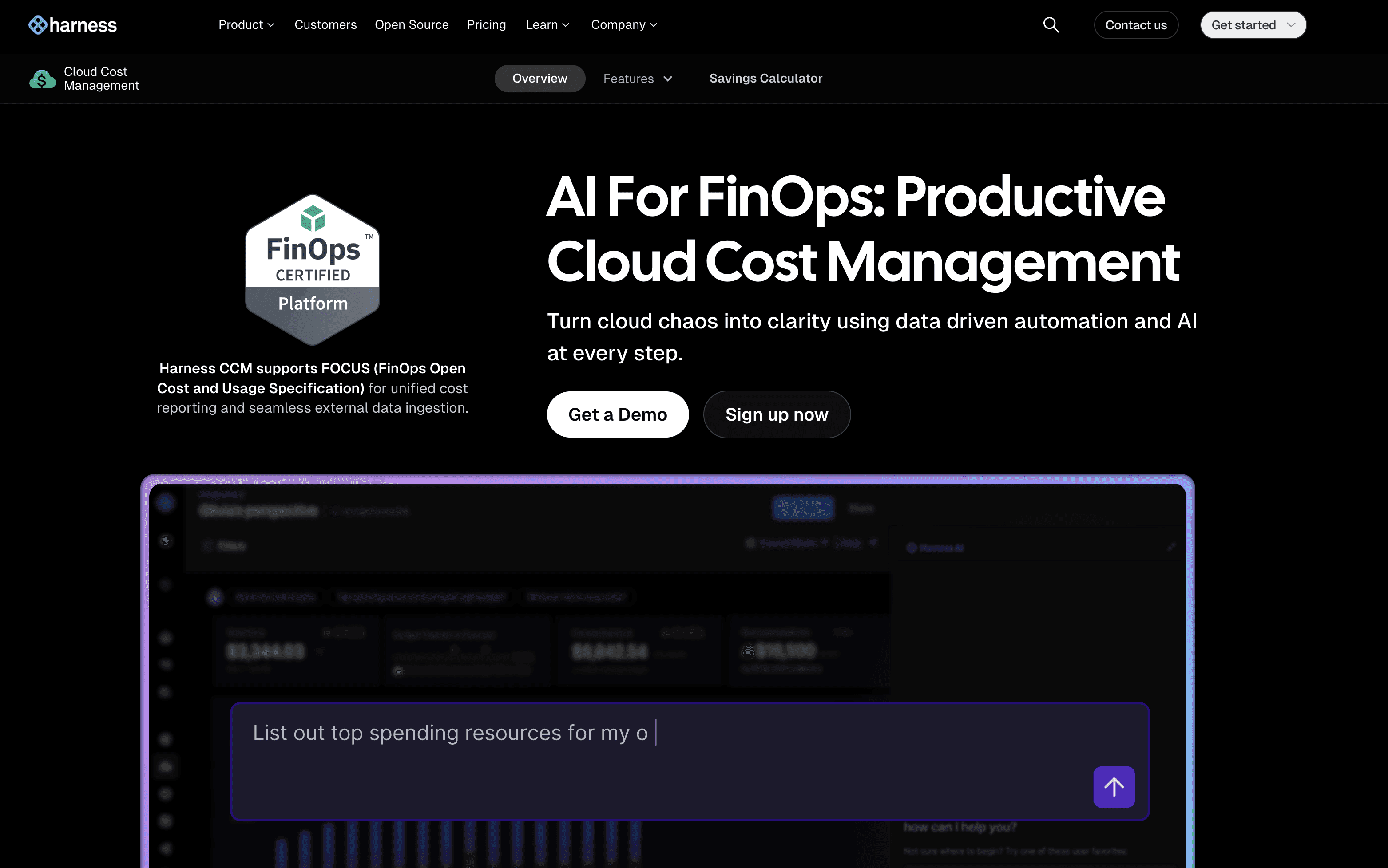
Harness Cloud Cost Management is a module inside the Harness software delivery platform. It supports AWS, Azure, GCP, and Kubernetes. The reporting angle is that cost lives next to deployments, so engineers see cost signals where they ship code.
Key features:
Perspectives view that maps cost to business context (team, product, environment).
Custom cost dashboards built on top of perspective queries.
Anomaly detection across deployments and clusters.
AI-assisted recommendations inside cost reports.
Periodic reports on cost categories shared across sprint reviews.
FOCUS-aligned exports.
Pricing: Per-module pricing inside the broader Harness platform. Custom quotes for enterprise.
Pros:
Cost signals appear in the same UI engineers use for deployments.
Perspectives are flexible for engineering-led allocation.
Strong fit if Harness is already the CI/CD layer.
Cons:
Less useful if Harness is not your delivery platform.
Finance-persona reporting depth is lighter than Cloudability.
What customers say:
"Harness CCM is catching a lot more overruns, including those that are smaller, not to mention enabling active reviews of costs during every sprint meeting."
Jay Patel, Director of Platform Engineering-DevOps, OneAdvanced
"All developers in Synopsys have access to recommendations within Harness CCM. We recommend that developers use this information when deploying new microservices to the cloud."
Jim D'Agostino, Senior DevOps Engineer, Synopsys
8. CloudHealth by Broadcom
Best for: Large enterprises that need policy-based governance combined with executive dashboards and detailed chargeback across AWS, Azure, GCP, and Oracle.
[SCREENSHOT: CloudHealth executive dashboard with multi-cloud cost and savings rollup]
CloudHealth, now part of Broadcom (formerly VMware Tanzu), is an enterprise-grade multi-cloud cost management and governance platform. It supports AWS, Azure, GCP, and Oracle Cloud. Reporting strength sits in executive dashboards and detailed chargeback with audit trails.
Key features:
Executive dashboards for CFO and CIO personas.
Detailed chargeback reporting with audit history.
Scopes (formerly Perspectives) for organizational mapping.
Policy-based anomaly detection that triggers reports.
Scheduled reports delivered via email and FTP.
FOCUS-aligned exports.
Pricing: Custom, contact Broadcom sales. Typically enterprise-scale.
Pros:
Mature in Fortune 500 finance teams.
Policy engine integrates governance with reporting.
Long track record on AWS and Azure environments.
Cons:
Procurement under Broadcom has been described as slower since the VMware acquisition.
Modern UI lags self-service competitors like Vantage.
What customers say:
CloudHealth is widely deployed in Fortune 500 finance teams and a frequent inclusion in FinOps X conference sessions. Its representation at FinOps X 2025 included a session on the Scopes feature, where Anthony Johnson of MGM Resorts spoke to multi-environment FinOps governance (source: VMware Tanzu blog coverage).
For independent customer commentary, the Gartner Peer Insights page for CloudHealth carries verified reviews from finance and operations leaders evaluating reporting depth.
9. Ternary
Best for: Teams that want a FOCUS-native multi-cloud reporting platform with a clean data model and persona-driven dashboards across AWS, Azure, GCP, and Kubernetes.
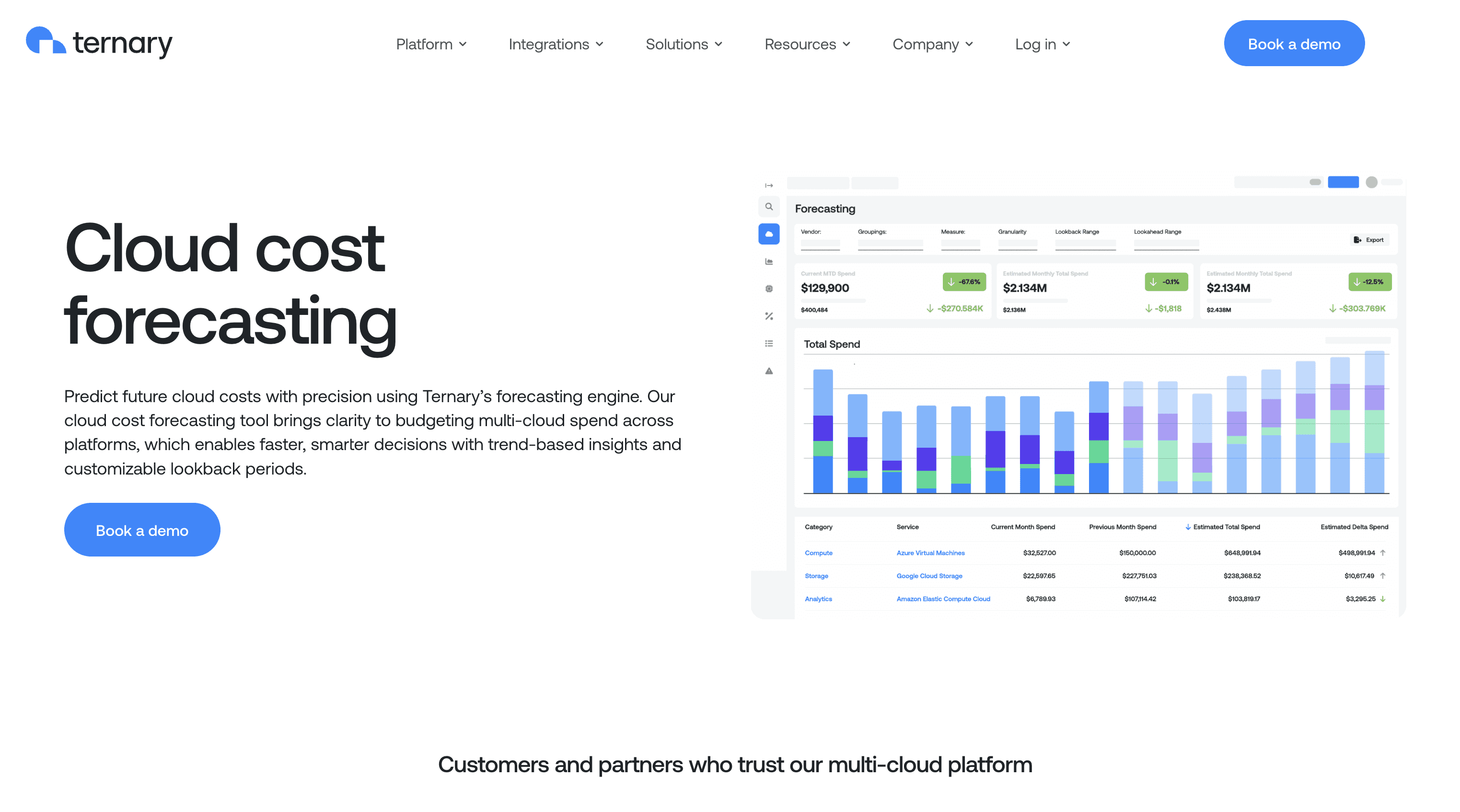
Ternary was built on the FOCUS specification from the start. It supports AWS, Azure, GCP, Oracle, and Kubernetes. The platform targets FinOps teams that want consistent reports without writing custom ETL.
Key features:
FOCUS-native data model and FOCUS-compliant exports.
Business mapping perspectives for organizational allocation.
Saved searches and customizable reports.
Anomaly insights surfaced inside scheduled reports.
Natural-language search (added late 2025).
Scheduled report delivery via email and Slack.
Pricing: Custom, contact sales. Typically priced by cost under management.
Pros:
FOCUS-native architecture means less drift as cloud providers update billing schemas.
Clean UI praised by reviewers.
Strong fit for teams that want vendor-neutral data.
Cons:
Smaller customer footprint than Cloudability or CloudZero.
Some advanced reports require setup work.
What customers say:
"There was not a single pane of glass unless a customer decided to invest dedicated effort, time, and money into building an intrinsic dashboard leveraging Looker and a combination of other GCP services."
Akshay Jituri, Cloud Cost Optimization Specialist, Rackspace Technology
10. Flexera One
Best for: Global enterprises with software contract managers who need multi-cloud chargeback combined with software lifecycle data.
Flexera One is an enterprise multi-cloud cost management platform with deep integration into software licensing and contract data. It supports AWS, Azure, GCP, and Oracle Cloud.
Key features:
Multi-cloud chargeback and showback with audit-ready documentation.
AI-assisted forecasting across cloud and software spend.
Detailed cost breakdowns by department, project, and contract.
Cost intelligence reports for procurement and finance.
FOCUS-aligned exports.
Integration with Flexera's software licensing data.
Pricing: Custom, contact Flexera sales. Enterprise contracts only.
Pros:
Software contract context inside cost reports is unique to this platform.
Enterprise-grade audit trails for finance reporting.
Strong global presence.
Cons:
Pricing is opaque and not aimed at smaller teams.
Onboarding can take months for global rollouts.
What customers say:
"Cloud Cost Optimization gives us unprecedented insight into the state of our cloud spend so we can better leverage our AWS cloud investments."
Laurent Gaertner, Director of Global Network and Hosting, Carlsberg Group
"Flexera gives me the necessary data quality to provide the financial transparency and overview required in a global software lifecycle management department."
Melanie Nash, Senior Software Contract Manager, Carlsberg
11. Anodot
Best for: Teams whose primary reporting concern is multi-cloud anomaly detection, with ML-driven pattern recognition baked into every report.
Anodot (now also marketed as Umbrella) is a multi-cloud cost management platform with machine learning at the core. It supports AWS, Azure, GCP, and Snowflake. Reporting strength is anomaly-first: every scheduled report can surface ML-detected cost spikes before they appear on the bill.
Key features:
ML-based multi-cloud anomaly detection (the core product).
Scheduled anomaly digest reports.
Forecasting based on historical patterns.
Cross-cloud cost attribution.
FOCUS-aligned exports.
Pricing: Custom, contact Anodot sales.
Pros:
The ML anomaly engine is purpose-built for this use case.
Useful for SREs and platform teams that need early warning on cost.
Strong for organizations that have struggled with cost surprises.
Cons:
Less mature for finance-persona reporting than Cloudability or Flexera.
Public customer testimonials are limited; ask for direct references during evaluation.
What customers say:
Anodot's customer base spans regulated industries that prioritize anomaly detection in monthly cost closes. For verified customer commentary, Anodot's customer page lists case studies including Avantis, Natural Intelligence, and Hudson MX. The Anodot State of Cloud Cost report 2025 provides public benchmarks on multi-cloud reporting maturity authored by Anodot's leadership team, useful for ICP referencing.
12. nOps
Best for: AWS-led teams that want multi-cloud cost reports with stronger AWS depth, automated through an AI agent.
nOps is a multi-cloud cost reporting and optimization platform with AWS roots. It now supports Azure and GCP as well. Reporting strength is automated multi-cloud reports with an AI agent for cost recommendations.
Key features:
Multi-cloud cost reports with strong AWS depth.
AI agent that surfaces cost recommendations inside reports.
Scheduled report delivery.
Cost allocation across business units.
FOCUS-aligned exports.
Pricing: Free tier with AWS support. Paid tiers for full multi-cloud and automation features.
Pros:
Free tier lets AWS-heavy teams start without procurement.
AWS depth is stronger than most generalist multi-cloud tools.
AI agent reduces manual report curation.
Cons:
Azure and GCP coverage is shallower than AWS.
Less suited if your cloud mix is Azure-led or GCP-led.
What customers say:
"nOps is a no-brainer for managing AWS costs. It's easy to get started and realize significant savings without any long-term commitments."
Björn Wening, Senior Director of Cloud Operations, Mobileum
For independent multi-cloud commentary, nOps G2 reviews page carries verified customer feedback covering Azure and GCP reporting maturity.
How to choose a multi-cloud cost reporting tool
Five criteria separate the right tool from the rest in 2026.
Cloud coverage matrix. Make sure the tool supports every cloud you run today and the two you might run next year. If you are 70% AWS but plan to add GCP for AI workloads, pick a tool with strong GCP support, not one where GCP is a roadmap item.
FOCUS support depth. Ask for a FOCUS export during the demo. A FOCUS-native tool hands it to you in one click. A FOCUS-aligned tool produces it from internal mapping. Either works, but FOCUS-native usually means less maintenance over time.
Reporting AI capability. In 2026, four AI features matter: natural-language query, anomaly explanation, auto-summary, and forecasting. Ask the vendor which they have today (not on the roadmap) and ask for a live demo on your data.
Persona-fit dashboards. Your CFO does not want the same view as your SRE. The tool should produce role-specific reports without you rebuilding them three times.
Scheduled report delivery. Check the delivery surfaces: email is table stakes; Slack, Microsoft Teams, and PagerDuty matter more in 2026. Daily, weekly, and monthly cadences should be default options.
Frequently asked questions
What are multi-cloud cost reporting tools?
Multi-cloud cost reporting tools pull billing and usage data from AWS, Azure, Google Cloud, and other providers, normalize it into a common data model (often FOCUS), and produce dashboards, scheduled reports, and AI-driven insights for engineering, finance, and leadership stakeholders.
What is the FOCUS specification and why does it matter for multi-cloud reporting?
FOCUS (FinOps Open Cost and Usage Specification) is an open standard maintained by the FinOps Foundation that defines a common schema for cloud cost data. It matters because it removes weeks of custom ETL work and makes reports consistent across AWS, Azure, GCP, Oracle, Snowflake, and more.
Can I get one report covering AWS, Azure, and GCP simultaneously?
Yes. Every tool in this list ingests billing data from at least the three major hyperscalers and produces unified reports. Tools like Amnic, Vantage, Finout, and Ternary go further and add Oracle, Alibaba, Kubernetes, and SaaS providers in the same report.
How do multi-cloud cost reporting tools normalize data from AWS CUR, Azure Cost Management, and GCP Billing Export?
They ingest each provider's native billing format (AWS Cost and Usage Report, Azure Cost Management exports, GCP Billing Export to BigQuery) and map it into a unified schema. Most 2026 tools map to FOCUS for consistency across providers.
What is the difference between AWS Cost Explorer and a multi-cloud cost reporting tool?
AWS Cost Explorer reports only on AWS spend. A multi-cloud cost reporting tool reports across AWS, Azure, GCP, and others in one view, normalizes the data into a common schema, and adds allocation, chargeback, anomaly detection, and AI features on top.
How do AI features (natural-language query, anomaly explanation) work across AWS, Azure, and GCP?
Tools like Amnic, CloudZero, and AWS Cost Explorer with Amazon Q let users type questions in plain English ("what did we spend on AI last month?") and return filtered reports. Anomaly explanation uses ML to identify cost spikes and write a short narrative explaining the cause.
What is showback vs chargeback in multi-cloud cost reporting?
Showback shows teams what their cloud cost would be if they were billed for it; chargeback actually allocates the cost back to the team's budget. Most multi-cloud tools support both, and the FOCUS spec includes columns to support either pattern.
Do multi-cloud cost reporting tools cover Kubernetes and SaaS spend?
Several do. Amnic, CloudZero, Vantage, Finout, Datadog, Harness, and Ternary include Kubernetes cost data. CloudZero, Vantage, and Finout also ingest SaaS billing (Snowflake, Databricks, OpenAI), making them the closest to true total-cloud-cost coverage in 2026.
Ready to see multi-cloud cost reporting work on your bill?
If you want one report covering AWS, Azure, GCP, Oracle, Alibaba, and Kubernetes, with four AI agents producing role-specific views and natural-language query through Amnic Assistant, book a demo with Amnic or start free on the free tier.
Better visibility and management into AI Tokens?
Start with a 30 day trial
Connect leading LLMs
24 hour time to value
Stay ahead of AI Spend

Make AI spend visible, controllable, and accountable.
Gain insights into your AI token costs at a team, customer, business unit and individual user level to measure and manage AI utilization.
Recommended Articles

8 Best Llama Cost Management Tools in 2026
Read More
8 Best Amazon Bedrock Cost Optimization Tools for 2026
Read More

7 Best Amazon Bedrock Cost Monitoring Tools
Read More

8 Best Gemini Cost Visibility Tools for 2026
Read More

7 Best Multimodal Cost Optimization Tools for 2026
Read More

5 Best Anthropic Cost Allocation Tools for 2026
Read More