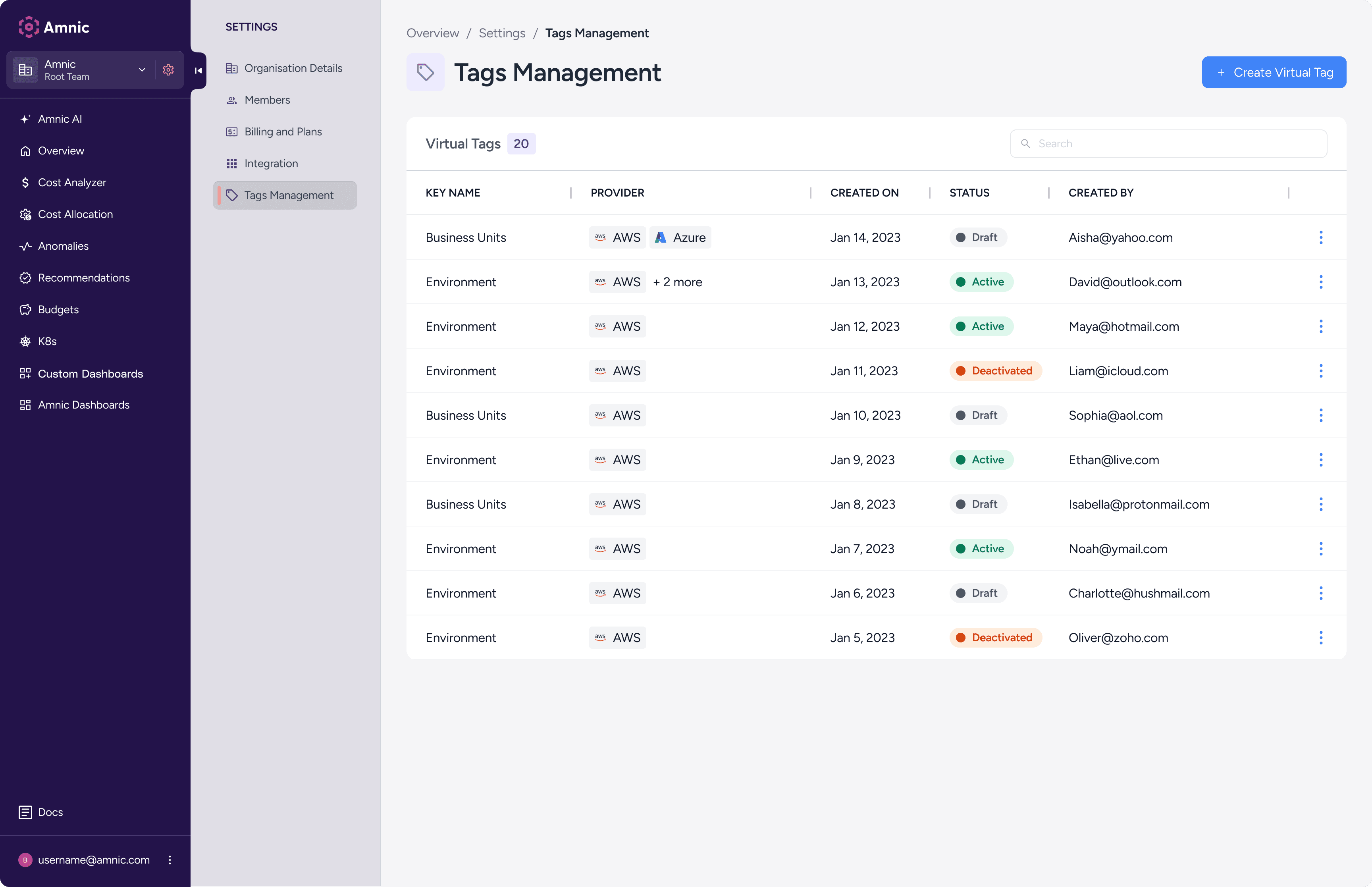









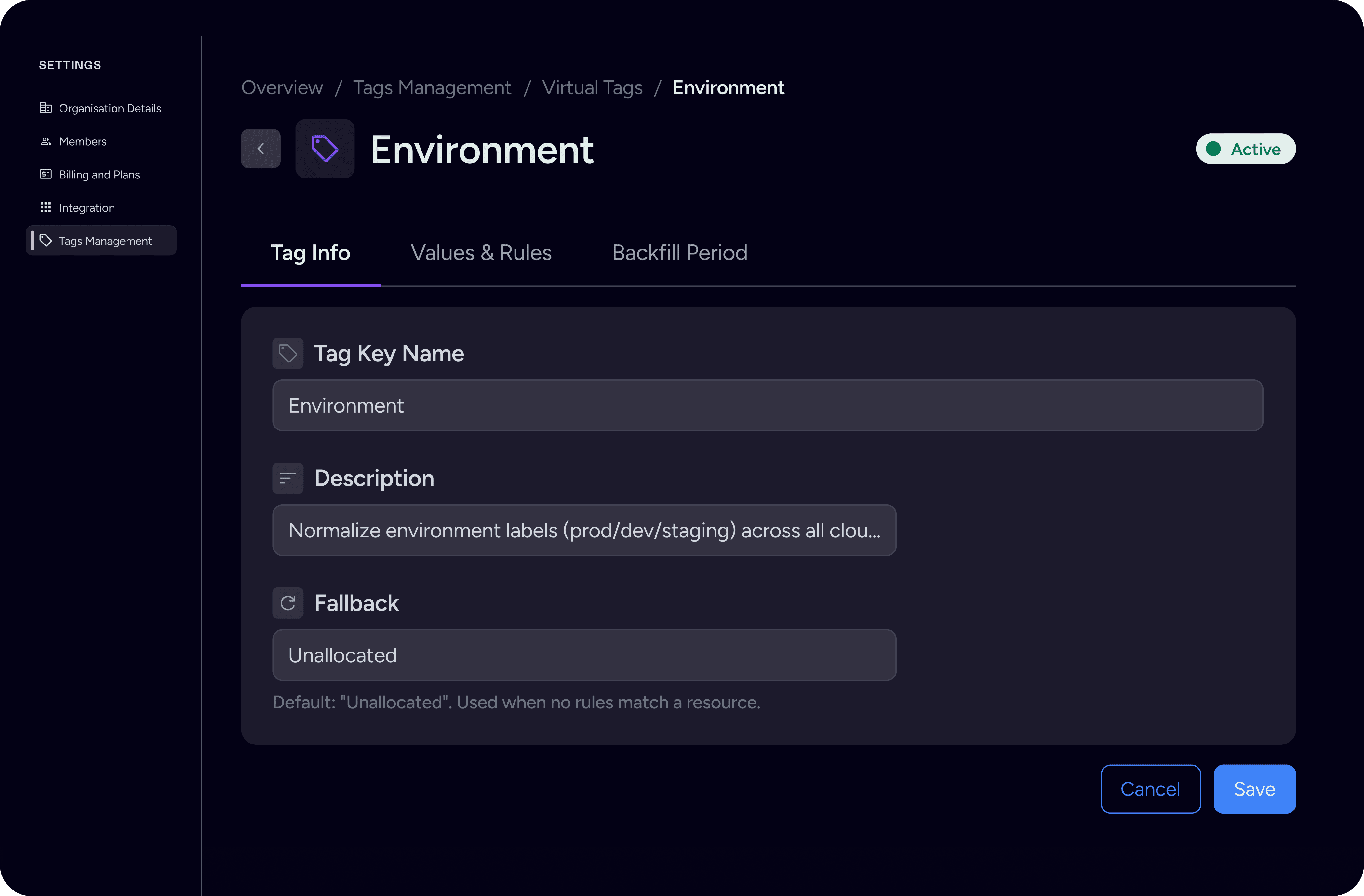
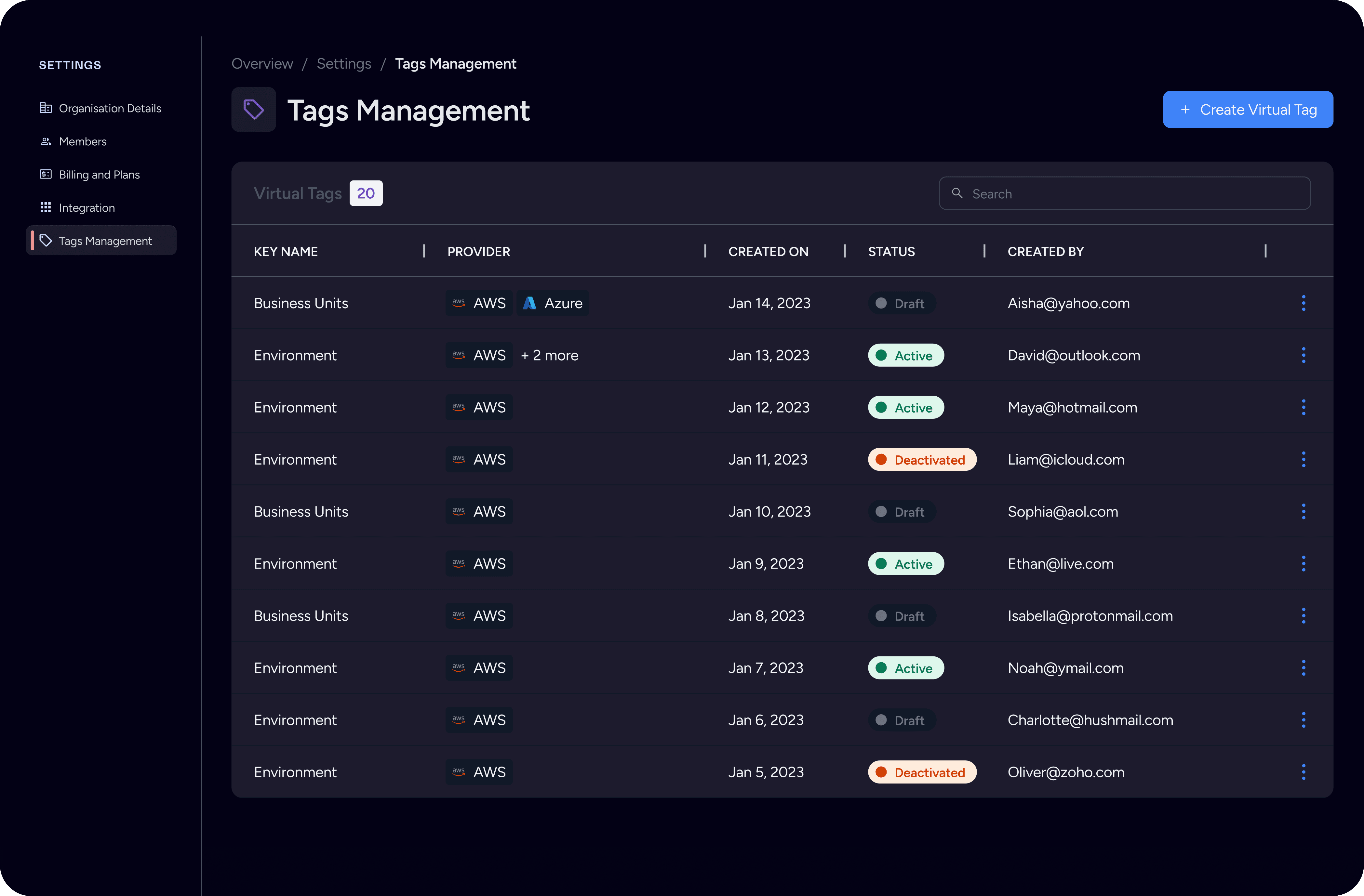
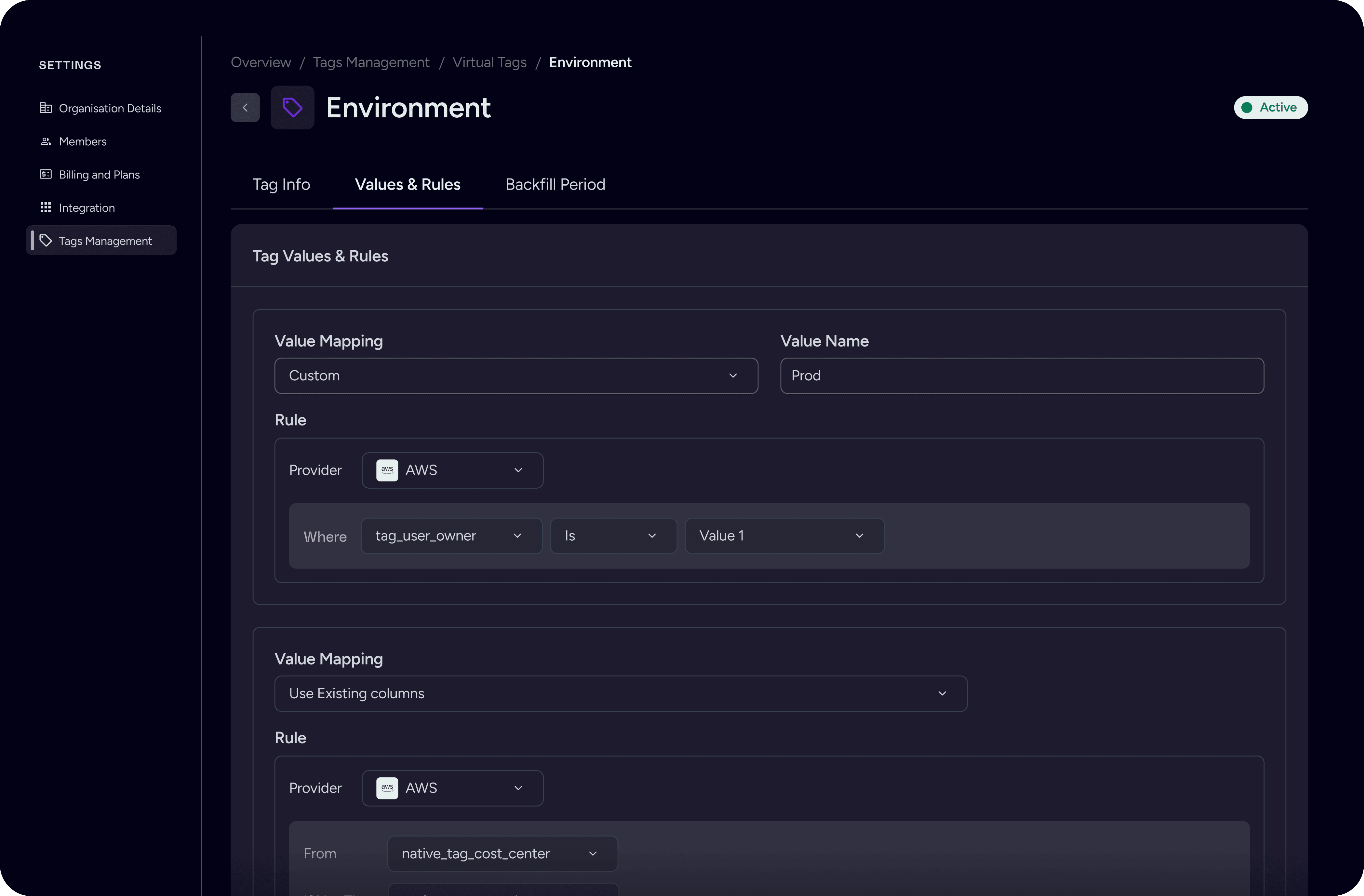
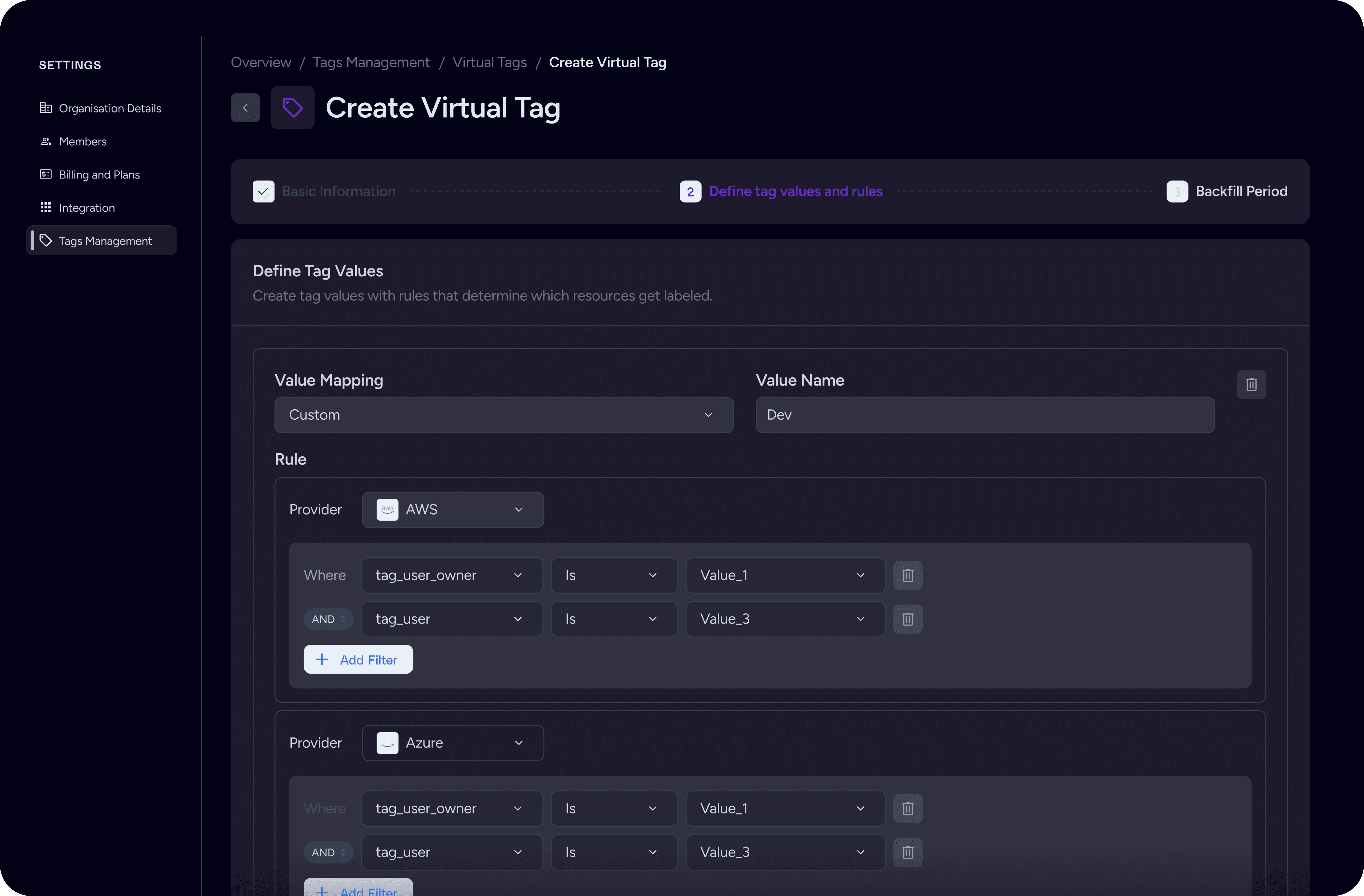
Not every resource comes with complete metadata, and manual tagging often leaves gaps. Virtual Tags fill those gaps by assigning fallback values like Unallocated or Unknown. Working at the reporting layer, they capture and categorize every cost, no retrofitting or infrastructure changes needed.


Benchmark maturity,close governance gaps,
and drive ROI in under 20 minutes








Frequently Asked Questions
1. What are Virtual Tags and how are they different from native cloud tags?
Virtual Tags are a smarter layer of cost categorization that sit on top of your existing cloud tagging, no infrastructure changes required. While native tags (AWS tags, GCP labels, Azure tags) often arrive incomplete, inconsistent, or missing altogether, Virtual Tags work at the reporting layer to fill gaps, normalize naming, and categorize every single cost across providers. Think of them as the clean up crew for messy cloud tagging.
2. Do I need to change my infrastructure or redeploy resources to use Virtual Tags?
Not at all. That's the whole point. Virtual Tags are applied at the reporting layer, so there's zero retrofitting, zero engineering lift, and zero risk to production. You can start categorizing costs instantly, without touching a single line of terraform or asking engineers to tag resources all over again.
3. Can Virtual Tags unify tagging across AWS, Azure, and GCP?
Yes, and that's where they shine. Each cloud provider handles tagging differently, AWS uses tags, GCP uses labels, Azure has its own naming rules, and teams rarely follow the same convention. Virtual Tags normalize all of that into a single, unified taxonomy, so your cost reports reflect your business, not the quirks of each provider.
4. How do Virtual Tags handle untagged or inconsistently tagged resources?
They capture every cost, tagged or not. Untagged resources get fallback values like "Unallocated" or "Unknown" so nothing slips through. Inconsistent values like "dev," "development," and "DEV" get automatically standardized using rule based logic. The result is 100% cost coverage with zero blind spots.
5. Who benefits most from using Virtual Tags?
FinOps teams get clean, accurate cost allocation without chasing engineers for missing tags. Engineering leaders skip manual retagging projects. Finance and leadership get reports that mirror how the business actually runs, by team, project, product, or environment. It's cleaner data, faster insights, and less friction across the org.