February 6, 2026
MCP: The Open Protocol Supercharging AI for FinOps Automation
10 min read
As cloud environments expand and AI becomes part of everyday operations, managing technology spend has quietly become one of the toughest leadership challenges for modern organizations. What was once a simple infrastructure decision is now a constantly shifting mix of cloud services, data platforms, AI models, and distributed systems – all generating costs in different ways.
FinOps teams are now expected to keep track of multi-cloud usage, control AI-related spending, forecast budgets, improve unit economics, and connect infrastructure costs to real business results – often under tight timelines. Yet in many companies, this work is still held together by spreadsheets, disconnected dashboards, and after-the-fact reports. By the time insights arrive, the opportunity to act has usually passed.
At the same time, AI agents are rapidly evolving from simple chat interfaces into autonomous systems capable of reasoning, planning, and executing complex workflows. For FinOps, this creates a powerful opportunity: moving from reactive cost management to intelligent, automated financial governance.
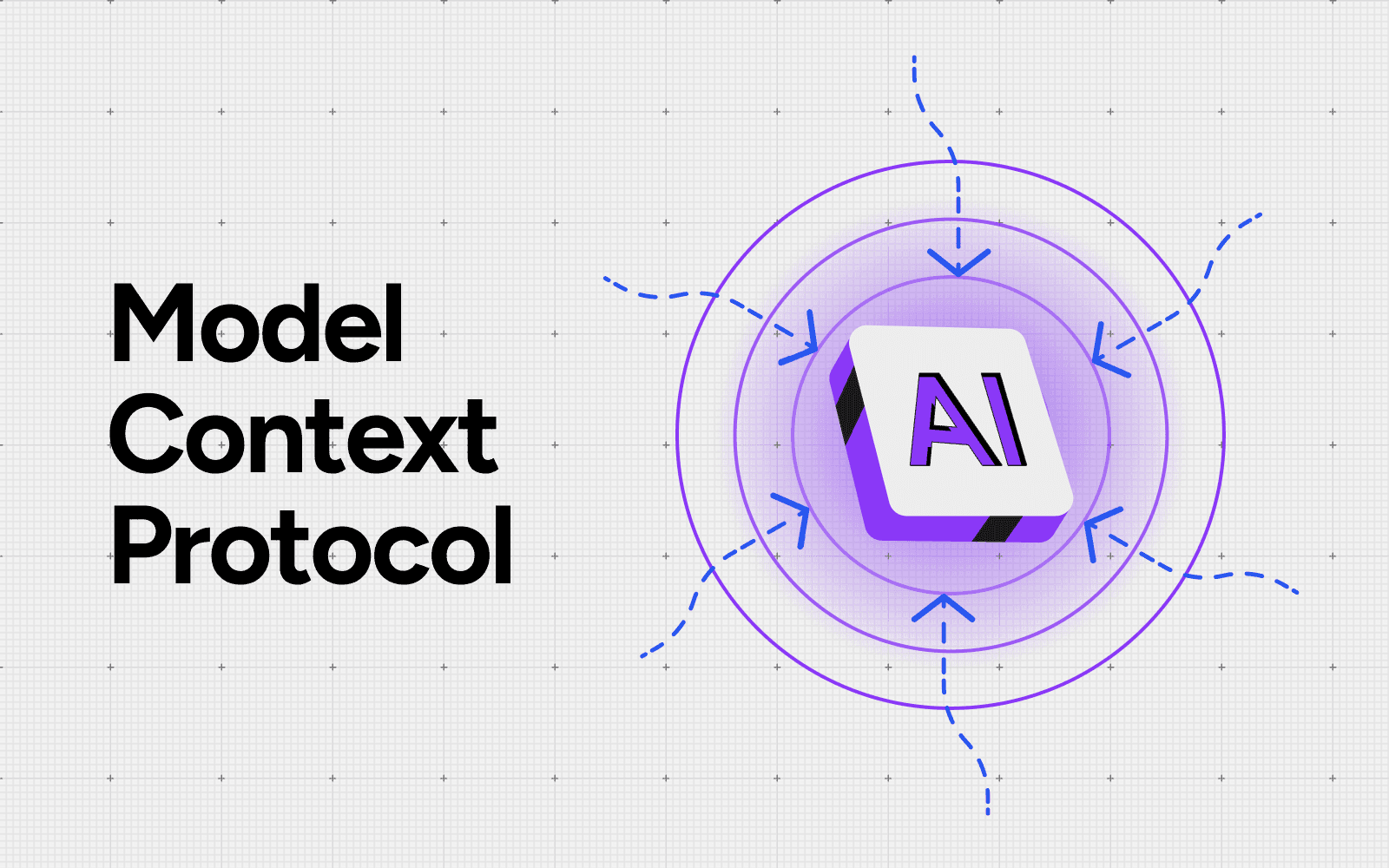
At the center of this shift is MCP, the Model Context Protocol, an open standard designed to help AI systems access, understand, and act on enterprise data securely and consistently.
In this blog, we explore how MCP is transforming FinOps automation in 2026, why open protocols matter, and how organizations can use this foundation to build truly intelligent cost governance.
Why FinOps Needs Open AI Infrastructure
Modern cloud environments are no longer centralized or predictable. They are distributed across regions, providers, platforms, and services. AI workloads run alongside traditional applications. Data flows continuously between systems. Pricing models change frequently. Usage patterns shift by the hour.
In this environment, traditional FinOps approaches struggle to scale.
Most teams still depend on:
Static dashboards
Periodic reports
Manual reviews
Rule-based automation
Spreadsheet-driven forecasting
These methods were designed for simpler infrastructure. They are not built for AI-driven, multi-cloud, real-time environments.
Meanwhile, organizations are experimenting with AI copilots and agents to analyze costs, generate insights, and recommend actions. But these systems often operate with limited context. They lack consistent access to billing data, usage metrics, contracts, policies, and business priorities.
Without shared context, AI cannot make reliable financial decisions.
This is the gap MCP is designed to fill.
What Is MCP (Model Context Protocol)?
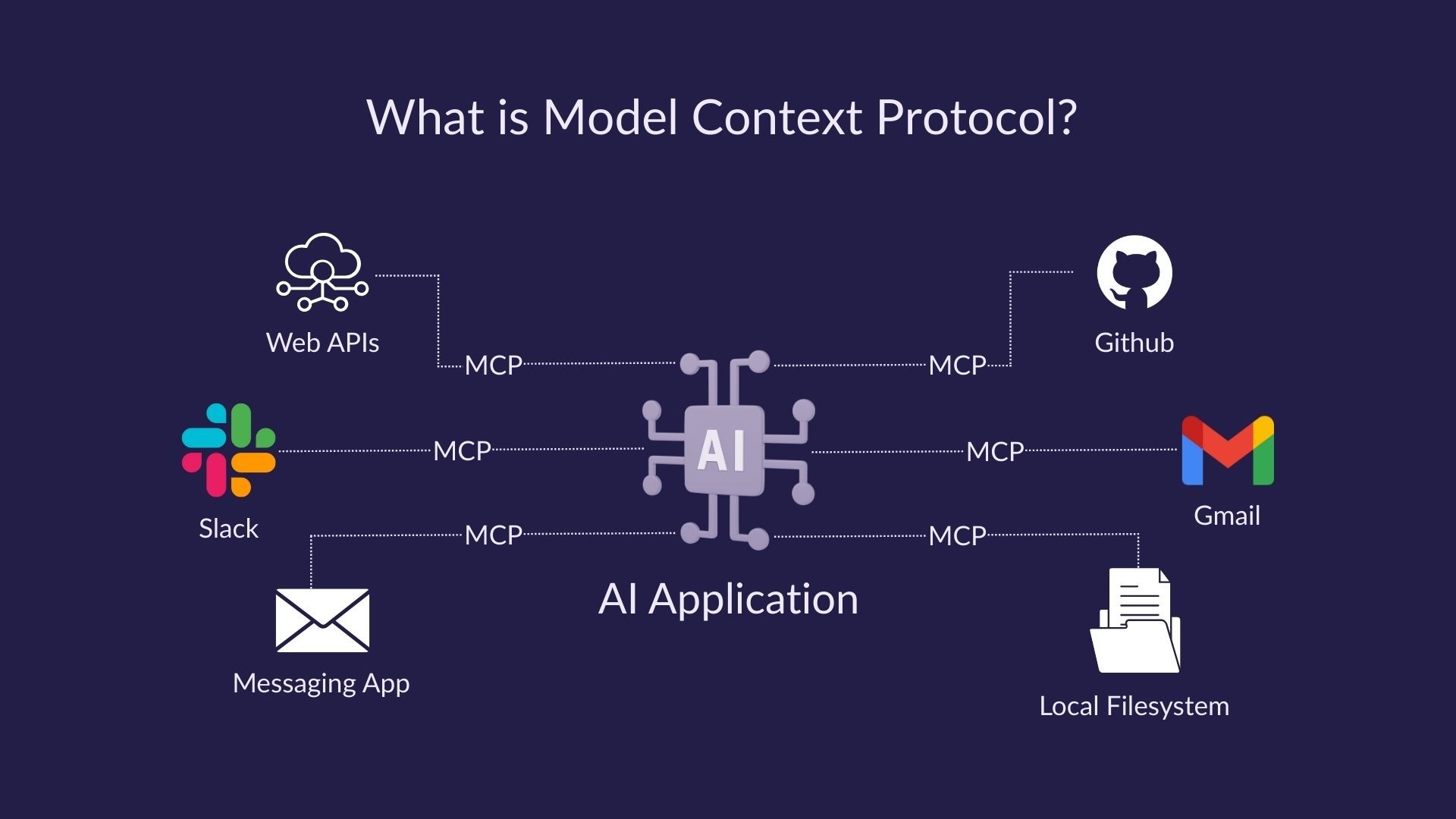
MCP, or Model Context Protocol, is an open standard that defines how AI systems securely access external tools, databases, and enterprise systems.
Instead of building custom integrations for every platform, MCP provides a standardized way for AI agents to retrieve structured, permissioned context from multiple sources.
In simple terms, MCP allows AI systems to understand:
What data exists
Where it lives
How to access it
What they are allowed to do with it
Unlike traditional APIs, which are often built for specific applications, MCP is designed for reasoning systems. It focuses on delivering complete, relevant context so AI can make informed decisions.
For FinOps, this means AI agents can access:
Cloud billing records
Usage metrics
Tagging structures
Budget policies
Forecast models
Contract terms
Sustainability data
Business KPIs
All through a consistent interface. This transforms AI from a reporting tool into a decision engine.
The Evolution of FinOps Automation: Before and After MCP
Before MCP
Traditional FinOps automation relies heavily on predefined rules and human oversight.
Common characteristics include:
Threshold-based alerts
Manual anomaly reviews
Static budget limits
Human approval workflows
Limited cross-platform intelligence
While helpful, these systems struggle with complex trade-offs. They cannot reason across multiple variables such as performance, cost, risk, and business impact.
As a result, optimization remains slow and reactive.
After MCP
With MCP-enabled AI agents, FinOps automation becomes context-aware and adaptive.
Key capabilities include:
Cross-platform reasoning
Continuous optimization
Predictive governance
Autonomous remediation
Business-aligned decisions
Instead of asking, “Did we exceed the budget?”, systems begin asking, “Why is this happening, what is the impact, and what is the best response?”
This marks the shift from automation to intelligence.
Why MCP Is a Game-Changer for FinOps
Unified Financial Context
Today, most FinOps teams operate with fragmented data. Cloud billing lives in provider consoles, usage metrics sit in monitoring tools, allocation data is maintained in spreadsheets, and financial reporting happens in ERP systems. Each team sees only part of the picture.
MCP acts as a common communication layer that allows AI agents to securely access and combine these disconnected sources into a single operational view. Instead of switching between dashboards and manually reconciling reports, teams get a unified, continuously updated financial context.
This eliminates blind spots, reduces reporting inconsistencies, and enables more accurate cost attribution across teams, products, and business units. With a shared source of truth, engineering, finance, and leadership can make decisions based on the same data.
Real-Time Cost Intelligence
Traditional FinOps processes rely heavily on delayed reports. By the time cost anomalies, inefficient workloads, or budget overruns are discovered, the financial impact has already occurred.
With MCP, real-time usage, performance, and billing data can be streamed directly to AI systems. This allows agents to continuously monitor spending patterns and infrastructure behavior as they happen.
As a result, anomalies, unexpected spikes, and underutilized resources can be detected within minutes instead of weeks. AI agents can flag risks early, recommend corrective actions, or even trigger automated responses. This shifts FinOps from reactive cost management to proactive financial governance.
Interoperability Across Tools
One of the biggest barriers to automation in FinOps is integration complexity. Most organizations use a mix of cloud providers, container platforms, SaaS tools, and financial systems, each with its own APIs, formats, and limitations.
MCP is designed to be vendor-neutral and extensible. It provides a standardized way for AI agents to interact with AWS, Azure, GCP, Kubernetes, data platforms, SaaS services, and finance systems without requiring custom-built connectors for every tool.
This dramatically reduces integration effort and ongoing maintenance. Teams can introduce new platforms or migrate workloads without rebuilding their automation stack. More importantly, it future-proofs FinOps operations, ensuring that AI-driven optimization can evolve alongside changing technology environments.
Secure and Governed Access
As AI agents gain deeper access to financial and infrastructure systems, security and governance become non-negotiable. Unrestricted access to billing data, usage metrics, and internal financial systems can introduce serious compliance and operational risks.
MCP addresses this by supporting fine-grained permissions, role-based access controls, and detailed audit trails. Organizations can precisely define what data each AI agent, team, or workflow is allowed to access, down to specific accounts, services, or cost categories.
Every interaction through MCP is logged and traceable, making it easier to meet internal governance standards and external compliance requirements. Finance leaders can review who accessed what data, when, and for what purpose, ensuring transparency across automated workflows.
By enforcing security and governance at the protocol level, MCP allows organizations to scale AI-driven FinOps automation with confidence. AI systems only see what they are authorized to see, making automation not just powerful, but also compliant, trustworthy, and enterprise-ready.
How MCP Powers AI-Driven FinOps Automation
At its core, MCP acts as the connective layer between raw cloud data and intelligent financial decision-making. Instead of relying on manual reports and fragmented tools, MCP enables a continuous, automated feedback loop where AI systems observe, analyze, and optimize cloud spend in real time.
A typical MCP-powered FinOps architecture looks like this:
Data Sources → MCP Layer → AI Agents → Automated Actions
This architecture transforms cloud cost management from a reactive process into a self-optimizing system.
Step 1: Data Collection: Unified Context Ingestion
The first step is gathering financial and operational context from across the organization.
Through MCP, cloud platforms, observability tools, and finance systems expose structured, machine-readable data such as:
Cloud billing and usage data from AWS, Azure, and GCP
Kubernetes and container metrics
Application performance and workload telemetry
SaaS subscription usage and licensing data
Budget forecasts, invoices, and ERP records
Business metrics such as revenue, customer usage, or unit economics
Instead of exporting CSV files or relying on manual integrations, these systems publish their data directly through MCP in a standardized format. This ensures that AI agents always have access to fresh, consistent, and reliable inputs.
Step 2: Context Aggregation: Normalization and Governance
Once data is ingested, MCP acts as a central context layer that organizes and secures it.
In this stage, MCP:
Normalizes billing formats across providers
Maps cloud resources to teams, projects, and products
Resolves missing or inconsistent tags
Aligns usage data with business metadata
Applies access controls and governance policies
This step is critical because raw cloud data is rarely usable in its original form. Without normalization, AI systems would struggle with inconsistent schemas, naming conventions, and fragmented ownership models.
By standardizing and governing this context, MCP presents AI agents with a single, trusted financial and operational view of the environment.
Step 3: AI Reasoning: Intelligent Cost and Value Analysis
With a clean, unified context in place, AI agents can begin reasoning over the data.
At this stage, agents analyze multiple dimensions simultaneously, including:
Historical and real-time cost trends
Resource utilization patterns
Application demand cycles
Budget constraints and financial targets
Internal FinOps policies and governance rules
Business performance metrics
Rather than evaluating costs in isolation, AI systems can understand why spend is changing and how it relates to business outcomes.
For example, agents can determine whether rising infrastructure costs are driven by healthy product growth, inefficient provisioning, unused capacity, or architectural bottlenecks.
They can also simulate scenarios such as:
“What happens if this workload is moved to another region?”
“How will this deployment impact next month’s budget?”
“Which services are at risk of breaching cost thresholds?”
This contextual reasoning is what enables AI to move beyond reporting and into true financial intelligence.
Step 4: Action Execution: From Insight to Automation
Once AI agents reach conclusions, MCP enables them to act directly within approved boundaries.
Based on predefined policies and confidence levels, agents can initiate actions such as:
Rightsizing overprovisioned instances and containers
Scaling down idle or underutilized workloads
Adjusting budget allocations dynamically
Shifting workloads to more cost-efficient regions or providers
Triggering approval workflows for high-impact changes
Updating forecasts and financial dashboards
Notifying stakeholders about emerging risks
These actions can be fully automated, semi-automated (requiring approval), or advisory, depending on organizational maturity and governance preferences.
Importantly, all actions are logged and traceable, ensuring transparency and compliance.
Continuous Optimization: A Self-Improving Cost Control Loop
What makes MCP-powered FinOps fundamentally different is that this process does not run periodically; it runs continuously.
The system operates as a closed feedback loop:
New data flows in through MCP
Context is refreshed and normalized
AI agents reassess conditions
Optimization actions are executed
Results are monitored and learned from
Over time, AI models refine their recommendations based on outcomes, improving accuracy and confidence.
For example, if a rightsizing action consistently leads to performance issues, agents learn to apply more conservative thresholds in similar scenarios. If a particular workload responds well to aggressive optimization, automation becomes more proactive.
This creates a self-learning FinOps system that adapts as infrastructure, pricing models, and business priorities evolve.
From Reactive Management to Autonomous FinOps
With MCP as the foundation, organizations move from:
Manual reporting → Continuous intelligence
Reactive cost control → Predictive optimization
Tool-based workflows → Agent-driven automation
Isolated decisions → Context-aware governance
Instead of spending hours interpreting dashboards and reconciling reports, FinOps teams can focus on strategic initiatives, while AI handles day-to-day optimization at scale.
MCP and the Rise of FinOps Agents
As cloud environments grow more complex, traditional cost management tools are reaching their limits. Static dashboards, periodic reviews, and manual optimization workflows cannot keep pace with dynamic, AI-driven infrastructure.
This gap is giving rise to FinOps agents, specialized AI systems designed to manage financial operations continuously and autonomously.
Unlike general-purpose analytics tools, FinOps agents are built to:
Monitor cloud spend and usage in real time
Interpret financial data in a business context
Apply governance policies automatically
Recommend and execute optimizations
Learn from past outcomes and decisions
With MCP as their foundation, these agents no longer operate in isolation.
Context-Driven Collaboration
Through MCP, FinOps agents can:
Collaborate across technical, financial, and operational domains
Share standardized context between systems
Coordinate decisions based on shared objectives
Learn collectively from historical actions and results
For example, an infrastructure optimization agent can exchange context with a budgeting agent and a performance-monitoring agent. Together, they can determine whether scaling down a workload will impact revenue, customer experience, or compliance requirements.
This creates a networked intelligence model where decisions are informed by multiple perspectives, not just cost metrics.
From Tools to Decision Networks
Instead of managing dozens of disconnected tools and reports, organizations begin deploying multi-agent ecosystems.
In these ecosystems:
Finance agents focus on budgets, forecasts, and margins
Engineering agents focus on utilization and performance
Operations agents focus on reliability and availability
Compliance agents focus on governance and risk
All agents communicate through MCP, aligning their actions toward shared business goals.
As a result, dashboards become secondary. They are replaced by decision networks that continuously assess trade-offs and act in real time.
FinOps evolves from a reporting function into an intelligent, distributed control system for cloud economics.
Benefits for Modern Organizations
Organizations that successfully adopt MCP-powered FinOps automation experience both operational and strategic advantages.
Faster and Smarter Financial Decisions
With unified, real-time context, AI agents eliminate delays caused by manual data collection and reconciliation.
Instead of waiting weeks for reports, teams gain:
Predictive insights into future spend
Automated scenario analysis
This enables leadership to make informed decisions in hours rather than weeks.
Reduced Operational Waste
Continuous monitoring and automated optimization help eliminate inefficiencies such as:
Overprovisioned compute and storage
Idle development environments
Underutilized SaaS licenses
Redundant data pipelines
Unnecessary cross-region transfers
By addressing waste as it emerges, organizations prevent small inefficiencies from compounding into major budget overruns.
Improved ROI on AI and Cloud Investments
As AI workloads and data platforms grow, so do their costs. MCP-powered automation ensures that these investments remain aligned with business value.
Organizations can:
Track unit economics at a granular level
Evaluate AI workloads based on outcomes, not just usage
Optimize models, pipelines, and infrastructure continuously
This turns AI from a cost risk into a measurable growth engine.
Stronger Accountability and Ownership
By mapping costs to teams, products, and business units, MCP enables clear financial ownership.
This leads to:
Greater engineering accountability
Transparent budget ownership
Data-driven performance reviews
Shared responsibility for optimization
Cost management becomes a cultural norm rather than a finance-only activity.
Scalable Governance and Compliance
As organizations scale, manual governance breaks down. MCP enables policies to be embedded directly into workflows.
Examples include:
Enforcing tagging standards automatically
Restricting high-cost resource creation
Applying approval workflows dynamically
Maintaining audit trails for all actions
This ensures compliance without slowing down innovation.
Better Forecasting and Strategic Planning
With historical patterns, real-time signals, and business context unified, AI systems can generate highly accurate forecasts.
Leaders gain:
Early warning systems for overruns
Scenario-based planning tools
Data-backed investment decisions
Most importantly, cost management becomes a strategic capability rather than a defensive function. It evolves into a source of competitive advantage.
Challenges and Considerations
While MCP enables powerful automation, successful adoption requires both technical and organizational maturity.
Without proper foundations, automation can amplify existing problems rather than solve them.
Ensuring High-Quality Data
AI systems depend on accurate, consistent, and complete context.
Common issues include:
Missing or inconsistent resource tags
Incomplete billing data
Unmapped business ownership
Outdated metadata
Fragmented cost centers
If input data is unreliable, AI-generated insights will be equally flawed.
Organizations must invest in data hygiene and governance before scaling automation.
Standardizing Tagging and Metadata
Effective FinOps automation requires a shared language across teams.
This includes standardized:
Project and environment labels
Cost center mappings
Application identifiers
Ownership metadata
Compliance classifications
Without this consistency, MCP cannot reliably connect technical resources to business outcomes.
Standardization is often more challenging than deploying new tools, but it is essential for success.
Integrating Legacy and Fragmented Systems
Many enterprises still rely on:
On-premise infrastructure
Custom billing systems
Manual spreadsheets
Older ERP platforms
Proprietary monitoring tools
Integrating these systems into MCP-based workflows can require significant effort.
Successful organizations approach integration incrementally, prioritizing high-impact systems first.
Managing Organizational Change
Automation changes how teams work and make decisions.
Common challenges include:
Resistance to AI-driven recommendations
Fear of losing control
Lack of trust in automated actions
Skill gaps in FinOps and data literacy
Leadership must invest in training, transparency, and change management to build confidence in AI systems.
Avoiding Over-Automation
Not every decision should be fully automated.
High-risk or strategic actions, such as major architectural changes or long-term commitments, often require human judgment.
Organizations must define clear boundaries between:
Advisory automation
Approval-based automation
Fully autonomous actions
This ensures that automation enhances human decision-making rather than replacing it blindly.
Evolving Governance Models
As automation scales, governance frameworks must evolve alongside it.
This includes:
Updating policies regularly
Reviewing agent behavior
Auditing automated decisions
Refining risk thresholds
Establishing accountability structures
Governance is not a one-time setup; it is an ongoing process.
The Future: Open Protocols and Autonomous Finance
MCP represents a broader shift toward open, interoperable AI infrastructure, where financial intelligence is no longer locked inside proprietary tools, but flows freely across systems.
Over the next few years, we will see:
FinOps Systems Evolve into Autonomous Controllers
FinOps platforms will move beyond reporting and recommendations. They will actively manage budgets, optimize infrastructure, and enforce policies in real time, much like autonomous systems manage traffic or energy grids today.
Cost Governance Embedded in Every Workflow
Instead of being a separate function, cost governance will become part of daily operations. From code deployment to data processing, every workflow will carry built-in financial awareness and guardrails.
AI-Driven Procurement and Budgeting
Procurement, vendor selection, and contract management will increasingly be guided by AI systems that analyze performance, usage patterns, and long-term value. Budgets will adjust dynamically based on real-time business conditions.
Real-Time Economic Optimization
Organizations will continuously balance performance, cost, and risk. AI agents will evaluate thousands of micro-decisions, where to run workloads, which models to use, when to scale, to maximize economic efficiency at every moment.
Finance Becoming Software-Defined
Just as infrastructure became programmable, finance will become programmable as well. Policies, approvals, forecasts, and controls will be managed through code and intelligent agents rather than manual processes.
Organizations that embrace open standards early will be better positioned to build resilient, adaptive, and future-ready financial systems, capable of scaling alongside AI, cloud, and digital transformation.
The Evolution from Human-Driven FinOps to AI-Led Governance
FinOps is entering a new era.
Manual reviews, static reports, and isolated tools cannot keep pace with AI-driven, multi-cloud environments. You need intelligent automation, and MCP provides the foundation for this transformation by giving AI systems secure, standardized access to financial context.
With it, organizations can move from reactive cost management to proactive, autonomous governance. In the age of AI-native infrastructure, the future of FinOps belongs to those who combine open protocols, intelligent agents, and strong financial observability.
[Request a demo and speak to our team]
[Sign up for a no-cost 30-day trial]
[Check out our free resources on FinOps]
[Try Amnic AI Agents today]
Frequently Asked Questions
1. What is MCP in FinOps and cloud cost management?
MCP (Model Context Protocol) is an open standard that enables AI systems to securely access, share, and analyze financial, usage, and operational data across cloud and SaaS platforms for automated FinOps management.
2. How does MCP support AI-driven FinOps automation?
MCP provides structured, real-time context to AI agents, allowing them to analyze cloud spend, detect anomalies, optimize resources, and execute governance actions automatically.
3. Is MCP compatible with AWS, Azure, and Google Cloud?
Yes. MCP is vendor-neutral and designed to work across major cloud providers, Kubernetes environments, SaaS tools, and enterprise finance systems.
4. How is MCP different from traditional FinOps tools?
Traditional FinOps tools focus on dashboards and reports. MCP enables autonomous AI agents that continuously monitor, reason, and optimize cloud costs in real time.
5. Is MCP secure for enterprise financial data?
Yes. MCP supports fine-grained access controls, audit trails, and governance policies to ensure AI systems only access authorized data.
6. Can MCP help reduce cloud and AI infrastructure costs?
By enabling real-time optimization, automated rightsizing, and intelligent workload management, MCP helps organizations reduce waste and improve ROI on cloud and AI investments.
7. Do organizations need advanced FinOps maturity to use MCP?
While MCP works best in mature environments, organizations at any stage can adopt it gradually by improving data quality, tagging, and governance practices.
8. Will MCP replace FinOps teams?
No. MCP augments FinOps teams by automating routine tasks, allowing professionals to focus on strategy, governance, and business alignment.
Recommended Articles
8 FinOps Tools for Cloud Cost Budgeting and Forecasting in 2026
5 FinOps Tools for Cost Allocation and Unit Economics [2026 Updated]