Top 7 Apptio Alternatives Compared by a Practitioner
13 min read
Comparisons
Table of Contents
If you typed “Apptio alternatives” into Google, you are almost certainly evaluating IBM Apptio Cloudability against the wave of newer FinOps platforms, or you have hit a contract renewal and want to know what else is realistic.
This guide compares seven of them: 1. Amnic, 2. Finout, 3. PointFive, 4. CloudChipr, 5. ProsperOps, 6. CloudZero and 7. Vantage. We compare them first on cloud cost management depth (visibility, allocation, automation, pricing transparency), then on how each one handles AI and Kubernetes cost, which is where the category is moving next.
The best Apptio alternative tools at a glance
Amnic: Multi-cloud FinOps platform with native Kubernetes and AI token cost in one view. Strongest fit if you want one console for AWS, Azure, GCP, Oracle, Alibaba, Kubernetes and OpenAI or Anthropic spend.
Finout: “MegaBill” consolidation that pulls AWS, Azure, GCP, Snowflake, Datadog and Kubernetes into one allocation model.
PointFive: Engineering-led optimization with autonomous remediation that lands as code, not a ticket.
CloudChipr: Lightweight cleanup and rightsizing across AWS, Azure and GCP with a low-friction setup.
ProsperOps: Autonomous rate optimization that manages reservations and savings plans for you.
CloudZero: Engineering unit economics for product-driven SaaS, with cost per customer, per feature, per deployment.
Vantage: Self-serve cost observability with a permanent free tier and many SaaS spend integrations.
What “Apptio” means today: the four FinOps modules and which alternative fits which
A lot of buyers say “Apptio” and mean only Cloudability. Since the IBM Apptio acquisition closed on August 10, 2023 per IBM Newsroom and the Kubecost acquisition closed in September 2024, also announced by IBM Newsroom, Apptio is now four FinOps modules sold as a suite.
Module | What it does | Closest alternative category |
IBM Apptio Cloudability | Multi-cloud FinOps: visibility, allocation, budgets, recommendations | Amnic, Finout, CloudZero, Vantage |
ApptioOne | IT financial management and Technology Business Management across IT, SaaS, people, on-prem | Amnic covers the cloud and SaaS slice; few direct full-scope replacements |
IBM Turbonomic | Application resource management: rightsizing, scaling, placement | PointFive, CloudChipr, ProsperOps |
IBM Cloudability Advanced Containers (powered by Kubecost) | Kubernetes cost allocation and waste detection | Amnic Kubernetes, OpenCost, Kubecost open-source |
If you only want to replace Cloudability, this list works as is. If you also need Turbonomic-style automation, weight PointFive, CloudChipr and ProsperOps higher. If your Kubernetes spend is the main reason for the switch, Amnic is the closest one-platform answer.
Why teams look for Apptio alternatives
Apptio Cloudability is a category leader. It earns its place inside large enterprise FinOps programs that report to a CFO and run a structured monthly close. The reasons teams evaluate alternatives are usually about fit rather than failure:
Pricing fit for smaller cloud estates. Reported pricing starts around $30,000 per year to manage roughly $1M of cloud spend, scaling to about $76,680 for $3M and $132,480 for $6M, with overage fees on top. That model is well suited to large enterprises and feels steep for teams under a few million in cloud spend. Pricing is based on May 2026 data.
Rightsizing recommendation scope. Recommendations focus on CPU and network utilization, which is solid for compute-bound workloads. Teams running memory-bound workloads (analytics, ML training, in-memory databases) often want memory data included in the same sizing call, as reflected in verified G2 reviews of IBM Cloudability.
Report column limit. Standard report views display ten columns by design. FinOps teams that build wide cross-tab reports tend to export and reshape data externally, a point that comes up across PeerSpot pros and cons reviews.
Allocation through configuration files. Business mapping changes are made through a structured YAML configuration, which is precise but assumes a practitioner comfortable with version-controlled config.
Suite integration timeline. Cloudability, Turbonomic and Kubecost are converging inside the IBM FinOps Suite and the cross-module integrations are still rolling out, as covered in TechTarget’s reporting on the IBM Apptio and Terraform integration, so some workflows still span more than one console.
“I find the rightsizing recommendations in IBM Cloudability lacking as they do not pull and show memory data; they only display CPU and network information. Moreover, the out-of-the-box options are limited to amortized and cash basis costs and they do not account for discounts, CSP, or reserved instances, which makes the cost analysis incomplete.”
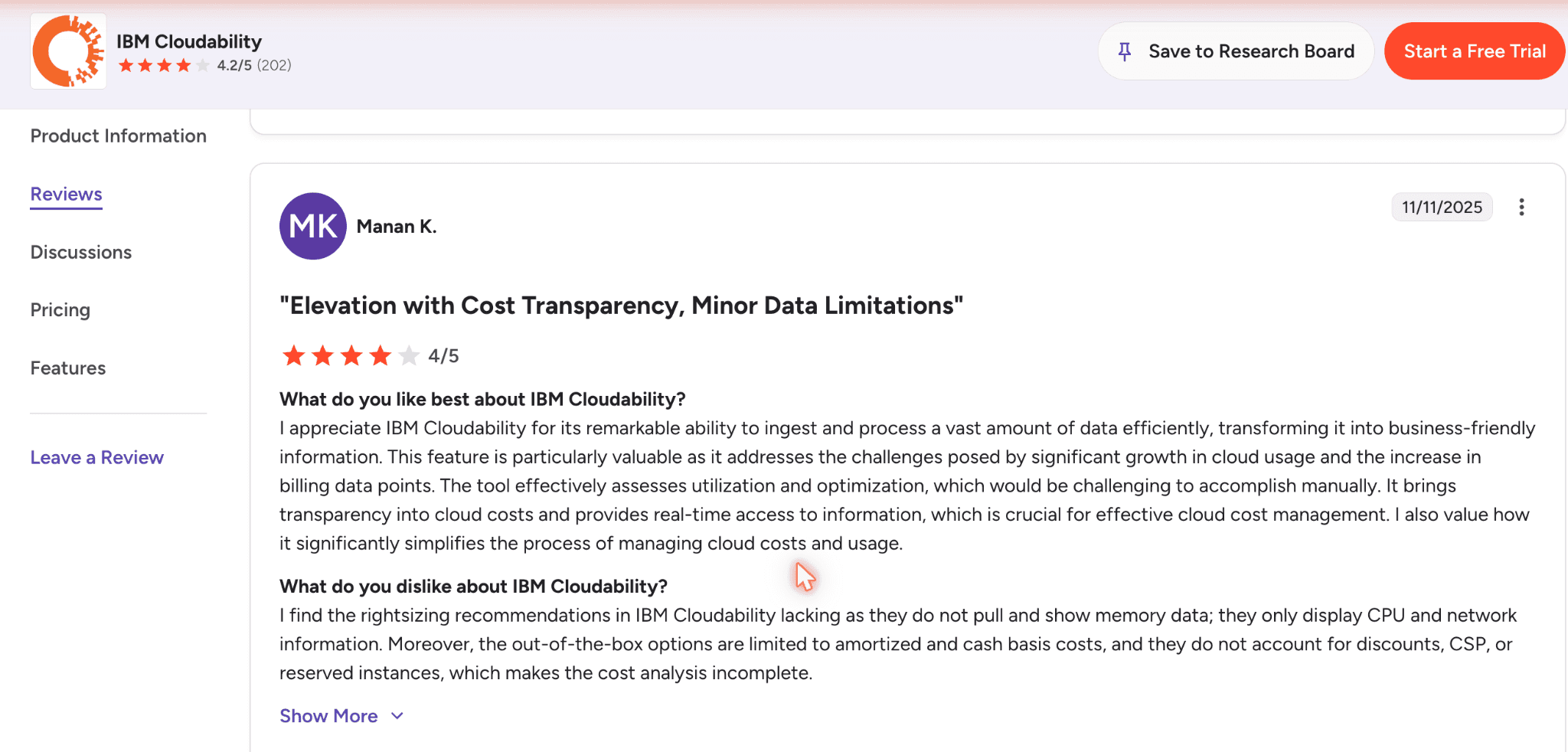
Manan K., verified G2 reviewer, 4/5 rating, dated 11/11/2025.
Top Apptio alternatives tools comparison
Platform | Best for | Multi-cloud and SaaS in one view | Allocation and unit economics | Optimization and automation | Kubernetes cost | Pricing model |
Amnic | Multi-cloud FinOps teams that also need Kubernetes and AI token cost in one view | AWS, Azure, GCP, Oracle, Alibaba, SaaS, plus AI tokens | Virtual tags, business mappings, unit economics, FOCUS-aligned | Recommendations, anomaly detection, AI agents | Native, namespace and workload level | Tiered by managed spend, free audit available |
Finout | Teams that want one bill across cloud and major SaaS | AWS, Azure, GCP, Snowflake, Datadog, Kubernetes | MegaBill, virtual tags, shared cost split | Recommendations, budgets, anomaly alerts | Yes, via MegaBill | Contact sales, custom pricing |
PointFive | Engineering teams that want autonomous remediation in code | AWS, Azure, GCP | Engineering-context allocation | Autonomous remediation with code-level fixes | Yes | Contact sales |
CloudChipr | Small and mid-size teams that want fast cleanup and rightsizing | AWS, Azure, GCP | Tag-based grouping, custom views | Idle and rightsizing automation, scheduled actions | Yes | Free tier, paid tiers per account |
ProsperOps | Teams that want autonomous commitment management on AWS, GCP, Azure | AWS, Azure, GCP for commitments | Effective Savings Rate scoring | Autonomous RIs, Savings Plans, CUDs | Indirect, via compute coverage | Performance-based, percentage of incremental savings |
CloudZero | Product-led SaaS teams that want cost per customer and per feature | AWS, Azure, GCP, Snowflake, Databricks, MongoDB Atlas | CostFormation allocation, unit cost views | Anomaly detection, recommendations | Yes | Contact sales |
Vantage | Self-serve teams that want fast setup and SaaS coverage | AWS, Azure, GCP, Oracle, plus 25+ SaaS integrations | Virtual tagging, cost reports | Auto-scaling pilot, rightsizing recommendations | Yes | Free tier, paid tiers, fixed-rate subscription |
Pricing notes in this table are based on May 2026 data.
How we evaluated these Apptio alternatives
We applied six criteria, in this order:
Cost visibility scope. Which clouds, which SaaS lines and whether Kubernetes and AI token spend show up in the same view.
Allocation model. How a team without engineering help can split shared cost (clusters, accounts, untagged spend) into business units.
Automation depth. Whether the tool only recommends or actually takes action on commitments, idle resources and rightsizing.
AI cost coverage. Whether OpenAI, Anthropic, Bedrock and Vertex spend can be tracked alongside cloud cost.
Pricing predictability. Whether pricing is published, whether there is a free tier and whether contracts are flexible.
Time-to-first-insight. How long from sign-up to the first allocation report you can show a CFO.
7 best Apptio alternatives
1. Amnic: Best overall Apptio alternative for multi-cloud, Kubernetes and AI cost in one view
Who gets benefited: Engineering, FinOps and finance teams in scale-ups and mid-market enterprises who need one console across AWS, Azure, GCP, Oracle, Alibaba, Kubernetes and AI tokens, without enterprise-suite implementation overhead.
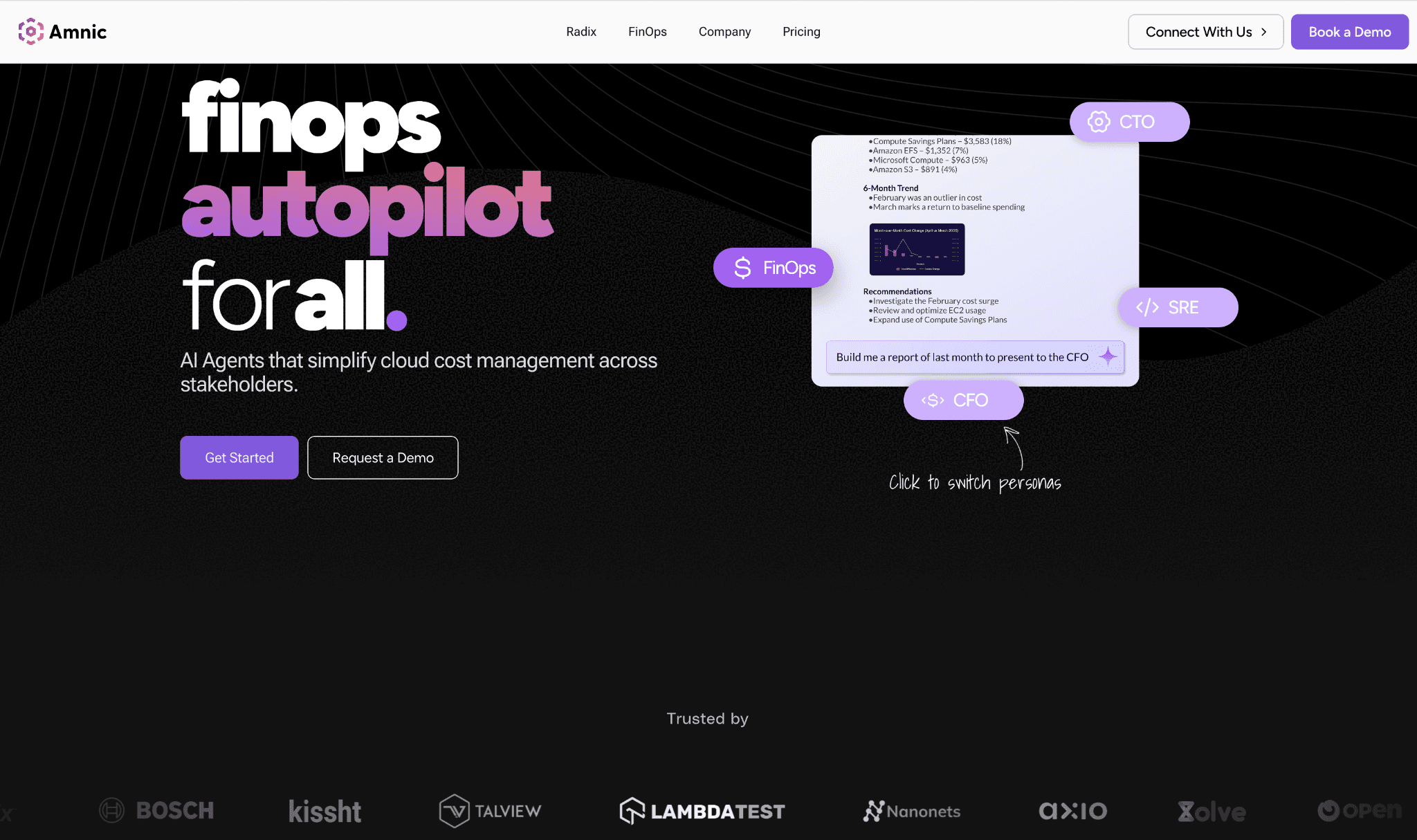
Amnic positions itself as a FinOps platform that gives every team, from CFOs to SREs, one view of cloud cost with role-based dashboards, recommendations and AI agents that explain spend changes.
Why it is the strongest Apptio alternative:
A single console covers multi-cloud, Kubernetes and AI token cost, including OpenAI and Anthropic, where most Apptio alternatives still need add-ons.
Allocation works without YAML; virtual tags and unit economics are configured in the UI and surfaced in reports the next minute.
Time-to-first-insight is measured in minutes through a free audit, with no annual commitment to start.
What the platform actually lets you do:
Build separate role-based dashboards for the CFO, CTO, FinOps lead and SRE from the same underlying data.
Allocate shared Kubernetes spend by namespace, workload, label, or virtual tag.
Track per-model AI token cost from OpenAI, Anthropic and other providers alongside cloud spend.
Run anomaly detection on accounts, services and tags, with alerts that include the likely root cause.
Use Amnic AI agents to investigate spikes, generate reports and surface savings opportunities.
Forecast cloud spend by service, account and business unit, with confidence ranges.
Pricing model: Amnic publishes a tiered plan structure with a free audit and paid tiers based on managed spend, with no mandatory annual lock-in to start. Pricing is based on May 2026 data.
Pros:
Single view for multi-cloud, Kubernetes and AI token cost.
UI-based allocation. No YAML edits to change business mappings.
Free audit gets you to your first allocation report quickly.
Role-based dashboards mean the CFO, CTO, FinOps lead and SRE each see their own version of the truth.
Open posture on FOCUS, the FinOps Foundation’s cost data spec.
Cons:
Brand recognition in Fortune 500 procurement is still building compared to IBM Apptio.
Some advanced TBM workflows that ApptioOne offers for on-prem and people cost are out of scope.
2. Finout
Who gets benefited: Teams whose cost picture is half cloud and half SaaS (Snowflake, Datadog, Databricks) and who want one bill that allocates everything to the team that owns it.
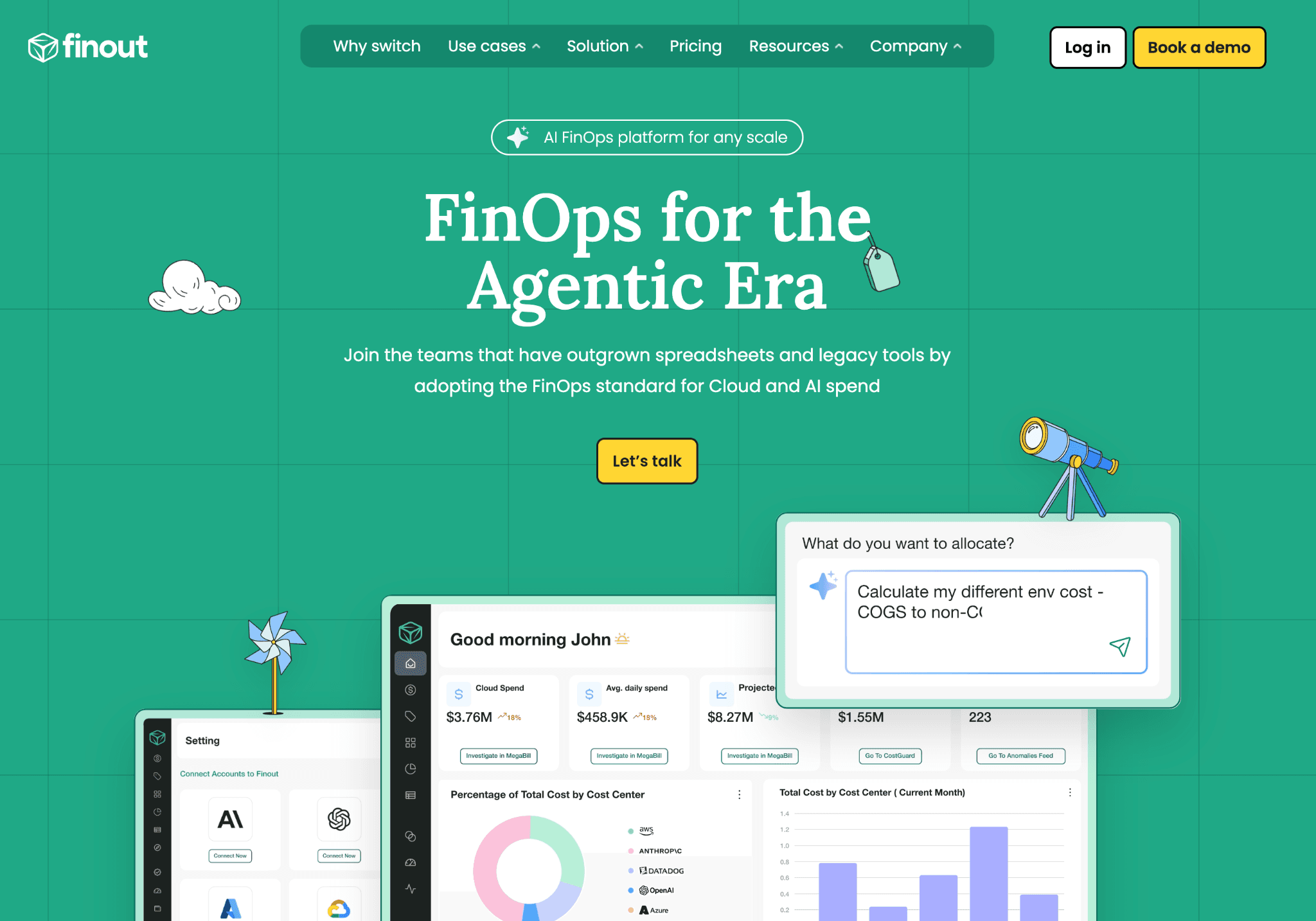
Finout positions itself as the “MegaBill” platform that unifies cloud, SaaS and Kubernetes cost in one place. The product reads more like a finance-friendly platform than a developer-first one, which suits FinOps-led organizations that want the CFO and the SRE looking at the same numbers.
In practice:
The MegaBill model lets you take a Snowflake or Datadog invoice and split it by team using the same virtual tag logic you use for AWS. That uniformity matters when a Snowflake bill grows faster than the AWS bill, which is now common.
Kubernetes allocation is built in, so you do not need a separate Kubecost deployment alongside it.
The shared cost split for Kubernetes namespaces is one of the cleaner implementations in the category, particularly for teams running multi-tenant clusters with mixed dev, stage and prod workloads.
Setup is sales-led rather than self-serve, which adds a few weeks to time-to-first-insight but tends to produce a cleaner allocation model on day one.
Pricing model: Finout uses custom pricing with a sales-led motion. The published pricing page asks teams to contact sales for a quote. There is no permanent free tier. Pricing is based on May 2026 data.
Pros:
True multi-source MegaBill, including major SaaS lines and Kubernetes.
Allocation works the same way across cloud and SaaS, so reports stay consistent across the business.
Strong shared cost split for Kubernetes namespaces and labels.
Good fit for a FinOps team that owns the financial close.
Cons:
No public free tier or self-serve trial; setup is sales-led.
Less depth on engineering-side automation than PointFive or ProsperOps.
3. PointFive
Who gets benefited: Engineering organizations where the bottleneck is “we know what to fix, we just cannot get the ticket prioritized.” PointFive closes that loop with code rather than a dashboard.
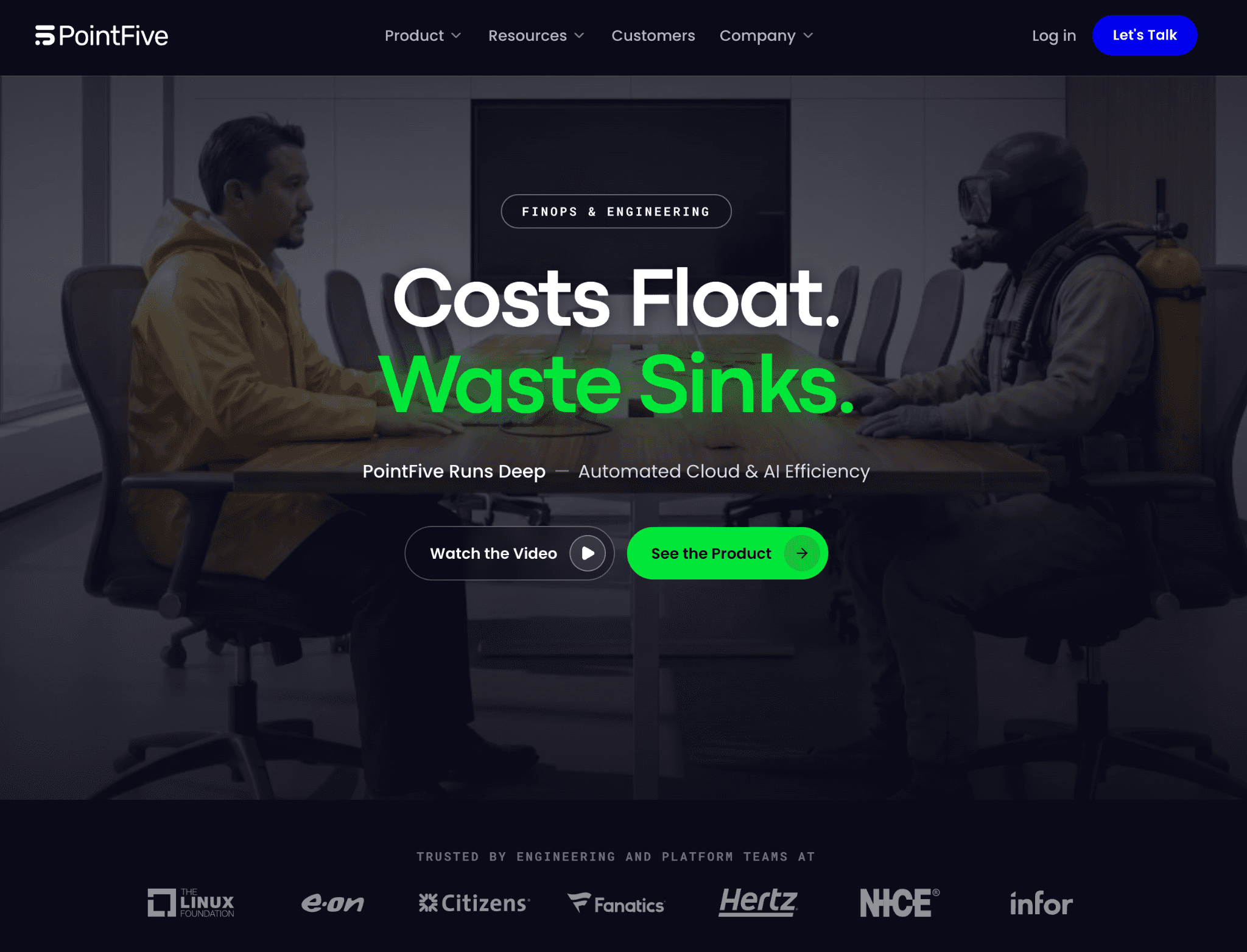
PointFive positions itself as a cloud efficiency platform with autonomous remediation that lands changes as code, not as a backlog item. The thesis is that findings only matter if they reach production and engineering teams already have a workflow for that: the pull request.
In practice:
Findings are mapped to specific code paths and infrastructure-as-code definitions, not just account IDs and service names. That mapping is the differentiator for organizations that already run a mature IaC practice.
Remediation can be reviewed and merged through normal pull request flow, which fits how engineering teams already work and removes the usual handoff friction between FinOps and engineering.
Coverage centers on AWS, with Azure and GCP support broadening over time.
The reporting side is intentionally lighter than a full FinOps suite, on the view that finance reporting belongs in a partner tool.
Pricing model: PointFive does not publish a self-serve price; pricing is contact-sales and tends to be scoped by managed spend and number of accounts. Pricing is based on May 2026 data.
Pros:
Remediation lives in code review, not in a separate console.
Findings include engineering context, not just billing context, which makes them more credible to platform teams.
Strong fit for organizations with a mature IaC practice (Terraform, Pulumi, CDK).
The autonomous-remediation angle fills the gap that pure visibility tools leave.
Cons:
Newer category entrant; reference base is smaller than the established names.
Less depth on finance-side reporting than Cloudability, Finout, or Amnic, so teams typically pair PointFive with a primary FinOps platform.
4. CloudChipr
Who gets benefited: Small and mid-size teams who want to clean up idle resources, schedule shutdowns and get rightsizing recommendations without standing up a full FinOps program with a dedicated practitioner.
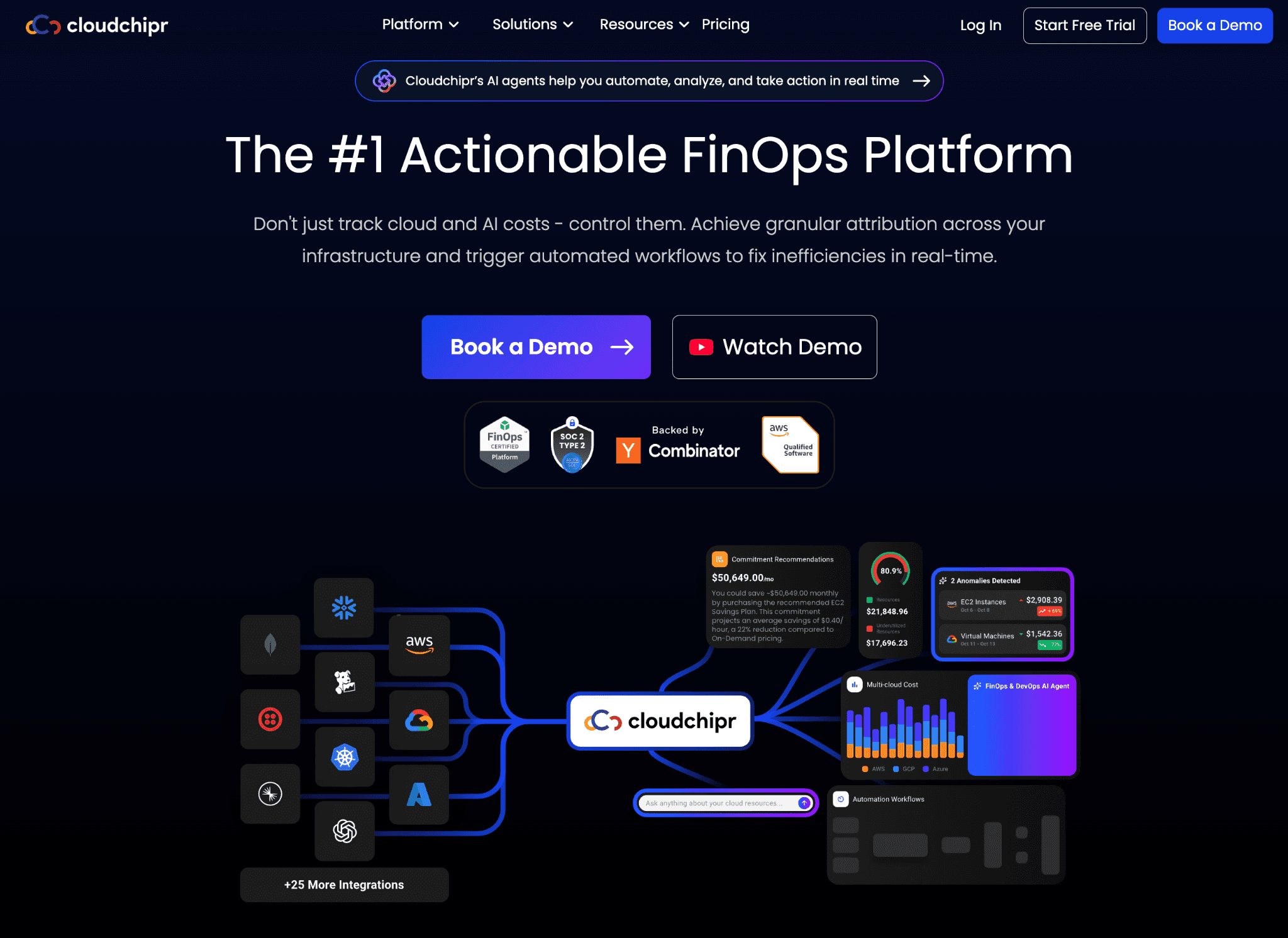
CloudChipr describes itself as a cloud cost optimization platform that covers AWS, Azure and GCP, with workflow automation for idle and underused resources. The product is built for fast setup: the value tends to show up in the first week, not the first quarter.
In practice:
The workflow builder lets you set rules like “stop dev instances at 8pm on weekdays” or “snapshot then delete EBS volumes unattached for 14 days” without writing scripts.
Resource explorer surfaces orphaned EBS volumes, idle load balancers, unattached IPs and stopped instances still attached to billable resources, all in one place.
Scheduled actions for non-production environments often deliver the first measurable savings, which is useful for teams that need to demonstrate FinOps ROI quickly.
Reporting depth is enough for engineering reviews, but a CFO running a formal monthly close will want to pair this with a dedicated FinOps platform.
Pricing model: CloudChipr publishes a free tier and paid tiers that scale by number of accounts and features used. The published pricing model is one of the more transparent in the category. Pricing is based on May 2026 data.
Pros:
Free tier you can stand up the same day.
Scheduled actions for non-prod environments save real money quickly.
Clean UI for resource cleanup, with low learning curve for engineers.
Published, predictable pricing.
Cons:
Less depth on business-mapping and allocation than Cloudability or Amnic.
Reporting suits engineering reviews more than a monthly CFO close.
5. ProsperOps
Who gets benefited: Teams whose biggest line item is on-demand compute on AWS, GCP, or Azure and who want commitments managed for them rather than building an in-house reservation desk.
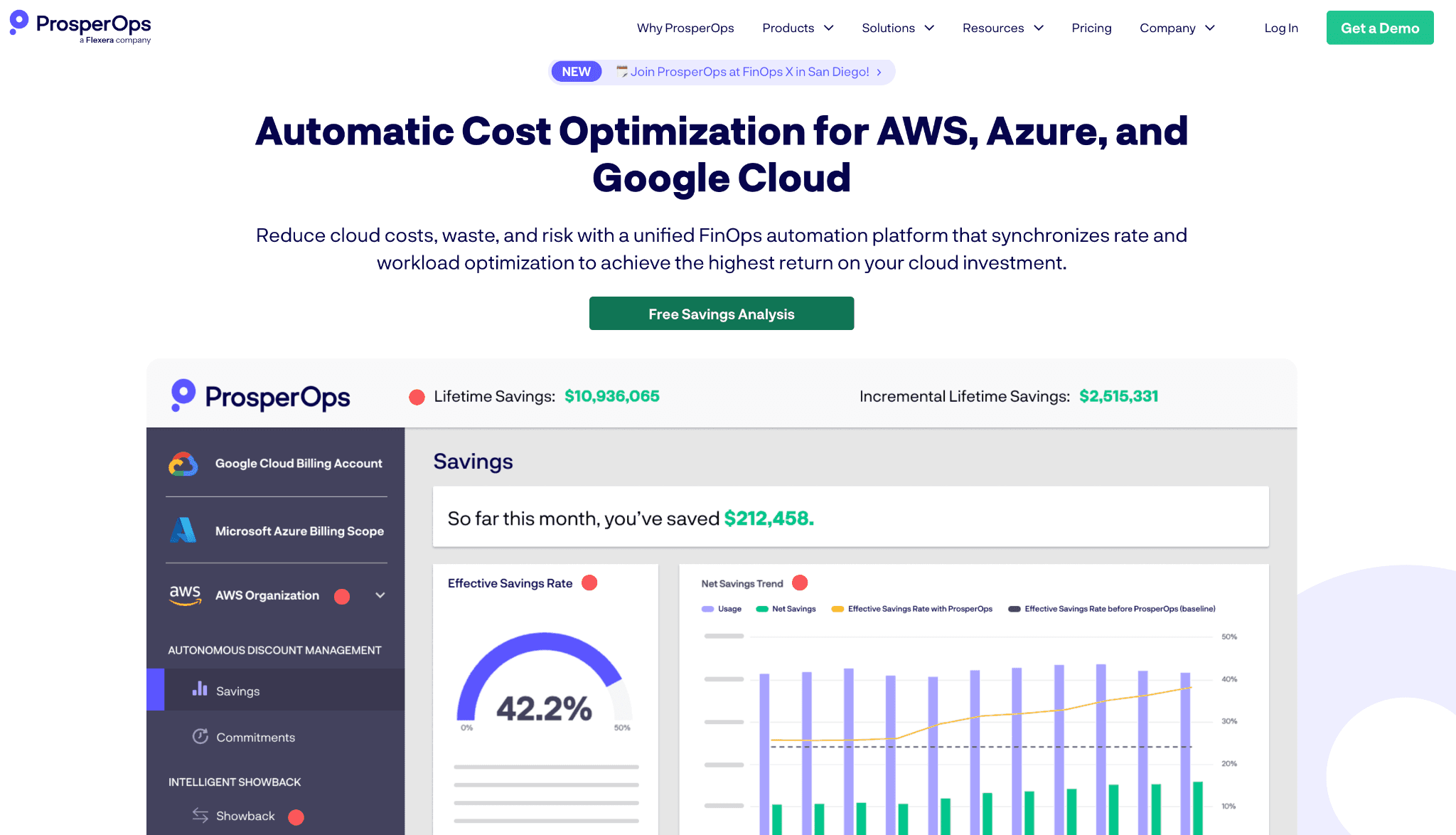
ProsperOps describes itself as an autonomous discount management platform that runs commitments for AWS, Google Cloud and Microsoft Azure. The angle is that commitment management is a continuous optimization problem, not a quarterly purchase exercise and a machine is better at running it than a human.
In practice:
The platform buys, sells and exchanges commitments on your behalf, with reporting against an Effective Savings Rate (ESR) benchmark that lets you compare savings outcomes against a clear metric.
It complements, rather than replaces, a visibility and allocation tool like Cloudability or Amnic; you still need a primary FinOps platform alongside it.
The value shows up cleanly in the AWS bill itself, which makes the ROI conversation simpler than for most FinOps tools.
Coverage is strongest on AWS, where the commitment model is deepest; Azure and GCP coverage are more recent and lighter.
Pricing model: ProsperOps prices on a performance basis, charging a percentage of the incremental savings it generates. There is no fixed platform fee, which aligns vendor and customer incentives. Pricing is based on May 2026 data.
Pros:
Outcomes-based pricing aligns vendor and customer.
Hands off the most annoying part of FinOps (RI, SP and CUD management).
Cross-cloud commitment coverage.
ESR gives a clear, vendor-independent benchmark to report against.
Cons:
Not a visibility, allocation, or anomaly tool; teams still need a primary FinOps platform.
Coverage is strongest on AWS; Azure and GCP coverage is more recent.
6. CloudZero
Who gets benefited: Product-led SaaS companies that want cost per customer, cost per feature and cost per environment, with engineers in the loop on the allocation model.
CloudZero describes itself as a cloud cost intelligence platform built around unit economics. The thesis is that engineering teams will only act on cost data when it is presented in terms they care about: per-customer cost, per-feature margin, per-deployment overhead.
In practice:
The CostFormation allocation engine handles shared cost splits using a YAML-style file, which is precise but expects engineering ownership of the allocation model. That is a feature for product-led teams and a friction point for finance-led teams.
Reports are oriented around product, customer and feature, not just account and service, which is the right framing for a SaaS CFO conversation.
The platform integrates with Snowflake, Databricks and MongoDB Atlas alongside the major clouds, which matters for data-heavy SaaS products.
Anomaly detection and savings recommendations are present, but the headline strength is allocation depth, not automation.
Pricing model: CloudZero uses custom pricing, sales-led; there is no published price card. Pricing is based on May 2026 data.
Pros:
Strong unit-economics reporting out of the box.
Good fit if engineering owns FinOps.
Coverage of major data platforms (Snowflake, Databricks, MongoDB Atlas).
CostFormation gives precise allocation control.
Cons:
Allocation file is code, which is powerful but requires engineering time to maintain.
Kubernetes depth is meaningful but not the headline use case.
7. Vantage
Who gets benefited: Teams that want to be productive in a day, without a sales call and who have meaningful SaaS spend alongside cloud infrastructure.
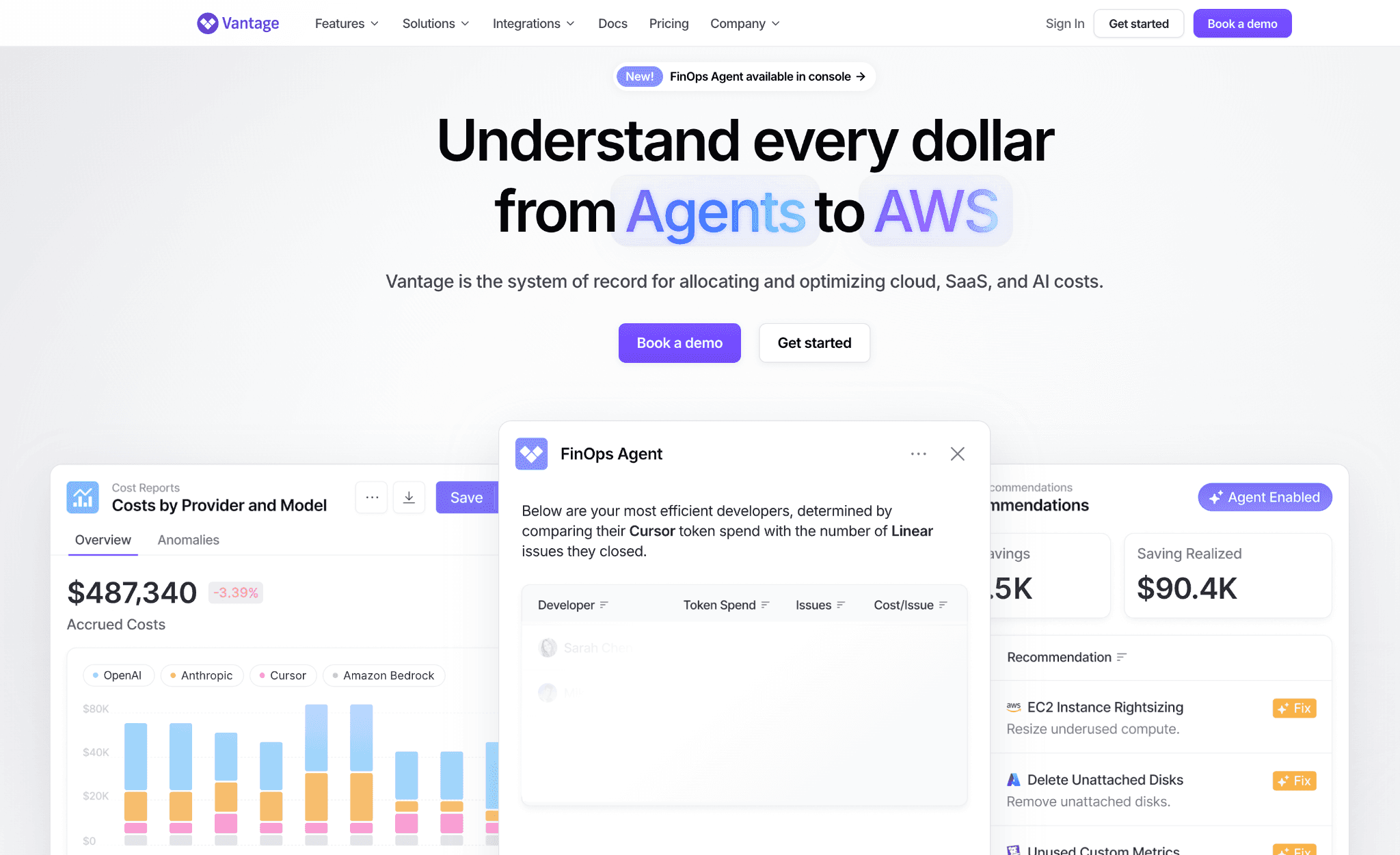
Vantage describes itself as a cost observability platform with native integration across AWS, Azure, GCP, Oracle and many SaaS tools. The product is built for self-serve adoption: a single engineer can stand it up over lunch and have a useful cost view by the end of the day.
In practice:
Sign-up to the first cost view is on the order of minutes for a single cloud account, which is among the fastest in the category.
The SaaS integration list (Datadog, MongoDB Atlas, OpenAI and dozens more) makes Vantage a useful complement to a cloud-only tool when SaaS spend is material.
Cost reports are flexible and shareable, but allocation logic is lighter than Finout’s MegaBill or Amnic’s virtual tags for organizations with complex shared-cost splits.
Automation is mostly recommendation-based, with commitment management delegated to partner tools.
Pricing model: Vantage publishes a free tier and paid tiers based on managed spend, charged on a fixed-rate subscription rather than a percentage of cloud spend. The fixed-rate model is unusually predictable for the category. Pricing is based on May 2026 data.
Pros:
Permanent free tier; fast self-serve setup.
Wide SaaS integration set, including AI providers.
Predictable subscription pricing that does not scale with cloud spend.
Low learning curve.
Cons:
Allocation depth is lighter than Cloudability, Amnic, or Finout for large organizations.
Automation is mostly recommendation-based; commitment management is delegated to partners.
How to choose between Apptio and these alternatives
Pick by the pattern that matches your team. Each pattern lists up to three platforms that solve it well.
If you need a CFO-grade monthly close with multi-cloud allocation: Amnic, Apptio Cloudability, Finout.
If you want one console for cloud, Kubernetes and AI token cost: Amnic, Finout, Vantage.
If your spend is half cloud and half SaaS (Snowflake, Datadog, Databricks): Finout, Amnic, Vantage.
If engineering owns FinOps and remediation should land as code: PointFive, CloudZero, Amnic.
If you want fast cleanup and scheduled shutdowns for non-prod environments: CloudChipr, Amnic, Vantage.
If your biggest line item is uncovered compute and you want commitments managed for you: ProsperOps, Amnic (as the visibility layer alongside), Finout.
If you want product-level unit economics (cost per customer, per feature) for a SaaS: CloudZero, Amnic, Finout.
If you want a free, self-serve start with SaaS coverage: Vantage, CloudChipr, Amnic.
If your primary driver is Kubernetes and AI cost in one platform: Amnic, Finout, Vantage.
Frequently asked questions
What is Apptio?
Apptio is IBM’s FinOps and TBM suite. It includes IBM Apptio Cloudability for cloud cost, ApptioOne for IT financial management, IBM Turbonomic for application resource management and IBM Cloudability Advanced Containers powered by Kubecost for Kubernetes cost.
What is the best Apptio alternative?
It depends on which part of Apptio you are replacing. For Cloudability-style multi-cloud FinOps with Kubernetes and AI cost in one place, Amnic is the strongest pick. For SaaS-heavy environments, Finout. For engineering-led remediation, PointFive. For commitment automation, ProsperOps.
Why do teams switch from Apptio?
The most common drivers are pricing fit for smaller cloud estates, the speed of getting a first allocation report, the configuration-file approach to business mappings and gaps in rightsizing data such as memory.
Is Apptio free or open-source?
No. IBM Apptio Cloudability and the rest of the IBM FinOps Suite are commercial, contract-based products. The Kubecost open-source project, called OpenCost, remains open and is now under the CNCF.
How does Amnic compare to Apptio?
Amnic covers multi-cloud, Kubernetes and AI token cost in a single console, with UI-based allocation and a free audit to start. Apptio remains strong inside large enterprise TBM programs that already standardize on the full IBM Apptio suite.
Does Apptio cover Kubernetes and AI spend?
Kubernetes coverage now comes through IBM Cloudability Advanced Containers, powered by Kubecost, as a separate module. AI token cost (OpenAI, Anthropic, Bedrock, Vertex) is not a first-class part of the suite at the time of writing; teams typically track it elsewhere.
The category is shifting from visibility to action and from cloud to AI
Cloud cost management started as visibility. Cloudability defined that era and remains a useful reference point for what good reporting looks like. The next chapter is about action: closing the loop between a finding and a code change, between a budget alert and a rightsizing PR, between a forecast and a commitment purchase.
The other shift is the rise of AI cost as a first-class line item. OpenAI, Anthropic, Bedrock and Vertex bills are now material for many product teams and they do not sit cleanly inside a tool that was designed for EC2 and RDS. Tracking them in the same view as cloud spend is no longer a nice-to-have.
That is why this comparison weights one-console coverage and automation alongside the traditional reporting strengths. Apptio still wins inside large IBM-aligned programs. For most other teams, a modern multi-cloud, Kubernetes and AI platform is the better fit.
Start your free Amnic audit. See your cloud savings in 30 seconds.
For the data referenced in this article, we have sourced from the following
Better visibility and management into AI Tokens?
Start with a 30 day trial
Connect leading LLMs
24 hour time to value
Stay ahead of AI Spend

Make AI spend visible, controllable, and accountable.
Gain insights into your AI token costs at a team, customer, business unit and individual user level to measure and manage AI utilization.
Recommended Articles

Compare Input vs Output Token Pricing: Why Output Costs More and How to Budget for It
Read More

Vertex AI vs Bedrock: The Enterprise Platform Decision That Outlives the Token Price
Read More

Gemini vs GPT: Which AI Model Fits Your Workflow and Budget
Read More
H100 vs A100: Specs, Cost and Which GPU Wins for Your Workload
Read More
OpenCost vs Kubecost: Key Differences and How to Choose
Read More
6 Best Datadog Alternatives for Cloud Cost Management in 2026
Read More