Bringing best practices from large corporations into younger companies: AmnicCast with Smita Ohja
4 min read
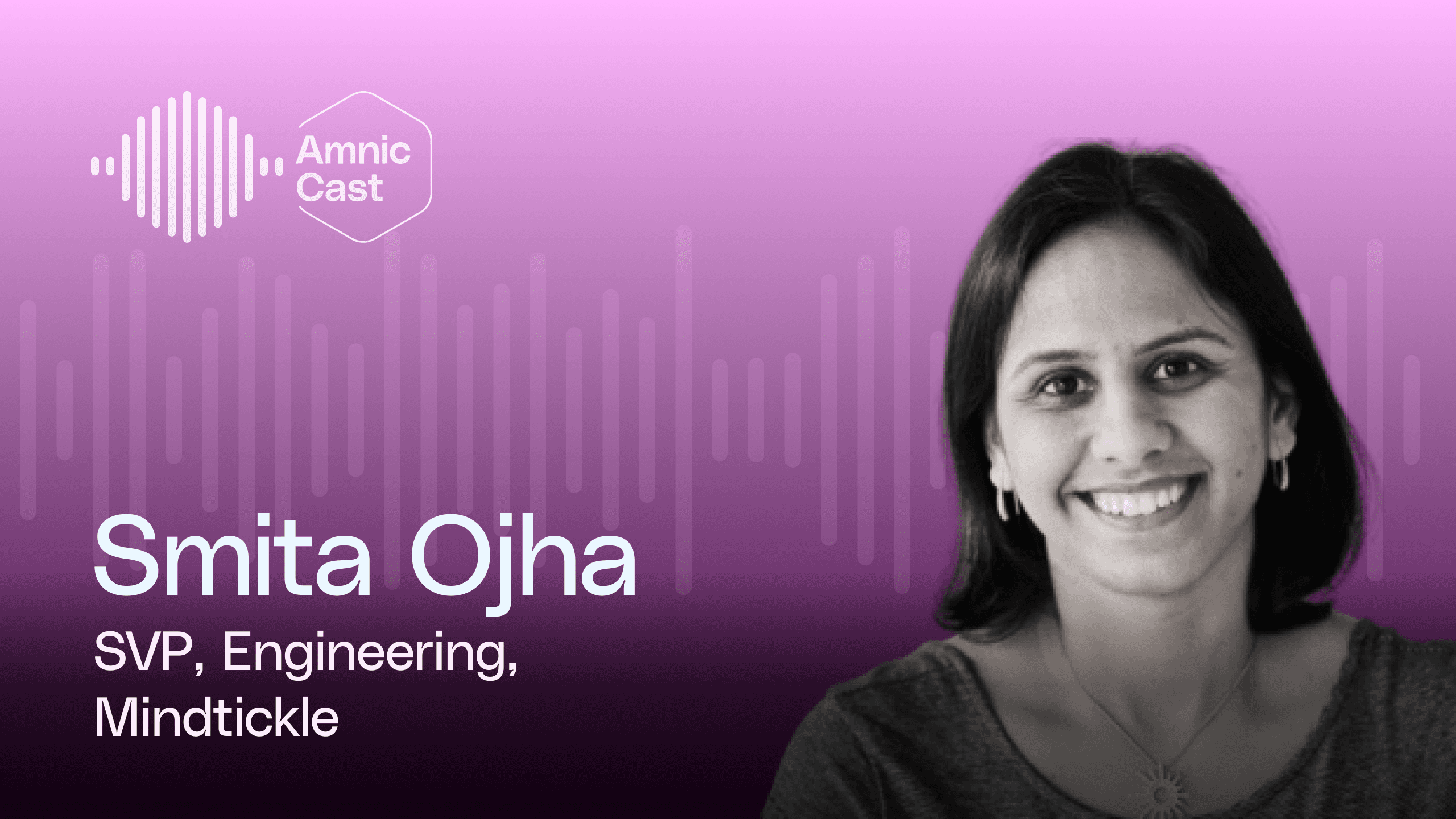
Table of Contents
In this edition of AmnicCast , we are joined by Smita Ohja, SVP, Engineering at MindTickle who has been in the industry for 22 years. She started her career with Microsoft, working on SharePoint and Office 365. She subsequently transitioned to Facebook and later worked at Google on some of their flagship projects like Workspace. She brings her immense learning from all these companies, which she applies to her role at the fast growing Mindtickle, a revenue productivity and sales enablement platform.
In a candid conversation with Sathya Nagarajan, she talks about how her learnings have shaped her views of engineering and shipping products right the first time around.
Smita elucidated on how every organisation she worked for provided significant learning opportunities. She sheds light on her early developer days in Sharepoint, where they were shipping CD’s, which meant that everything had to be perfect. She learned about the value of doing things right and thoroughly; and finishing code reviews, optimal design, and logging in before the shipment was out was crucial. This became the core of her engineering culture.
When cloud enterprises started to open their shops, a whole new era of innovation lay ahead of them. She explains that the development of many large tools faced numerous challenges, such as transforming a CD product into a cloud-based one, writing appropriate scripts for these products, gathering logs, and hosting them. Overcoming these challenges was a significant learning experience she gained in her first decade of engineering.
DevOps innovation primarily originates from the realm of system monitoring after completing deployment. She applied all her theoretical knowledge of anomaly detection to the router systems, which allowed her to gain valuable insights and identify numerous anomalies indicating system malfunctions. According to Smita, DevOps development and big data streaming laid the groundwork for innovation.
The social graph cache was being built in Facebook when Smitha was working there; she shares that during this period she realised the importance of understanding where every microsecond is spent in the system and learned how to use which language was required, whether it be C, C++, or Assembly language. She discusses the process of scaling a very basic graph system, emphasising the necessity of a simple system for its growth.
Smita covers a lot more during this episode of AmnicCast
Importance of simplicity in architecture and scalability in product development
Prioritising processes and setting up multiple test environments for improved productivity
Focus on stability and catching regressions early through performance testing environments
Emphasis on DevOps and SRE teams for optimal design decisions and cost optimization.
Role of head of engineering in overseeing developers, machine learning teams, devops, and quality assurance
Collaboration and decision-making involving devops and SRE teams in technical discussions
Smita Ojha’s approach to integrating best practices from her past experiences into emphasizing the value of continuous learning, adaptation, and evolution in driving growth, innovation, and success in a startup environment.
Watch the full episode here:
Better visibility and management into AI Tokens?
Start with a 30 day trial
Connect leading LLMs
24 hour time to value
Stay ahead of AI Spend

Make AI spend visible, controllable, and accountable.
Gain insights into your AI token costs at a team, customer, business unit and individual user level to measure and manage AI utilization.
Recommended Articles

How to Catch AI Cost Spikes Early (FinOps Playbook)
Read More

How to Forecast AI Spend: A FinOps Guide
Read More

MongoDB Atlas Pricing: Tiers, Real Costs, and How to Control Them
Read More

Llama API Pricing: What Llama Actually Costs Per Token by Provider
Read More

Azure VM Pricing: What Actually Drives the Bill and How to Cut It
Read More

Cursor Pricing Explained: Plans, Credits, and What You Will Actually Pay
Read More